Duloren (also written Du Loren and DuLoren) is a Brazilian lingerie brand founded in Rio de Janeiro in 1962 by Lebanese immigrants who had been selling men's suits in the city center. That date and that origin come from the company's own account of itself. Earlier summaries, including the previous version of this entry, gave 1967 as the founding year and placed the company in Nova Friburgo, and we found nothing that supports either claim. Duloren now sells bras, panties, bodysuits, shapewear and pajamas through what it says are more than 12,000 points of sale across Brazil.
Suits in downtown Rio, then lingerie
The company does not name its founders on its history page, and no independent source we checked does either. What it does say is that the family started in the clothing trade, selling suits in the center of Rio, before turning to women's underwear. The move is less odd than it sounds. A suit seller and a bra maker are both in the business of buying cloth in volume and cutting it to fit bodies that refuse to be standard.
Nova Friburgo, the mountain town that older articles credited with Duloren's birth, is a real lingerie center. Its municipal economy lists "moda íntima" (intimate apparel) among its main industries, alongside metalworking and vegetable farming. But Duloren's own story is a Rio story, and the brand's registered address today is in São Cristóvão, a working district north of the old center.
The Queimados textile park
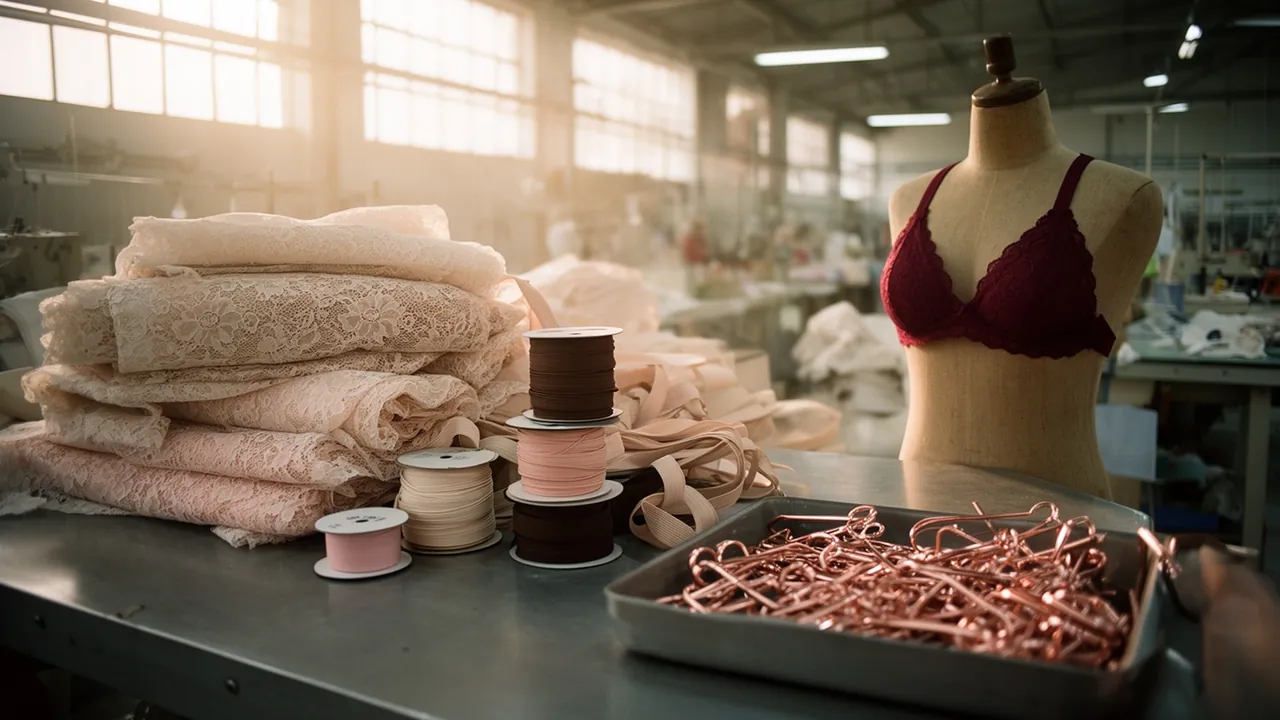
The most unusual thing about Duloren is how much of its supply chain it owns. About 25 years after the founding, which puts it in the late 1980s, the company opened its own textile park in Queimados, a municipality in the Baixada Fluminense west of Rio. The company describes the site as covering more than 500,000 square meters. Fabrics, lace, elastic, hook-and-eye closures and other trims for its garments are made there.
That kind of vertical integration is rare at Duloren's price point. Most budget lingerie brands buy finished lace and elastic from specialist mills, often abroad. Duloren says it works with the elastane producers Lycra and Creora for stretch yarn, then knits and finishes in-house. The company presents itself as 100 percent Brazilian and responsible for its whole production chain, and the Queimados plant is the evidence for that claim.
Duloren advertising and the 1995 Roberta Close campaign
In Brazil, Duloren is remembered as much for its advertising as for its bras. The company's own summary calls its campaigns irreverent and built around women's attitude, and it points to one in particular: in 1995 the model Roberta Close fronted a Duloren campaign. Close was Brazil's best-known trans model, and the brand notes, fairly, that trans visibility was not a mainstream advertising subject at the time.
Other traces of the brand's pop culture reach turn up in unlikely places. Sony released an LP titled "Coleção DuLoren Music" in 1987, listed in the discography of the singer Guilherme Arantes. The Rio street personality Isabelita dos Patins, famous for roller skating on Avenida Atlântica, appeared in Duloren commercials in the years after a 1993 photograph with presidential candidate Fernando Henrique Cardoso made her a national figure. A lingerie company that ends up on a record sleeve and in the same news cycle as a presidential campaign is doing something right with its marketing budget.
Online in 2016, a first store in 2019
For most of its life Duloren sold through other people's shops: department stores, multi-brand boutiques and the small independent retailers that still carry much of Brazil's lingerie. It opened its own e-commerce site only in 2016. In 2019 it opened its first official branded store, in what the company describes as one of the largest shopping malls in Rio de Janeiro.
The current range is broad and practical. The online catalog is organized into bras, panties, bodysuits, shapewear (modeladores, close to what this encyclopedia files under control brief), pajamas and a plus-size line, plus multipacks and bundles. Pricing is mass market, with installment payment offered at checkout, which is standard for Brazilian retail. Its regional peers sit in the same space, Colombia's Leonisa being the obvious comparison, though Duloren has always been a domestic brand first.
Quick facts
| Founded | 1962, Rio de Janeiro (company account) |
| Founders | Lebanese immigrant family, names not published |
| Production | Own textile park in Queimados, RJ |
| Notable campaign | Roberta Close, 1995 |
| E-commerce launch | 2016 |
| First branded store | 2019, Rio de Janeiro |
The brand's Brazilian-cut styles are the kind of thing foreign readers expect from a Rio lingerie label, but the more telling detail is the factory. Sixty-odd years on, Duloren still makes its own lace in the Baixada Fluminense.
Last updated
Sources
- duloren.com.br: sobre nos
- duloren.com.br
- pt.wikipedia.org: Nova Friburgo
- pt.wikipedia.org: Isabelita dos Patins
- pt.wikipedia.org: Discografia de Guilherme Arantes
Members
How Du Loren fits
Loading member reviews...