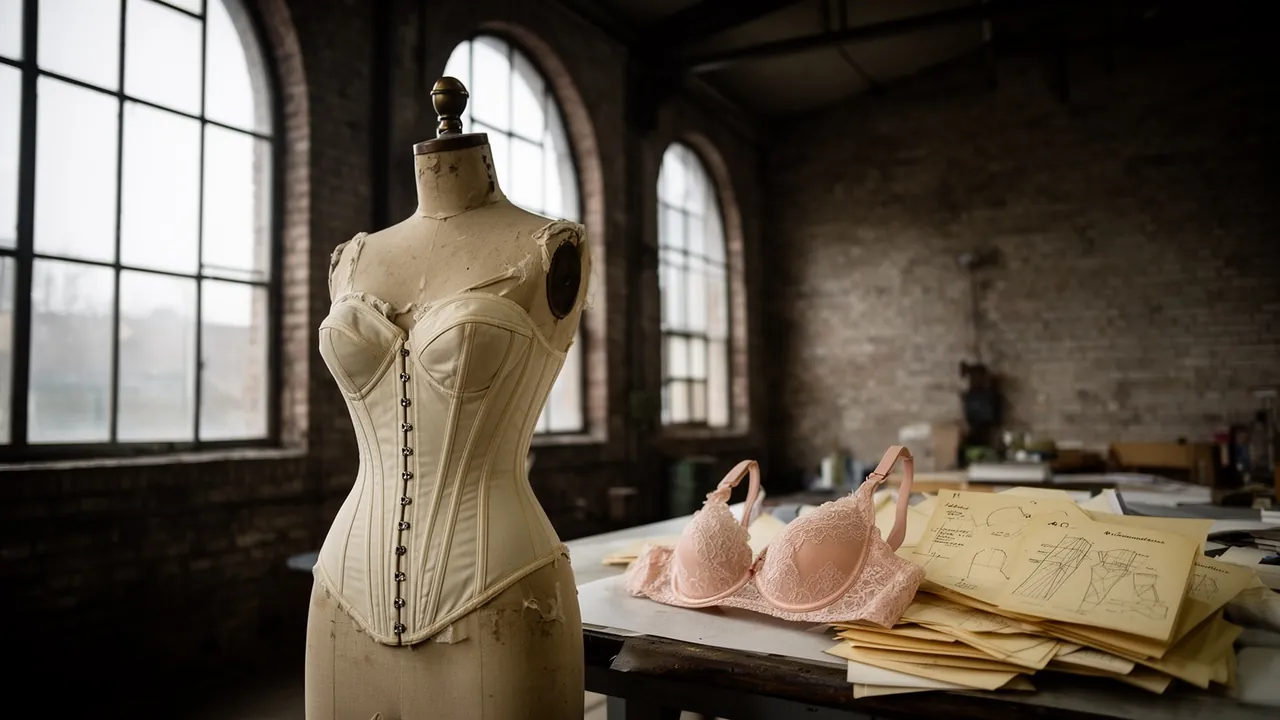
In 1885 Eugen J. Herbst opened a corset workshop in Bad Rappenau, and the company he started, Felina, has been based in Mannheim, Germany, since about 1890. It makes bras, everyday lingerie and shapewear under the Felina and Conturelle names, designs them in Mannheim, sews them in its own plants in Hungary, and has belonged to the Latvian-rooted European Lingerie Group since June 2017.
Bad Rappenau, 1885: a corset maker with ten staff
Herbst started with about ten employees. The company's own history makes a point worth keeping: in the 1880s most corsets sold in Germany came from France, so a domestic corset factory was a novelty. After five years demand had outgrown the small spa town, and Herbst moved the business to Mannheim, which had better transport links. The company has been there ever since.
The name came later. "Felina" was registered as a trademark for brassieres in 1915, then adopted as the company name. The earlier version of this entry described a philosophy behind the name, feline grace and freedom of movement; we found no source for that, and it reads like a story written afterward.
By 1926 the Mannheim factory employed 660 people, about 90 percent of them women. In the 1930s Felina opened manufacturing branches in Milan, Paris, Zurich and London.
The Herbst family and the 1936 sale
The Herbst family was Jewish, and the Nazi seizure of power in 1933 hit the business at once. According to the German Wikipedia account, the company was barred from trade fairs and subjected to currency restrictions, and control passed formally to a state labor trustee, though Eugen Herbst kept running it in practice until 1936. That year Richard Greiling, a Leipzig industrialist and consul general, bought Felina well below its value, one of several Jewish-owned firms he acquired in the same way.
Felina's own history is briefer: Greiling took over from the founding family, which had to leave Germany in 1936 under growing persecution. The independent record adds what the company leaves out. Under Greiling the business, renamed Korsettfabrik FELINA Mannheim, used forced labor and had part of its production made in the Łódź ghetto. Its Mannheim buildings were largely destroyed in 1944.
The Felina boom years
Postwar rebuilding was fast. A branch factory opened in Kaiserslautern in 1955, which by Wikipedia's account made Felina the second-largest foundation garment maker in West Germany, and the brand exhibited at the 1958 Brussels World's Fair. The company says it was exporting to more than 50 countries by the end of the 1950s, with Italy, Switzerland, the Netherlands, Norway and Sweden as its main markets.
At its 75th anniversary in 1960, Felina had about 2,500 employees. The company puts the whole West German corsetry industry at about 25,000 workers in the early 1960s, with around 2,000 at Felina, and says the anniversary catalog offered more than 250 models. Lycra, the first pantyhose and the miniskirt were all reshaping what women wore underneath, and the girdle's long decline was beginning.
One period detail survives in the company's own telling: after the 1970 film Love Story, Felina launched a Lovestory bra sold with a small pendant meant as a gift.
Swiss owners and Hungarian factories
By the late 1970s the company was in financial trouble, and in 1981 it entered composition proceedings. A Swiss investor group bought it and set up Felina International AG in Wettingen, near Zurich, with the Mannheim company as a wholly owned subsidiary. Production moved step by step to cheaper plants, first in Hungary and Poland, and today in Hungary.
In the 1990s the company leaned into well-fitting bras for larger busts, full cup styles among them, arguing that a well-fitting bra in big sizes was exactly where its corsetry experience paid off. Its current range covers smooth everyday lingerie, lace and embroidered styles, and functional shapewear.
Palero, then the European Lingerie Group
Ownership changed twice in quick succession. In 2015 Palero Invest, based in Luxembourg, took over Felina International. In June 2017 Felina was acquired by the European Lingerie Group, the company behind the Lauma fabric and lace business from Liepāja in Latvia.
The company now describes itself as active in more than 50 countries, with its own sales companies across Europe and business in North America, Scandinavia, the United Arab Emirates and Russia. It counts about 6,500 retailers and 1,000 employees, 130 of them in Mannheim. Its own stores are few: the shop in the Nußloch fashion park has closed for good, and the Mannheim shop was shut for renovation at the time of writing.
The name has also escaped the lingerie trade. Mannheim's list of independent stages includes the Theater Felina-Areal, literally the theater on the Felina grounds, which keeps a corset maker's name on the city's cultural map.
Last updated
Sources
- de.wikipedia.org: Felina
- felina.de: ueber uns
- felina.de: conturelle uebersicht
- de.wikipedia.org: Mannheim
Members
How Felina fits
Loading member reviews...