How Did World War II Change Women's Underwear?
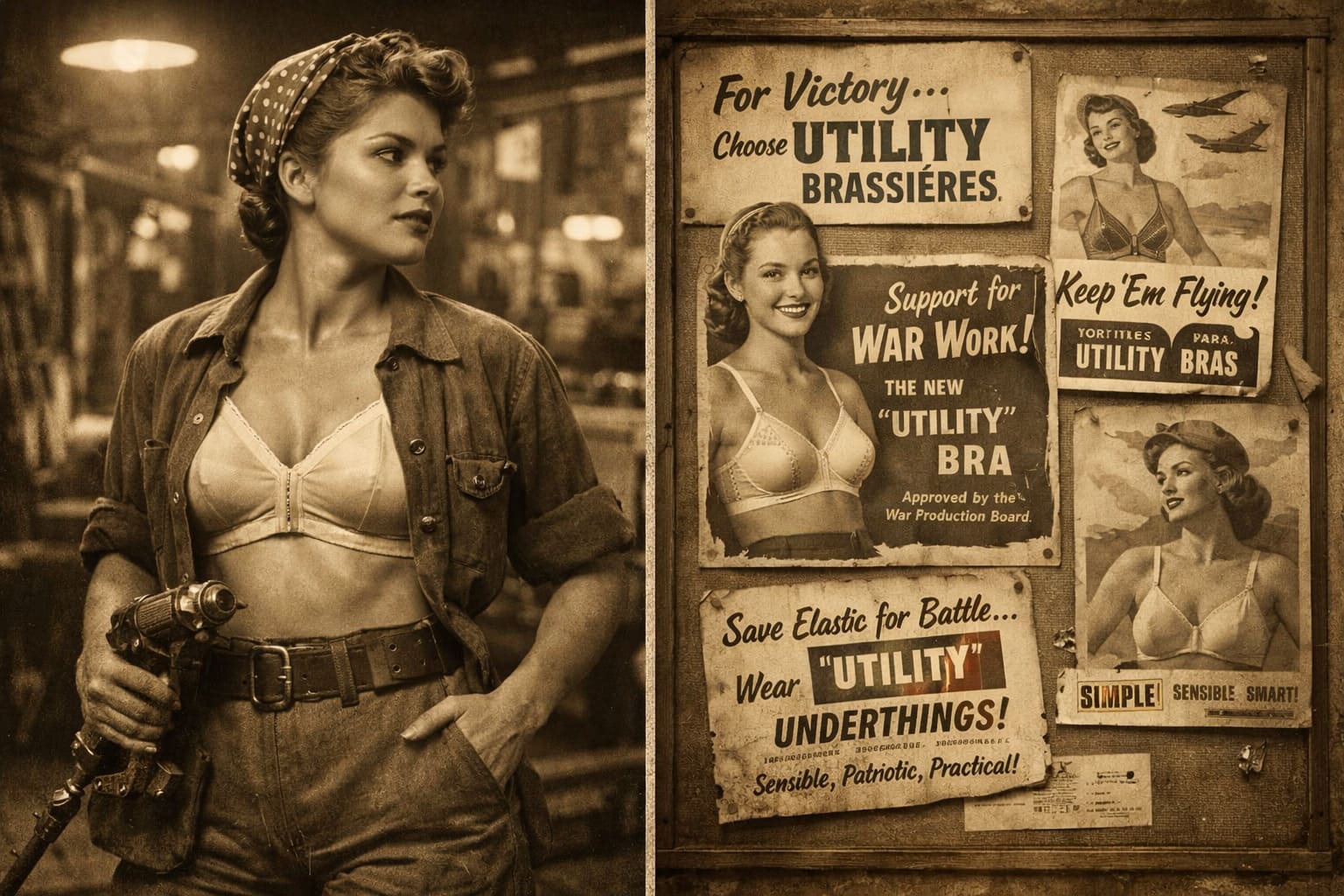
World War II transformed women's undergarments from luxury items into practical necessities. Fabric rationing eliminated silk and lace, replacing them with cotton and rayon. Elastic and metal shortages forced redesigns of every garment from bras to girdles. And when the War Production Board tried to ration bra materials, Maidenform successfully argued that bras were "essential to the war effort" — officially classifying them alongside ammunition and rations. The war also introduced millions of women to practical, functional undergarments for the first time, permanently changing what women expected from their lingerie.
Before the War: The State of Women's Underwear in 1939
On the eve of World War II, women's undergarments were experiencing a golden age of innovation. Nylon, invented by DuPont chemist Wallace Hume Carothers in 1935, had just revolutionized the stocking industry — 64 million pairs of nylon stockings were sold in the first year alone, in 1940.
The typical middle-class woman's undergarment wardrobe included:
- A brassiere (structured, often with underwire)
- A girdle or corselette (rigid foundation garment)
- Nylon or silk stockings with garter belt
- A slip (silk or rayon)
- Panties (silk, rayon, or cotton)
Materials were luxurious: silk, satin, lace, elastic, and the revolutionary new nylon. Metal components — clasps, hooks, underwire — were standard.
Then everything changed.
The Rationing Revolution (1941–1945)
What Disappeared
When the United States entered the war in December 1941, almost every material used in women's undergarments was redirected to military use:
| Material | Military Use | Impact on Lingerie |
|---|---|---|
| Nylon | Parachutes, tow ropes, tents, ponchos | Stockings disappeared entirely |
| Silk | Parachutes, powder bags for artillery | No more silk lingerie |
| Rubber/elastic | Tires, gas masks, rafts | Girdles lost their stretch |
| Steel/metal | Weapons, vehicles, ships | Underwire and metal clasps eliminated |
| High-quality cotton | Military uniforms, bandages | Only low-grade cotton available |
What Replaced Them
The lingerie industry adapted with remarkable ingenuity:
- Rayon replaced silk and nylon for slips and panties
- Button fasteners replaced metal hooks and snaps
- Drawstrings replaced elastic waistbands
- Cotton jersey replaced structured fabrics
- Bone and plastic replaced metal underwire and boning
The "Make Do and Mend" Mentality
In Britain, the government issued official guidelines for repairing and extending the life of undergarments. Women were encouraged to:
- Repair torn stockings with careful darning
- Convert old silk parachutes into lingerie (when available)
- Use flour sacks and feed bags for fabric
- Paint "stocking seams" on bare legs with gravy browning or eyeliner pencil
The Declaration of Essentiality
The most remarkable chapter in wartime lingerie history came when the War Production Board attempted to ration materials used by Maidenform, one of America's largest bra manufacturers.
Maidenform's response was extraordinary: the company filed a formal "Declaration of Essentiality," arguing that:
"America needs working women, and working women need their bras."
The company presented evidence that women performing physical labor in factories, shipyards, and farms required proper breast support for safety and productivity. A woman operating heavy machinery, riveting aircraft panels, or lifting artillery shells needed a well-constructed bra — not just for comfort, but for workplace safety.
The government agreed. Bras were officially classified as essential to the war effort, alongside food, fuel, and ammunition. Maidenform received its material allocations.
The Nylon Crisis and the Stockings Riots
The Disappearance
Nylon stockings vanished from American stores virtually overnight in 1942. DuPont converted 100% of nylon production to military use. For American women, this was genuinely traumatic — nylon stockings had been available for only two years, and women had already become dependent on them.
The Aftershocks: 1945–1946
When small shipments of nylon stockings began reaching stores after the war ended, the result was chaos:
- New York: 30,000 women lined up for stockings
- Pittsburgh: 40,000 people queued for just 13,000 pairs
- San Francisco: A store window was smashed by approximately 10,000 desperate shoppers
- Multiple cities reported injuries from crowd crushes
The "Nylon Riots" continued until DuPont ramped production to 30 million pairs per month in March 1946.
How the War Changed Underwear Permanently
1. Function Over Form
Before the war, lingerie was decorative. After the war, women expected their undergarments to work — to be practical, comfortable, and durable. The wartime experience of wearing functional cotton bras and simplified girdles while performing physical labor permanently shifted expectations.
2. The End of the Girdle's Dominance
Women who spent four years working in factories without rigid girdles discovered they didn't need them. While girdles remained popular through the 1950s, their grip on women's wardrobes was loosened. The war planted the seed that would bloom in the 1960s liberation movement.
3. New Materials, New Possibilities
The wartime development of synthetic materials — particularly improvements to nylon and the introduction of new polymers — gave the post-war lingerie industry materials that were lighter, stronger, and more versatile than anything available before the war.
4. Women as Consumers
The war gave millions of women their own income for the first time. When peace returned, these women became consumers with their own purchasing power and their own preferences — not just wearing what their husbands or mothers chose for them.
Frequently Asked Questions
Were bras rationed during WWII?
The U.S. War Production Board attempted to ration bra materials, but Maidenform successfully argued that bras were essential to the war effort. Bras were officially classified as essential items, and manufacturers received material allocations to continue production, though designs were simplified.
What did women wear instead of nylon stockings during WWII?
Women wore rayon stockings (which were less durable and less attractive), went bare-legged, or famously painted fake stocking seams on their legs using gravy browning, eyeliner pencil, or commercial leg paint products.
When did nylon stockings come back after WWII?
Small quantities returned to stores in September 1945, causing massive queues and even riots. Full availability wasn't restored until early 1946, when DuPont reached production of 30 million pairs per month.