The History of Victoria's Secret
Victoria's Secret was founded in 1977 by Roy Raymond in San Francisco, purchased by Leslie Wexner for just $1 million in 1982, and built into a multi-billion-dollar empire that dominated the American lingerie market for three decades. The brand peaked in the 2000s with its annual fashion show attracting millions of viewers, but declined sharply in the late 2010s due to changing cultural values, the rise of inclusive competitors like Savage X Fenty, and scandal involving CEO Leslie Wexner's association with Jeffrey Epstein. Victoria's Secret cancelled its famous fashion show in 2018 and has been attempting to reinvent itself since.
The Founding: 1977
Roy Raymond's Embarrassment
The origin story is famous: in 1977, Roy Raymond, a Stanford MBA graduate, walked into a department store to buy lingerie for his wife. The experience was mortifying — fluorescent lighting, saleswomen who made him feel like a pervert, and racks of ugly, utilitarian underwear.
Raymond's insight: there was no store where both men and women could comfortably shop for lingerie in a pleasant environment.
He opened the first Victoria's Secret in the Stanford Shopping Center in Palo Alto, California. The store was designed to feel like a Victorian boudoir: dark wood paneling, oriental rugs, framed vintage photos, and classical music. The sales staff were trained to be helpful rather than judgmental.
The name "Victoria's Secret" evoked the sophisticated restraint of the Victorian era — the idea that beneath a proper exterior, there was something private and alluring.
Within five years, Raymond had expanded to six stores and a mail-order catalogue generating $6 million annually.
The Wexner Transformation: 1982
The $1 Million Purchase
In 1982, Leslie Wexner, the founder of L Brands (which also owned The Limited, Bath & Body Works, and other retail chains), purchased Victoria's Secret for $1 million.
Raymond's vision had been a comfortable shopping experience for couples. Wexner's vision was different: he wanted to target women directly with aspirational, glamorous lingerie.
The Pivot
Wexner transformed Victoria's Secret from a small, tasteful boutique into a mass-market powerhouse:
- Redesigned stores with bright pink branding and louder aesthetics
- Expanded the catalogue into one of the most successful direct-mail operations in retail history
- Introduced the push-up bra as a hero product
- Created a clear brand identity: sexy, glamorous, aspirational
- Priced products in the accessible luxury range
Within two years of acquisition: $500 million in sales. By the early 1990s: $1 billion in annual revenue.
Roy Raymond's Tragic End
Roy Raymond, the founder, did not share in Victoria's Secret's success. After selling the company, he launched several failed business ventures and fell into financial difficulty. On August 26, 1993, Raymond died by suicide by jumping from the Golden Gate Bridge. He was 46 years old.
The Empire: 1995–2015
The Angels
The Victoria's Secret Angels — a rotating cast of supermodels who served as brand ambassadors — became among the most famous models in the world. The roster included Tyra Banks, Heidi Klum, Gisele Bündchen, Adriana Lima, and Alessandra Ambrosio.
The Fashion Show
Starting in 1995, Victoria's Secret hosted an annual fashion show that became a genuine cultural phenomenon:
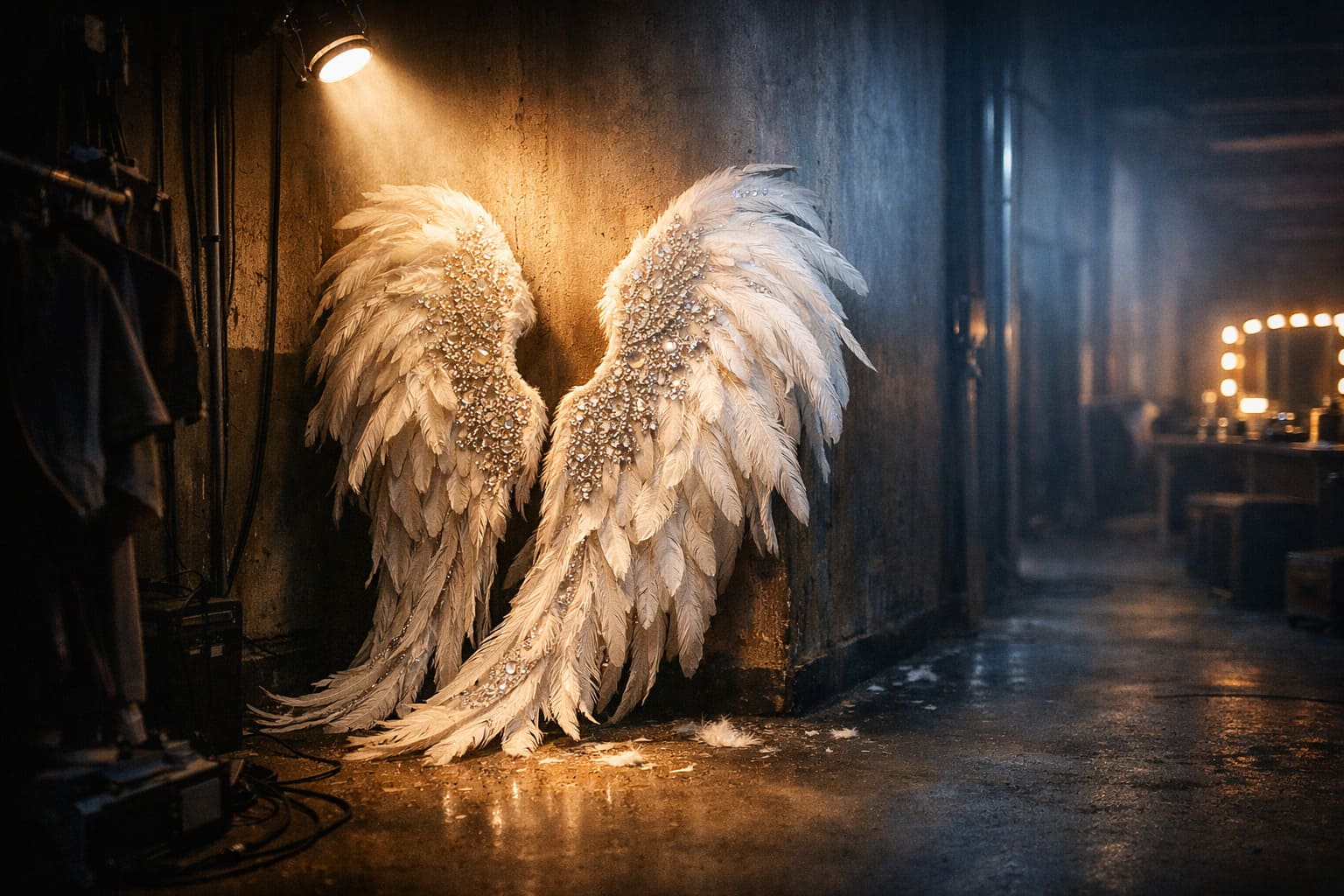
- Elaborate themed "wings" for each Angel
- Celebrity musical performances (from rock bands to pop stars)
- A "Fantasy Bra" valued at millions of dollars (the most expensive: $15 million in 2001)
- Television broadcast attracting millions of viewers worldwide
- The 2001 webcast crashed the internet with 2 million simultaneous viewers
At its peak, the Victoria's Secret Fashion Show was one of the most-watched fashion events in the world.
Market Dominance
By the 2010s, Victoria's Secret controlled an estimated 32% of the U.S. lingerie market — more than the next five competitors combined. L Brands' stock price reflected this dominance.
The Decline: 2016–2020
Changing Values
The cultural ground shifted beneath Victoria's Secret:
- The #MeToo movement (2017) challenged the male gaze that had powered the brand
- Body positivity became mainstream — Victoria's Secret's narrow beauty ideal (tall, thin, mostly white) felt increasingly out of touch
- Competitors like Aerie (American Eagle) stopped retouching models entirely and saw sales increase 20%
- ThirdLove offered half-cup sizing and featured diverse models
- Savage X Fenty (2018) offered sizes 30A to 46DDD with models of every body type
The Epstein Scandal
The Hulu documentary "Victoria's Secret: Angels and Demons" (2022) exposed the relationship between CEO Leslie Wexner and convicted sex offender Jeffrey Epstein:
- Epstein had been Wexner's financial advisor and had unusual access to the company
- Multiple executives reported that Epstein abused his connection to Wexner by posing as a Victoria's Secret model recruiter to approach young women
- The connection between a lingerie brand built on the sexualization of young women and a convicted sex trafficker was devastating to the brand
February 2020: Wexner officially resigned as CEO of L Brands.
The Last Fashion Show
The final Victoria's Secret Fashion Show aired in 2018. Ratings had been declining for years:
- 2001 peak: 12.4 million viewers
- 2018: 3.3 million viewers
The show was cancelled. The Angels program was disbanded. The brand was left without its most visible marketing platform.
The Attempted Reinvention: 2021–Present
Victoria's Secret has attempted to remake itself:
- Replaced Angels with the VS Collective — a group of women including soccer player Megan Rapinoe, actress Priyanka Chopra Jonas, and transgender model Valentina Sampaio
- Expanded size ranges
- Shifted marketing from "sexy for others" to "confidence for yourself"
- July 2025: Introduced the Body by Victoria FlexFactor Bra with titanium underwire and adaptive memory foam — a pivot toward technology and comfort
Whether the reinvention will succeed remains an open question.
Frequently Asked Questions
Who founded Victoria's Secret?
Victoria's Secret was founded in 1977 by Roy Raymond, a Stanford MBA graduate, in San Francisco. He opened the store after feeling embarrassed buying lingerie for his wife in a department store. Leslie Wexner purchased the company for $1 million in 1982 and built it into a multi-billion-dollar brand.
Why did Victoria's Secret decline?
Victoria's Secret declined due to several converging factors: the rise of body positivity and inclusive competitors (especially Savage X Fenty), the #MeToo movement's challenge to the brand's male-gaze marketing, declining ratings for the fashion show, and the scandal involving CEO Leslie Wexner's association with Jeffrey Epstein.
When was the last Victoria's Secret Fashion Show?
The last Victoria's Secret Fashion Show aired in 2018. Viewership had declined from a peak of 12.4 million in 2001 to 3.3 million in 2018. The show was cancelled and has not returned in its original format.
How much was Victoria's Secret bought for?
Leslie Wexner purchased Victoria's Secret from founder Roy Raymond for $1 million in 1982. Within two years, the brand was generating $500 million in annual revenue.