Did Feminists Really Burn Their Bras?
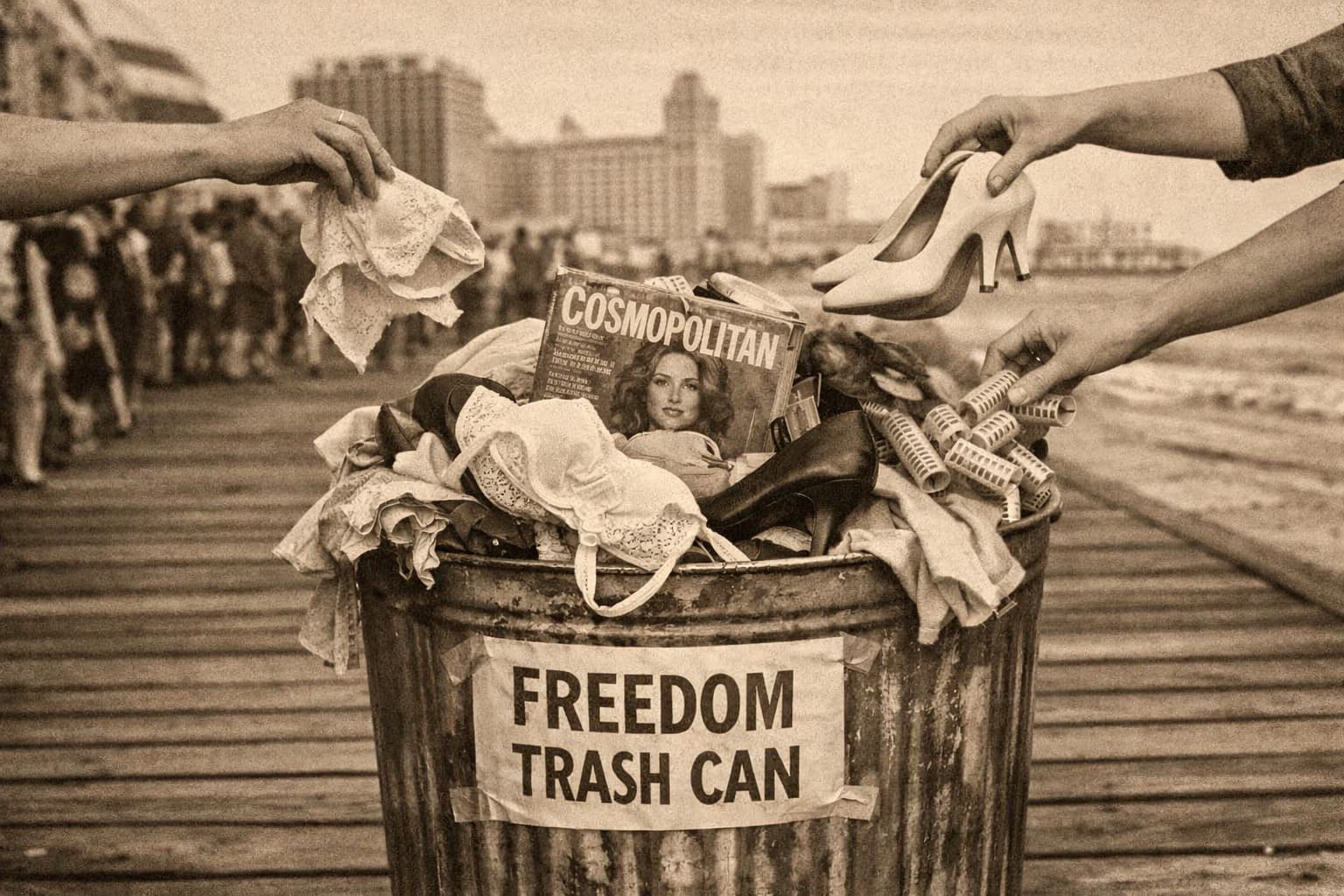
No. Nobody burned a bra at the 1968 Miss America protest — or at any other feminist protest of that era. The "bra-burning feminist" is a myth that originated from a single newspaper reporter's speculation before the event even happened. What actually occurred on September 7, 1968, was a peaceful protest where women threw bras, girdles, and other items into a "Freedom Trash Can" on the Atlantic City boardwalk. Nothing was set on fire because the wooden boardwalk was a fire hazard.
What Actually Happened: September 7, 1968
On the evening of September 7, 1968, approximately 400 women gathered on the Atlantic City boardwalk outside the convention hall where the Miss America Pageant was being held. The protest was organized by the New York Radical Women, a feminist group, and was one of the first major public demonstrations of the second-wave feminist movement.
The Protest Actions
The women carried out several planned protest activities:
-
The Freedom Trash Can: A large metal trash can was placed on the boardwalk. Protesters threw in items they called "instruments of female torture":
- Bras
- Girdles and corsets
- High-heeled shoes
- False eyelashes and hair curlers
- Copies of Cosmopolitan and Playboy magazines
- Mops and pots and pans
-
The Sheep Crowning: Protesters crowned a live sheep as "Miss America" — comparing the pageant to a livestock competition.
-
Signs and Chanting: Protesters carried signs reading "The Degrading Mindless-Boob-Girlie Symbol" and chanted slogans challenging the pageant's beauty standards.
What Did NOT Happen
Nobody burned anything. The Atlantic City boardwalk was constructed entirely of wood, and the city's mayor and police had specifically requested that nothing be set on fire. The protesters complied. The items went into the trash can. The trash can was not ignited.
No bra was removed from a body. No bra was set ablaze. The entire event was peaceful.
How the Myth Spread
The New York Post Connection
Before the protest took place, reporter Lindsy Van Gelder of the New York Post wrote a pre-event article drawing a deliberate parallel between the planned protest and the Vietnam War draft card burnings that were making headlines at the time.
Van Gelder suggested — speculatively, before the event — that protesters would burn bras. She later expressed regret about the comparison, noting that she had been trying to give the protest more gravitas by connecting it to the anti-war movement.
The Amplification
Other New York Post writers reported Van Gelder's speculation as fact. Then syndicated humor columnist Art Buchwald — one of the most widely read columnists in America — wrote a satirical piece about bra-burning that was published in newspapers across the country.
Within weeks, "bra-burning" had become shorthand for feminism in the American media.
Why the Myth Stuck
Author and media scholar Bonnie J. Dow argued that the "bra-burning feminist" image was actively encouraged by opponents of the feminist movement. The image served a specific purpose: it made feminism seem frivolous, silly, and sexually provocative rather than politically serious.
As Dow wrote: "The association between feminism and bra-burning created an image that women were asserting themselves as sexual beings rather than seeking freedom from sexism."
The myth reduced a political movement about workplace equality, reproductive rights, and bodily autonomy to a joke about underwear.
The Real Legacy of the 1968 Protest
Despite the mythologizing, the Miss America protest was genuinely significant:
- It was one of the first mass-media feminist demonstrations in American history
- It introduced concepts like "objectification" and "beauty standards" to mainstream discourse
- It inspired dozens of similar protests across the country in subsequent years
- The phrase "women's liberation" entered the American vocabulary partly through coverage of this event
The irony is that the protest's actual message — that women are valued for their appearance rather than their abilities — was undermined by the very myth that made it famous. People remember the (fictional) bras burning, not the sheep being crowned or the "instruments of torture" being discarded.
The Broader Pattern
The bra-burning myth fits a larger pattern of how women's political movements are trivialized through association with their clothing:
- Suffragettes were mocked for their fashion choices
- Amelia Bloomer's dress reform was ridiculed so intensely she abandoned it
- The 1968 protesters were reduced to "bra-burners"
In each case, public attention focused on what women wore (or didn't wear) rather than what they said.
Frequently Asked Questions
Did anyone ever burn a bra at a feminist protest?
There is no documented instance of bra-burning at any organized feminist protest in the 1960s or 1970s. The entire concept originated from a newspaper reporter's pre-event speculation about the 1968 Miss America protest, where women threw bras into a trash can but never set anything on fire.
Where did the term "bra-burning" come from?
The term originated from reporter Lindsy Van Gelder of the New York Post, who drew an analogy between the planned 1968 Miss America protest and Vietnam War draft card burnings. Her speculative comparison was reported as fact by other journalists and amplified by syndicated columnist Art Buchwald.
What was the 1968 Miss America protest about?
The protest, organized by the New York Radical Women on September 7, 1968, challenged the Miss America Pageant as a symbol of how women were valued primarily for their physical appearance. Protesters threw bras, girdles, cosmetics, and women's magazines into a "Freedom Trash Can" and crowned a live sheep as their alternative "Miss America."