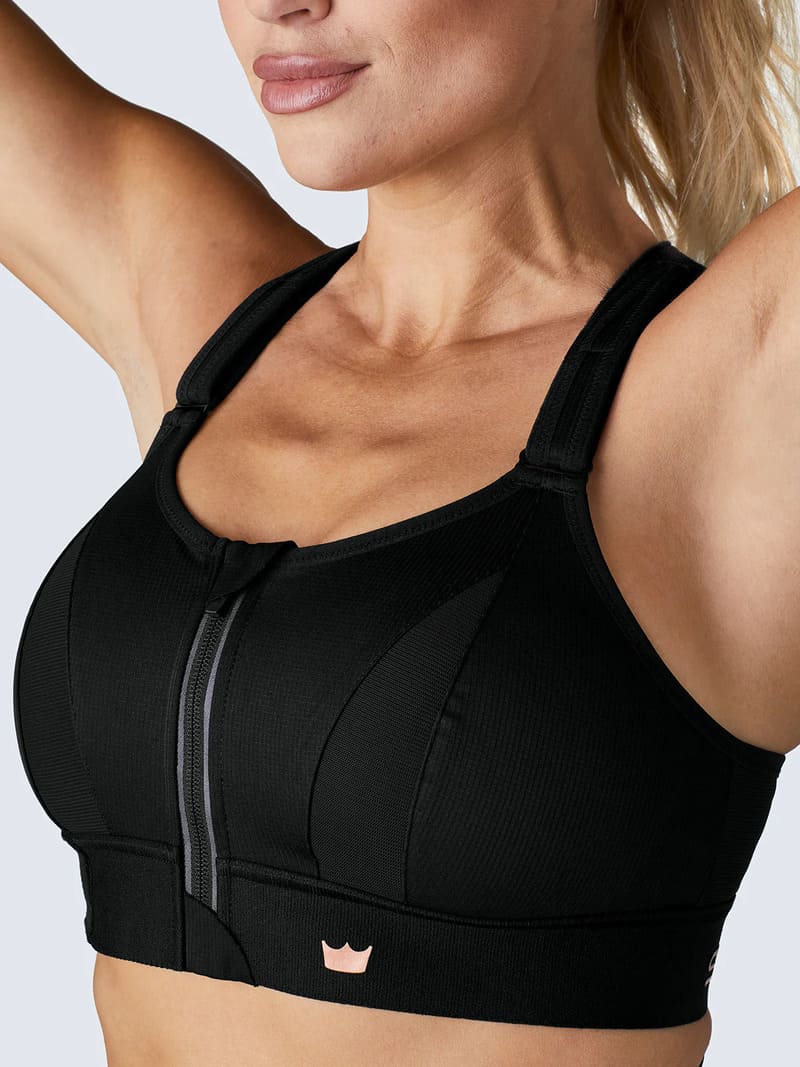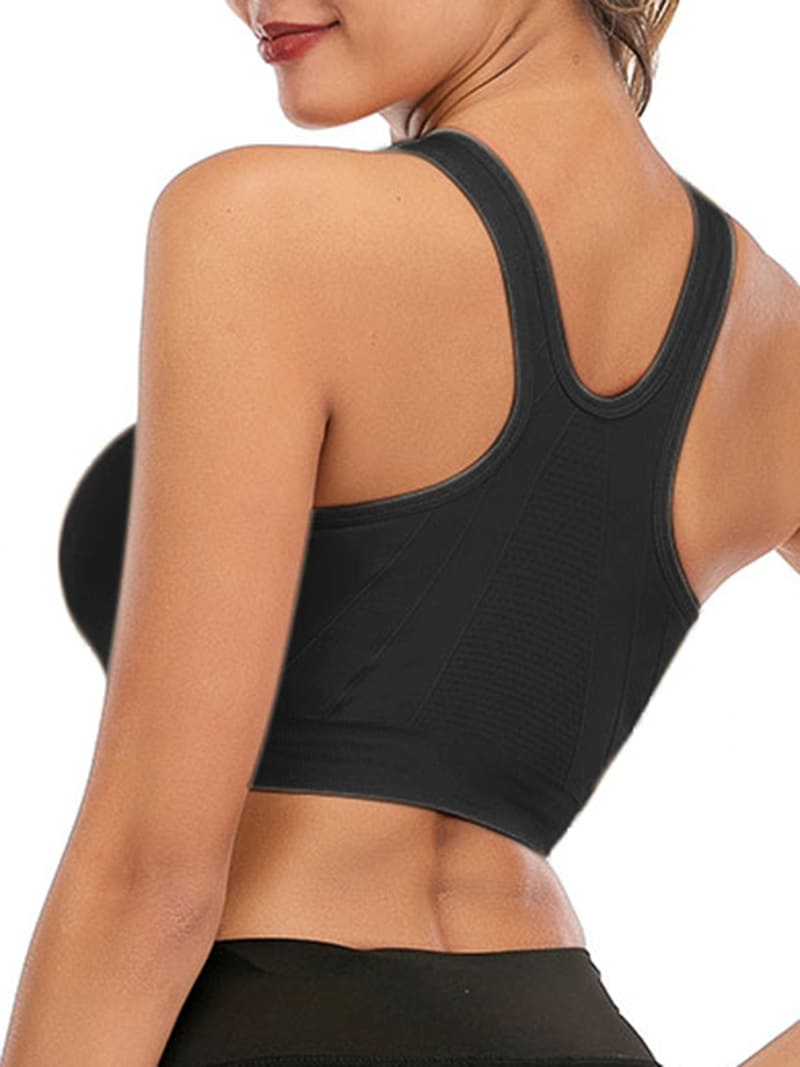
A racerback takes its shape from the racer-back tank top. The straps angle in from the shoulders and meet between the shoulder blades in a Y, T or X, instead of running straight down to the band. The geometry keeps straps from slipping off narrow or sloping shoulders and hides them under tops with the same cut.
Because the straps pull toward the spine, an ordinary hook-and-eye back is hard to place, so most racerbacks pull on over the head or close at the front. Some everyday bras come with a small clip or J-hook that joins two parallel straps into a racerback, a quick fix under a single top.
The construction is standard on sports bras, where the converging straps stay in place through movement, and it has spread to everyday wireless bras and bralettes. The style suits wearers whose straps slip and anyone dressing in sleeveless or athletic clothes. It has no single recorded inventor.
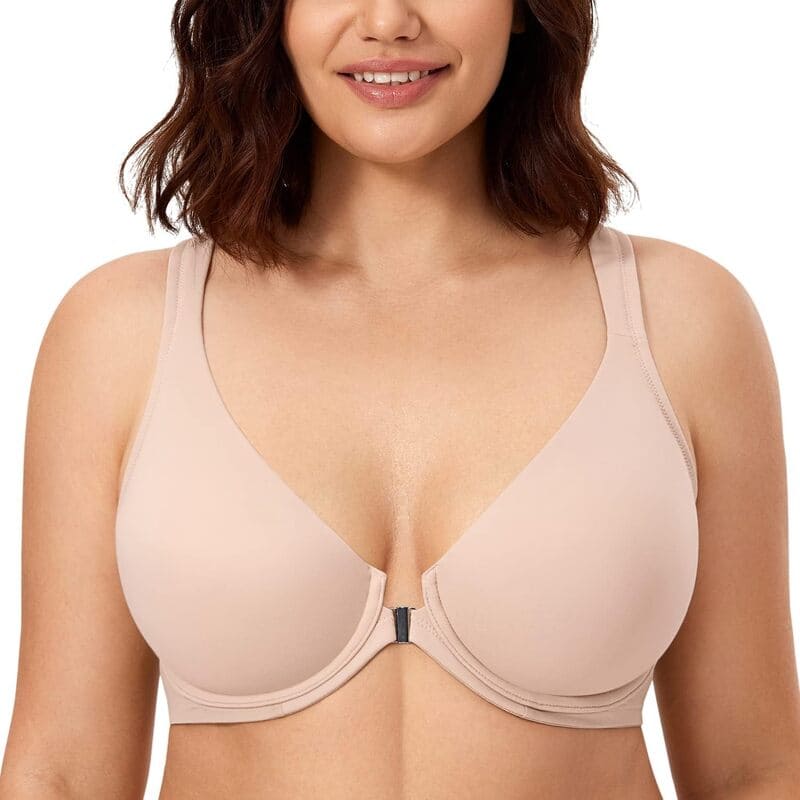
A front-closure bra is often racerback, but the two terms describe different things; check the back for converging straps. A sports bra may be racerback, but it adds a deep band, technical fabric and compression or encapsulation. A halter bra's straps go round the neck instead of meeting at the back.
How to Identify
- Straps meet between the shoulder blades in a Y, T or X
- No parallel straps running straight down to the band
- Pull-on construction or a front closure
- Common on sports bras and wireless styles
- On converted bras, a small clip or J-hook joining two ordinary straps