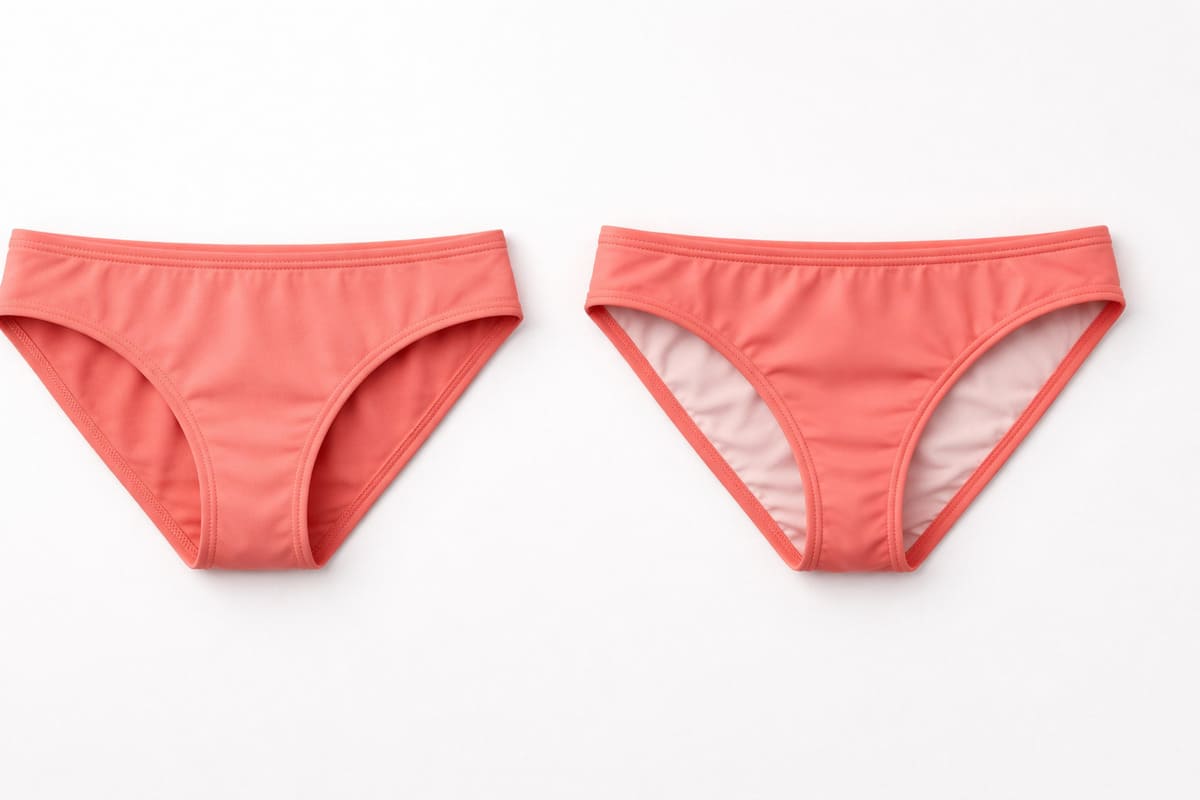
Water is what separates bikini brief vs bikini bottom. A bikini brief is underwear, cut at the hip with full rear coverage and made in cotton, modal, microfiber or lace to be worn under clothes. A bikini bottom is the swimwear version of a similar shape, made in a dense nylon or polyester knit with elastane, usually lined, and built to survive chlorine, salt and sun. Laid side by side on a bed, they can look like twins. In a pool, they behave like strangers.
One name, two industries
Both garments take their name from the same event. On July 5, 1946, the French engineer Louis Réard showed a two-piece swimsuit at the Piscine Molitor in Paris and called it the bikini, after Bikini Atoll, where the United States had tested a nuclear weapon four days earlier. The swim bottom came first. The underwear borrowed the word later for a brief cut at the hip rather than the waist.
Since then the two have developed separately. Swimwear is made by swim specialists, with fabrics and trims chosen for wet use. Underwear is made by lingerie mills, for comfort, breathability and looks under clothes. Many big brands sell both, which is part of why shoppers mix them up.
What changes when it gets wet
Fabric
Underwear fabrics are chosen to absorb. Cotton and modal pull moisture away from the skin, which is comfortable on land. In water they soak up their own weight, sag, and dry slowly. Thin, light-colored cotton also becomes see-through when wet.
Swim fabrics are chosen to resist water. A tight nylon or polyester knit holds less water, keeps its shape when wet and dries far faster.
Elastane and chlorine
Both garments rely on elastane, the stretch fiber that DuPont developed in 1958 and sold as Lycra. Standard elastane, however, is vulnerable to chlorine. In pool water it gradually loses its snap, and the garment sags. Swim fabrics therefore often use chlorine-resistant versions. Lycra Xtra Life, for example, is marketed as resisting chlorine, sunscreen and UV and lasting up to ten times longer than unprotected spandex, according to its maker.
Lining
A bikini bottom is normally lined at the front, and often all over, so it stays opaque when wet. A bikini brief usually has only a gusset lining, which is all it needs on land.
The two garments compared
- Purpose. Brief: daily wear under clothes. Bottom: swimming, beach, pool.
- Fabric. Brief: cotton, modal, microfiber, lace. Bottom: dense nylon or polyester with elastane.
- Lining. Brief: gusset only. Bottom: front or full lining.
- When wet. Brief: absorbs, sags, may turn sheer. Bottom: stays opaque and holds shape.
- Breathability on land. Brief: high. Bottom: lower.
- Fit. Brief: soft, light grip. Bottom: firmer, to stay put in waves.
Can one stand in for the other?
Swimming in underwear
Possible, but rarely a good idea. Cotton sags and may become see-through; lace can snag; and the elastane in most lingerie is not made for chlorine. A single dip will not ruin it, but regular pool use will.
Wearing swim bottoms as underwear
More workable. A bikini bottom is opaque, stretchy and quick-drying, and travelers sometimes pack it as a spare. The downsides are breathability and bulk: lined swim fabric is warmer than cotton, and its thicker edges can show under fitted clothes. It is a fine stopgap rather than a daily choice.
Telling them apart off the hanger
When the tag is missing, these checks work well:
- Feel the fabric. Swim fabric is smoother, denser and slightly slippery. Underwear fabric is softer and lighter.
- Look inside. A full or front lining suggests swimwear. A small cotton gusset suggests underwear.
- Check the gusset. Underwear gussets are usually cotton. Swim bottoms rarely have a separate cotton gusset.
- Read the label. Swim care labels typically tell you to rinse after chlorine or salt water.
Why our database keeps them apart
Bikini briefs and bikini bottoms often appear in the same brand catalogs, sometimes on the same page. Our classifier separates them so a search for underwear does not return swimwear and the other way around. For the bikini brief's closest underwear relative, see our bikini brief vs hipster comparison.
The garment Réard showed in 1946 was made to be photographed by the water. Eighty years on, its underwear cousin is still the one doing the everyday work.