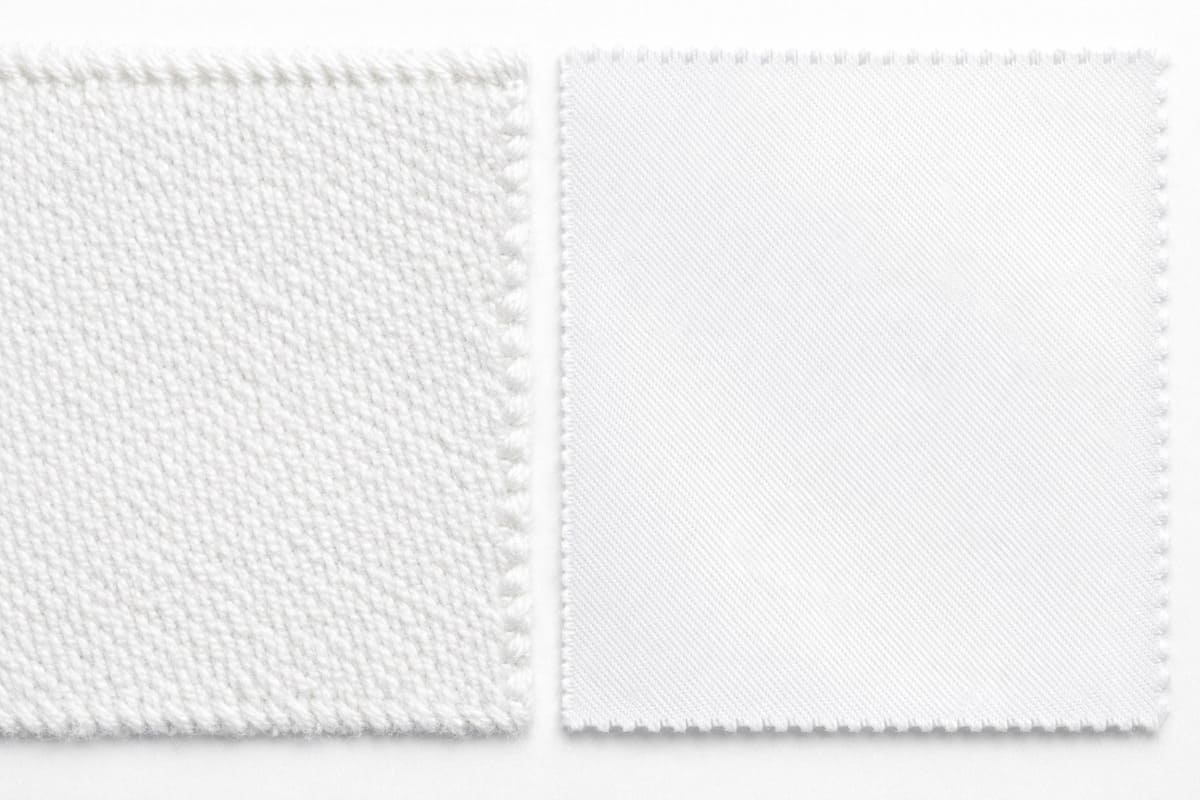
In the cotton vs microfiber choice, cotton is the natural plant fiber that breathes and absorbs, and microfiber is a synthetic, nylon or polyester spun finer than one denier, that stays smooth, thin and quick to dry. For a brief worn all day at home, cotton is the safer pick. For a bra or brief that must vanish under a fitted dress, microfiber is the one built for the job. Most people end up owning both, and the better microfiber briefs quietly include a cotton gusset anyway.
What "microfiber" actually means
The word gets used as if it were a fabric. It is really a fiber size. A microfiber is a synthetic filament finer than one denier, or one decitex, which works out to less than ten micrometers across. Polyester and polyamide (nylon) are the usual polymers.
The technology is Japanese. Miyoshi Okamoto at Toray Industries experimented with ultra-fine fibers in the 1960s, and Ultrasuede, one of the first commercial successes, reached the market in the 1970s. Microfibers got their wider public moment in Sweden in the early 1990s and spread through Europe from there.
In lingerie, those fine filaments are usually warp knitted into tricot, often with elastane. Tricot has a smooth face, resists runs, and has been used in slips, panties and bra linings for decades. So "microfiber" on a lingerie tag normally means a fine nylon-elastane or polyester-elastane knit, not a woven cloth. The old idea of microfiber as a "weave" is worth dropping.
Cotton, for comparison, is a staple fiber: short natural hairs spun into yarn. In underwear it is almost always knitted as jersey, a distinction covered in cotton vs jersey knit.
Cotton vs microfiber: a scorecard for everyday underwear
Breathability: cotton. Air moves through spun cotton yarn easily, and the fiber absorbs sweat into itself.
Drying speed: microfiber. Synthetic filaments hold little water, so damp microfiber dries fast. That makes it the usual base for sports underwear.
Invisibility: microfiber. It is thin, smooth and can be laser cut or bonded at the edges with no elastic, so lines under clothing are slight. Cotton jersey is thicker and its edges need elastic or binding.
Softness on skin: a draw. Brushed cotton and fine microfiber are both soft. They feel different: cotton dry and matte, microfiber cool and slippery.
Shape retention: microfiber. Nylon and elastane recover well after stretching. Cotton jersey can bag at the seat by evening unless it has elastane in it too.
Sensitive skin and intimate health: cotton. Gynecologists regularly advise cotton underwear, or at least a cotton crotch lining, because cotton absorbs moisture and traps less heat. That is why so many microfiber and lace briefs still carry a cotton gusset.
Color: microfiber. Synthetic fibers take bright and dark dyes evenly and hold them through washing. Cotton is more prone to fading.
How to tell them apart
Look first, then touch. Cotton has a soft, matte, slightly fuzzy face, and older pieces pill. Microfiber looks almost featureless, with a faint sheen, and feels cool and slippery. Then check the tag. Microfiber pieces list polyamide or polyester as the main fiber, usually with 10 to 20 percent elastane.
Where each one belongs
Cotton: sleep and lounge briefs, everyday bralettes, anything worn on a hot day without much clothing on top, and anyone prone to irritation.
Microfiber: T-shirt bras with smooth molded cups, invisible briefs under thin trousers or bodycon dresses, shapewear and sports underwear.
The hybrid that most people buy
A microfiber brief with a cotton gusset is the market's compromise, combining a smooth outside with breathable cotton at the point of most contact. When a brand advertises "cotton lined", that is what it means.
The neighbouring comparison, microfiber vs satin, covers the two smooth synthetics. For the fibers themselves, see the cotton and microfiber entries. The detail that surprises most shoppers is that the fabric marketed as modern and invisible has its roots in a 1970s Japanese suede substitute.
Last updated
Questions
Is microfiber underwear breathable?
Less than cotton. Air moves easily through spun cotton yarn, and the fiber absorbs sweat into itself, which is why cotton wins on breathability. Microfiber's strength is drying speed: its synthetic filaments hold little water, so damp microfiber dries fast. Many microfiber briefs add a cotton gusset to get breathable cotton at the point of most contact.
What is microfiber made of?
Microfiber is a fiber size rather than a fabric. It is a synthetic filament, usually polyester or polyamide (nylon), finer than one denier, which is less than ten micrometers across. In lingerie the filaments are usually warp knitted into tricot, often with elastane, so a microfiber tag normally means a fine stretch knit, not a woven cloth.
Do gynecologists recommend cotton underwear?
Yes. Gynecologists regularly advise cotton underwear, or at least a cotton crotch lining, because cotton absorbs moisture and traps less heat. That is why so many microfiber and lace briefs still carry a cotton gusset, and why a brand advertising a brief as cotton lined usually means microfiber outside with cotton at the crotch.
Which underwear is best under tight clothes?
Microfiber. It is thin and smooth, and its edges can be laser cut or bonded with no elastic, so lines under clothing are slight. Cotton jersey is thicker and needs elastic or binding at the edges. That makes microfiber the usual choice for T-shirt bras, invisible briefs under bodycon dresses and shapewear.
Does cotton underwear stretch out?
Cotton jersey can bag at the seat by evening unless it has some elastane in it. Nylon and elastane recover well after stretching, so microfiber holds its shape better. Microfiber also takes bright and dark dyes evenly and keeps them through washing, while cotton is more prone to fading and older pieces tend to pill.
Sources
- en.wikipedia.org: Microfiber
- en.wikipedia.org: Warp knitting
- thelingerieaddict.com: 5 most common lingerie fabrics
- thehealthy.com: healthiest womens underwear gynecologists
Discussion
Loading...