The Short Answer
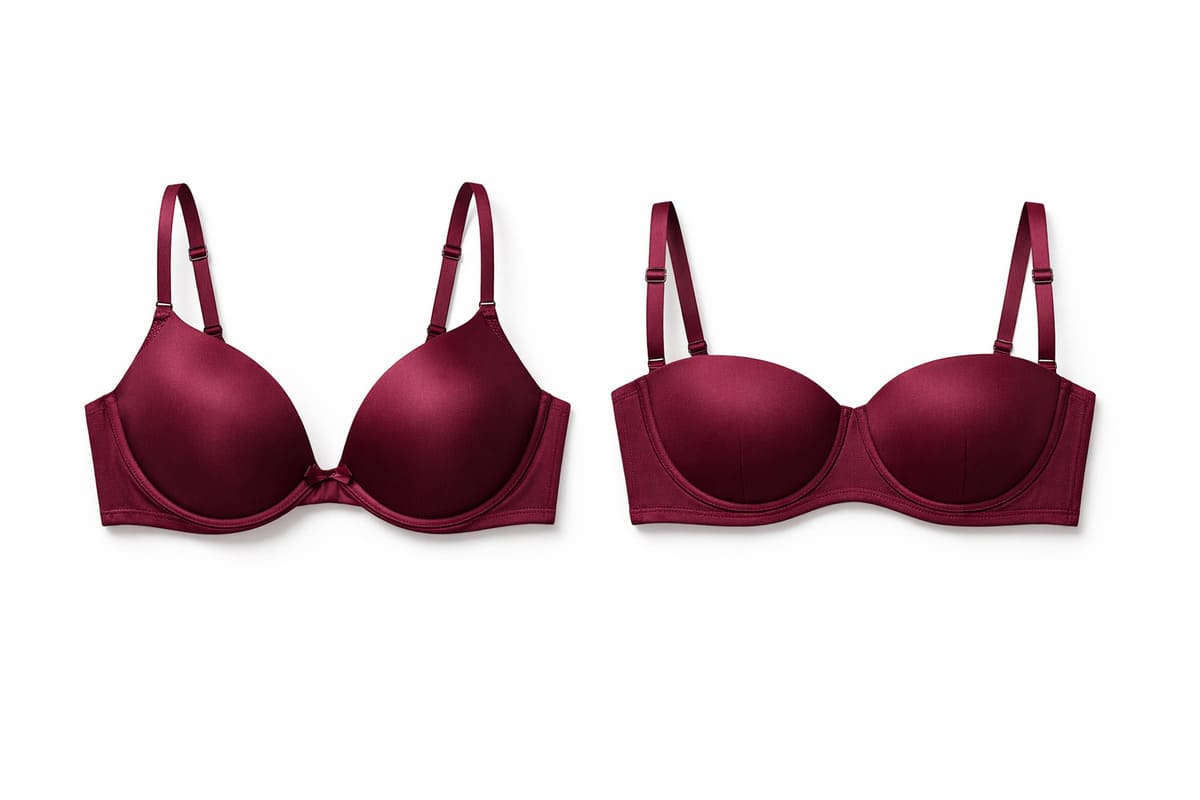
A plunge has a deep V-shaped center gore that dips low between the cups — designed for V-necklines and wrap dresses. A balconette has a horizontal upper cup edge with wide-set straps — designed for square, off-shoulder, and boat necklines. Both are low-coverage styles, but they expose different areas and complement different garment shapes.
Construction Side by Side
| Feature | Plunge | Balconette |
|---|---|---|
| Center gore | Deep V or U shape | Short, standard height |
| Upper cup edge | Angled inward toward V | Horizontal / straight |
| Strap placement | Slightly outward | Far outer corners |
| Neckline shape created | V-shaped | Square-ish |
| Cleavage style | Center cleavage emphasized | Lifted, separated look |
| Coverage | Low at center, moderate at sides | Low and even across |
How to Tell Them Apart
Look at the center gore first. If it dips into a deep V — plunge. If it's short but standard — look at the upper edge. If that edge is straight and horizontal with straps at the far outer corners — balconette.
The neckline shape they create is the real distinction: plunge = V-shape, balconette = horizontal shelf.
When to Wear Each
Plunge: Under wrap dresses, deep V-necks, button-down shirts worn partially open, and any garment that dips at the center of the chest.
Balconette: Under square necklines, off-shoulder tops, boat necks, and Bardot styles. The horizontal cup edge sits perfectly parallel to these straight necklines.
A Common Mistake
Many people buy a plunge when they need a balconette, and vice versa. The test: look at your garment's neckline. If it dips in a V at the center — you need a plunge. If it runs straight across — you need a balconette. Matching the bra shape to the neckline shape is the whole game.