The Short Answer
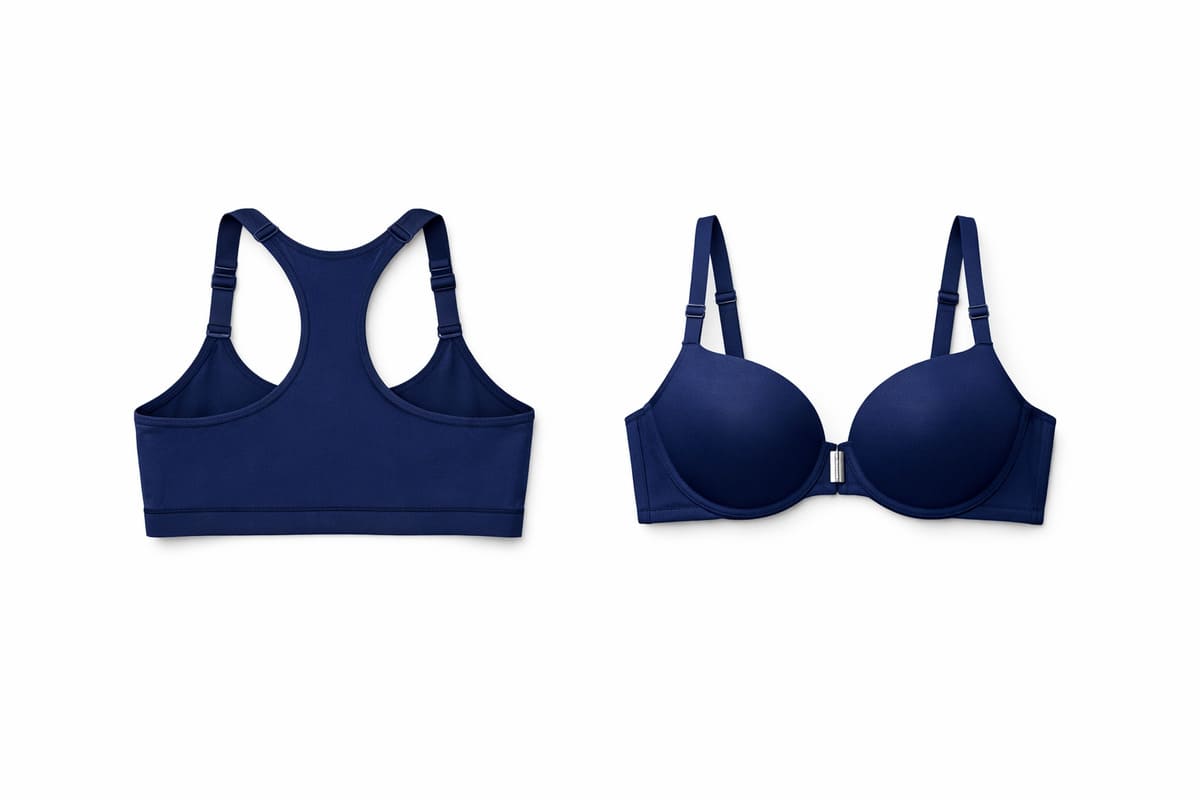
A racerback has straps that converge toward the center of the upper back in a Y or T shape. A front-closure has its hook or clasp between the cups instead of at the back. They're often combined (most racerbacks have front closures because a back closure would fight the strap angle), but each can exist independently.
Construction Side by Side
| Feature | Racerback | Front-Closure |
|---|---|---|
| Defining feature | Strap geometry (Y/T at back) | Closure position (center front) |
| Straps | Converge at upper back | Any arrangement |
| Back | Smooth (usually no hooks) | Smooth (hooks are at front) |
| Closure | Front-closure or pull-over | Clasp, hook, or clip at center front |
| Best under | Racerback tanks, open-back tops | Any top (easier to put on) |
| Accessibility | Standard | Excellent — no reaching behind |
How to Tell Them Apart
Look at the back: if the straps converge — racerback. Look at the front: if the clasp is between the cups — front-closure. A bra can be one, both, or neither.
Common combinations:
- Racerback + front-closure: The most common pairing. The converging straps demand a smooth back, so the closure moves to the front.
- Racerback + pull-over: Sports bras often use this — no closure at all, just stretch fabric.
- Front-closure + regular straps: Exists for accessibility — people with limited shoulder mobility who can't reach behind their back.
When to Wear Each
Racerback: Under racerback tank tops, open-back garments, and athletic wear. The converging straps stay hidden behind narrow-back garments.
Front-closure: When ease of dressing is the priority — arthritis, shoulder injuries, post-surgery recovery, or simply preferring not to fumble behind your back. Also creates a clean back silhouette under fitted tops.