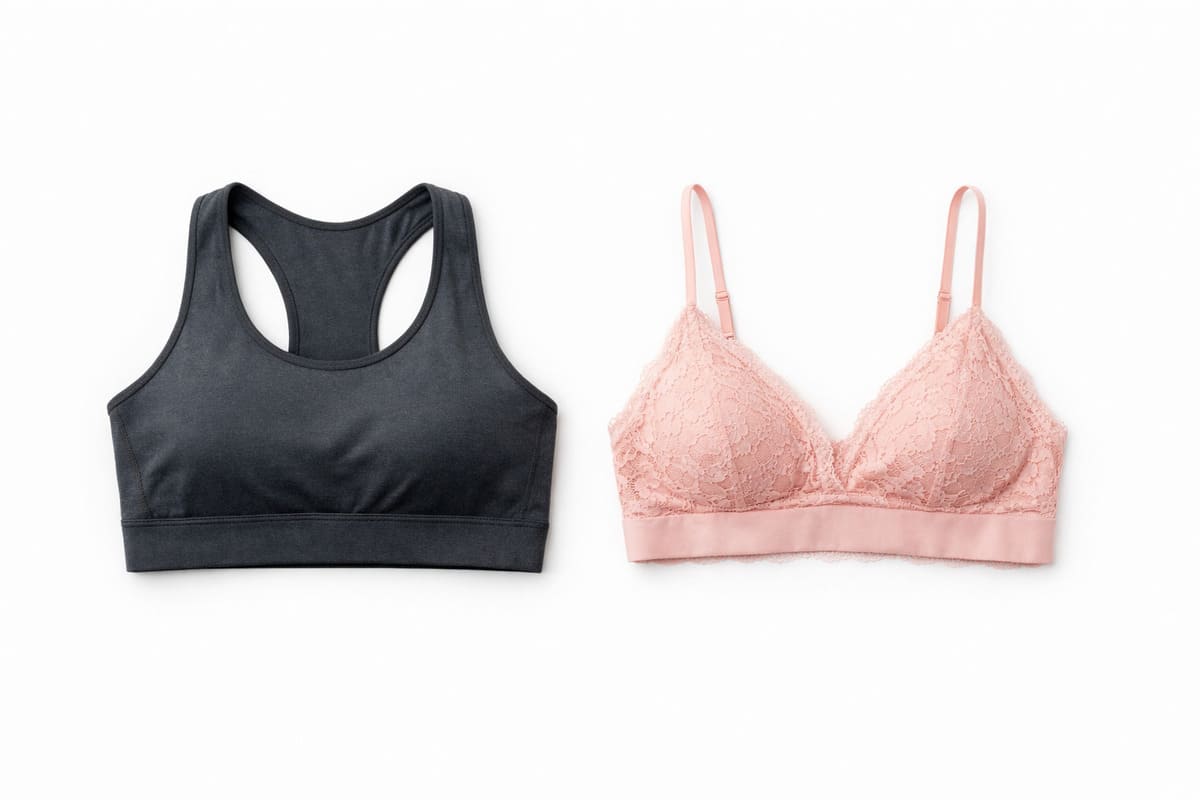
The Short Answer
A sports bra is performance gear — thick straps, wide underband, compression or encapsulation engineering, moisture-wicking fabric. A bralette is a comfort piece — thin straps, soft fabric, zero compression, decorative rather than functional. Both are wireless, but their purpose and construction are worlds apart.
Construction Side by Side
| Feature | Sports Bra | Bralette |
|---|---|---|
| Straps | Wide, thick (often racerback) | Thin, delicate |
| Underband | Broad, reinforced elastic | Narrow, soft elastic |
| Fabric | Moisture-wicking synthetic | Lace, mesh, knit, cotton |
| Support method | Compression and/or encapsulation | None — fabric drapes |
| Closure | Often pull-over | Pull-over, hook, or clasp |
| Intended activity | Exercise and impact | Rest and light activity |
| Price range | $25–80 | $10–45 |
How to Tell Them Apart
The straps and underband tell the whole story. If the straps are thick enough to support weight and the underband is a wide, reinforced elastic — it's a sports bra. If the straps are thin and decorative and the underband is a soft, narrow elastic — it's a bralette. The fabric confirms: athletic synthetics versus lace and cotton.
Can You Use One as the Other?
Bralette as sports bra: Only for very low-impact activity (yoga, walking) and only for smaller cup sizes (A–B). A bralette provides zero bounce control.
Sports bra as bralette: Technically works for lounging, but the thick fabric and compression make it less comfortable for all-day wear. Some people do sleep in light sports bras, but a bralette is softer against the skin.
When to Wear Each
Sports bra: Any exercise. Running, gym, cycling, dance — anything where breast movement would be uncomfortable or cause tissue damage over time.
Bralette: Lounging, sleeping, under casual outfits where you want minimal support without going braless. The aesthetic layer for visible-bra looks.