The Short Answer
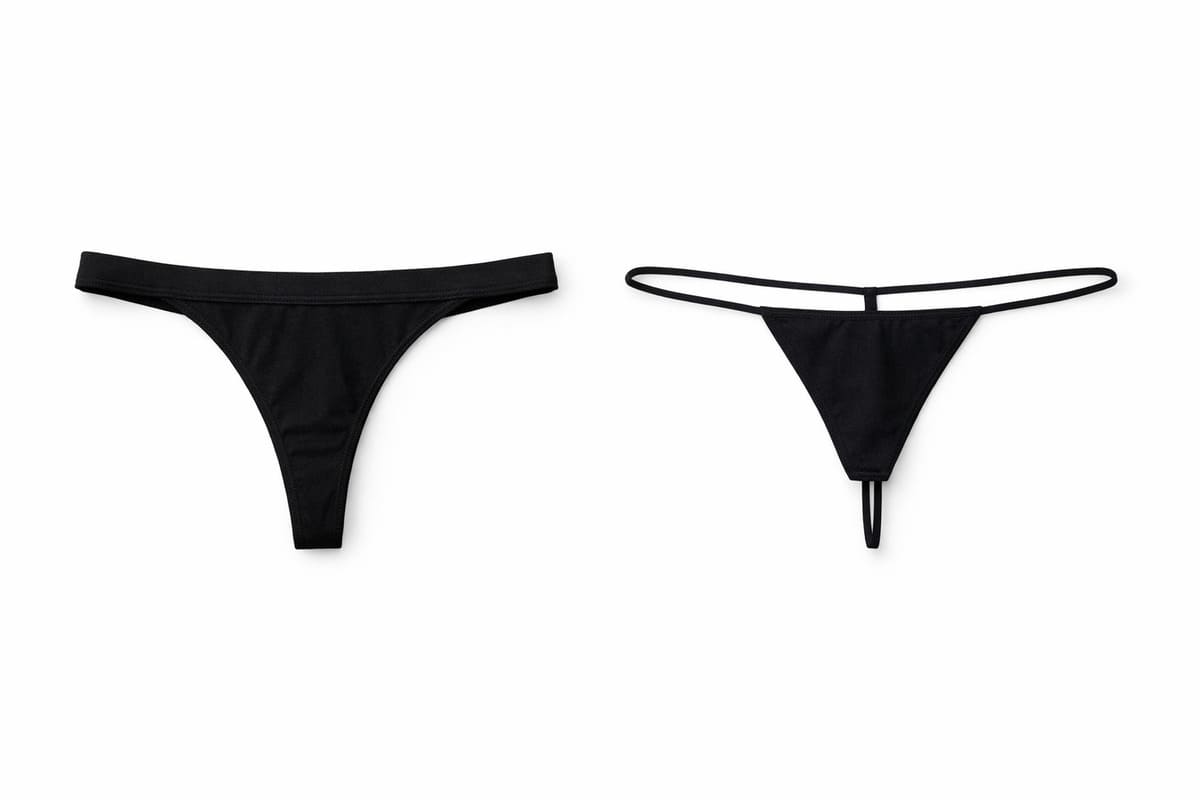
A thong has a narrow fabric strip (1–2 cm wide) running between the cheeks, while a G-string replaces that strip with a literal string or thin cord. Both eliminate visible panty lines, but the G-string uses less material and provides even less rear coverage.
Construction Side by Side
| Feature | Thong | G-String |
|---|---|---|
| Back | Narrow fabric strip (1–2 cm) | Thin string or elastic cord |
| Front panel | Standard triangular panel | Smaller, minimal panel |
| Waistband | Regular elastic waistband | Often string waistband too |
| Coverage | Minimal — essentially bare | Ultra-minimal — less than a thong |
| Material used | More fabric than a G-string | Least fabric of any panty style |
How to Tell Them Apart
The test is simple: look at the back. If there's a narrow strip of fabric connecting the front to the waistband — it's a thong. If that connector is a cord, string, or thin elastic with no fabric width — it's a G-string.
When to Wear Each
Thong: The everyday invisible-panty-line solution. Works under fitted pants, skirts, and dresses. The fabric strip sits flat and doesn't shift as much as a string.
G-string: When even a thong would show — ultra-tight dresses, sheer fabrics, or as a lingerie statement piece. Less comfortable for all-day wear because the string can shift and dig.
History
The thong as mainstream underwear dates to the 1990s, driven by the low-rise jeans trend that made regular panty lines unacceptable. The G-string is older — the name comes from 19th-century vaudeville costumes (the "gee-string"), and it became swimwear in Brazil decades before it appeared in Western lingerie drawers.
Which Is More Popular?
Thongs outsell G-strings by a wide margin. They hit the sweet spot between invisibility and comfort. G-strings are a niche within the niche — for occasions where maximum invisibility matters or as lingerie for visual impact rather than daily wear.