The Short Answer
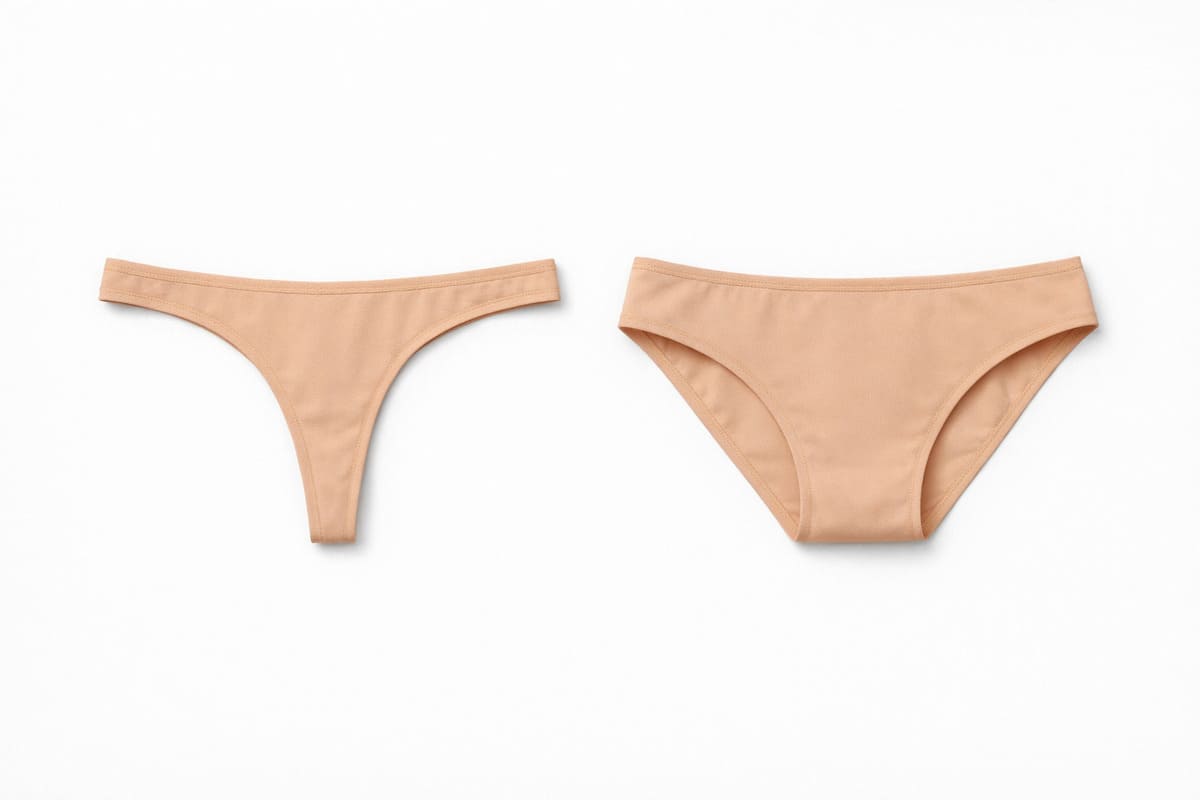
A thong has a narrow strip at the back with essentially zero rear coverage. A tanga has a wider back panel that covers part of the cheeks — typically the upper half — while still being cut higher on the sides than a standard bikini brief.
Construction Side by Side
| Feature | Thong | Tanga |
|---|---|---|
| Back coverage | Near zero — narrow strip | Partial — covers upper cheeks |
| Side cut | Standard or high-cut | High-cut (narrower at hips) |
| Front panel | Standard triangle | Similar to thong, sometimes wider |
| VPL risk | Very low | Low to moderate |
| Comfort | Less coverage = less to adjust | More coverage = more comfortable for most |
How to Tell Them Apart
Hold them up and look at the back. A thong has a narrow strip — maybe 1–2 cm of fabric. A tanga has an actual back panel — smaller than a bikini brief but clearly wider than a strip. You can see the fabric covering a meaningful portion of the rear.
Regional Naming
This is where it gets confusing. In Brazil and Latin America, "tanga" is the standard word for what English speakers call a bikini brief. In European lingerie, "tanga" specifically means the partial-coverage style described here — more than a thong, less than a bikini. Some brands use "tanga" and "cheeky" interchangeably.
When shopping online, always check the product photo rather than relying on the name.
When to Wear Each
Thong: Maximum invisibility under clothing. Better under very fitted or thin fabrics.
Tanga: The comfort upgrade from a thong without going full bikini. Good under moderately fitted clothing where a thong feels like too little but a bikini brief would show lines.