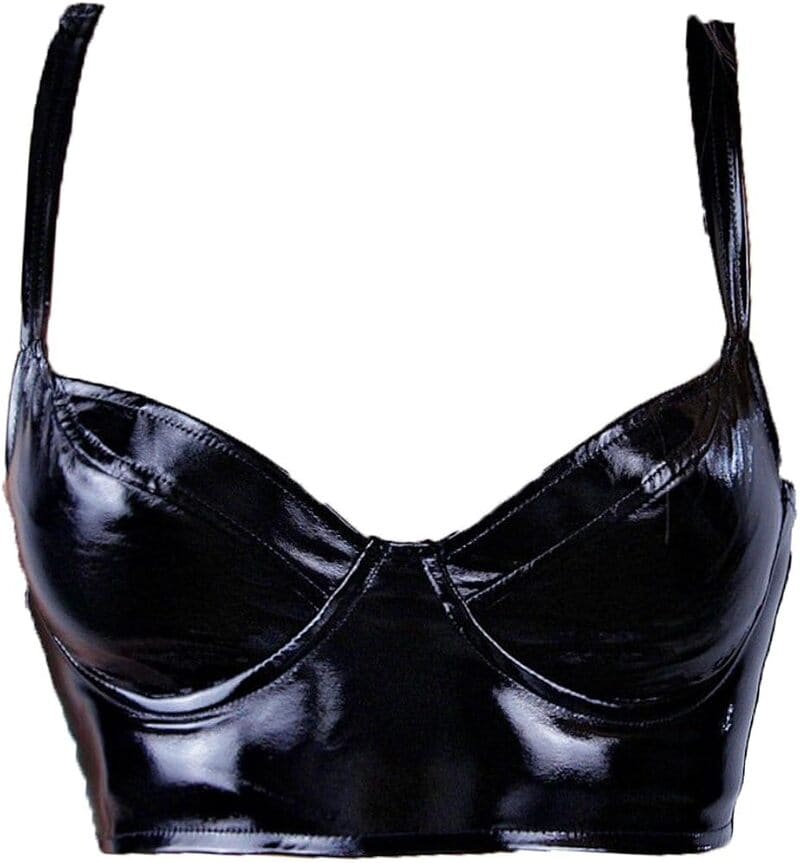
This class groups four materials that a camera cannot reliably tell apart: genuine leather, faux leather made from polyurethane (PU), vinyl made from polyvinyl chloride (PVC), and latex, a sheet of natural or synthetic rubber. All of them form a continuous skin with no visible weave, hold their own shape, and range from satin-matte to mirror-gloss.
They differ in construction. Leather is tanned hide, cut and stitched. PU and PVC are plastic coatings on a knitted backing; stretch vinyl uses a stretchy knit so it can be made into close-fitting bodysuits. Latex is not sewn at all: panels of sheet rubber are joined with glue, and the high shine usually comes from a silicone-based polish applied before wearing.
The look moved from private catalogs into popular culture in the mid-20th century. British designer John Sutcliffe founded AtomAge in 1957, nominally making weatherproof clothing for women motorcycle passengers; its first catalog appeared in 1965. Diana Rigg's leather catsuits in the television series The Avengers in the 1960s brought the style to a mass audience. Fashion lingerie has borrowed from it ever since in harnesses, corsets, bustiers, bodysuits and bralettes.
These materials suit statement pieces worn for effect rather than comfort. None of them breathes, latex needs talc or lubricant to dress, and PVC and latex can tear at stress points. The classifier keeps them as one class because photographs show the same thing: an opaque, glossy, stiff surface with sharp highlights. Satin can look similar in black, but it drapes and folds softly, and its sheen runs in bands rather than mirror reflections.
How to Identify
- Opaque, continuous surface with no weave, knit or pile visible
- Sharp mirror-like highlights on PVC and polished latex
- Stiff panels that wrinkle or crease rather than drape
- Glued or bonded seams on latex, stitched seams with piping on leather and PU
- Mostly black or red, sometimes metallic, often with zips, buckles or O-rings
Last updated