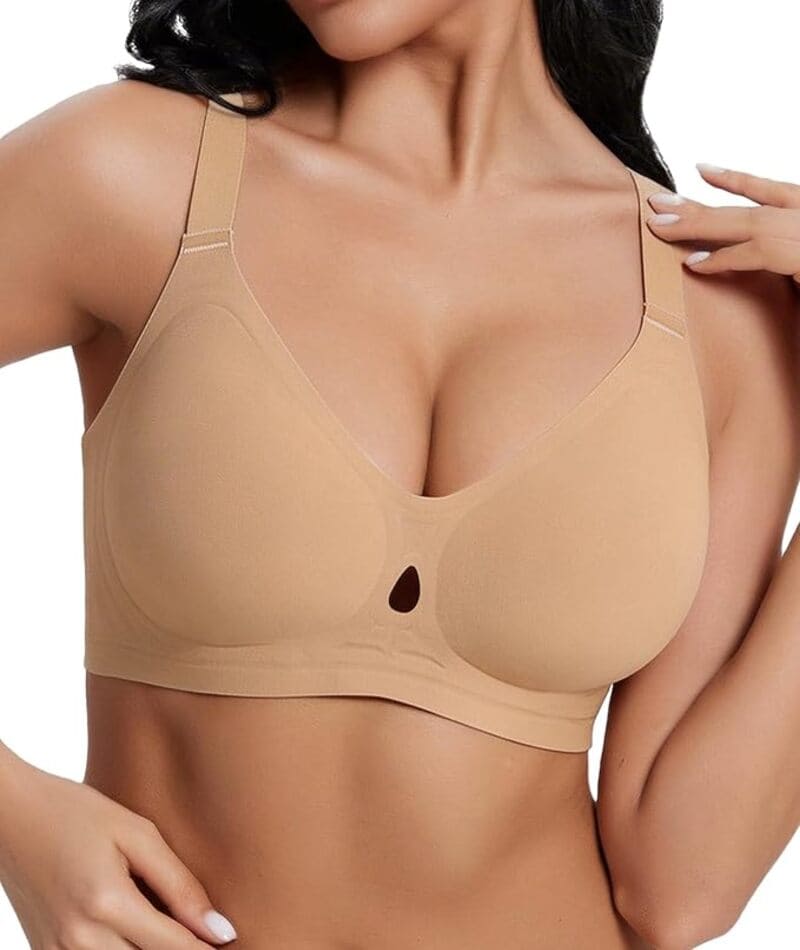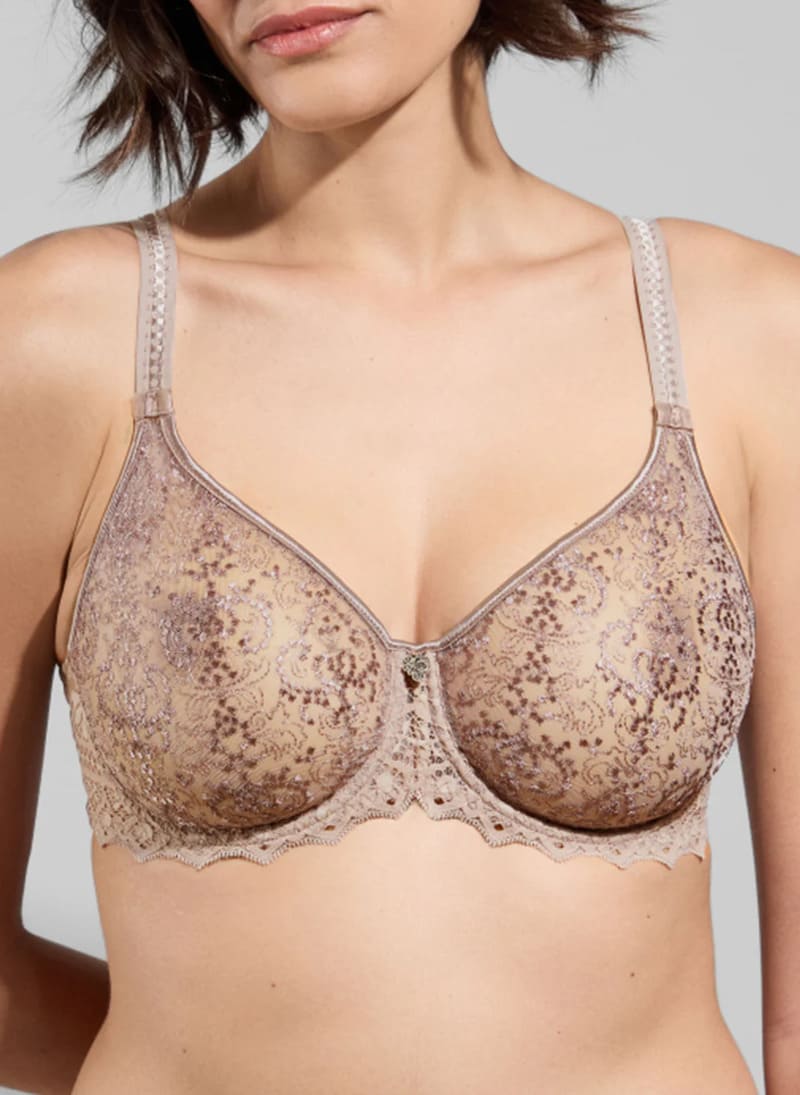
Underwire is a construction feature, not a silhouette. A U-shaped wire of steel or plastic runs inside a fabric channel along the bottom and side of each cup, holding the base of the cup against the ribcage. The wire lifts and separates the breasts and stops the band riding up. Most T-shirt, push-up, plunge, balconette, demi and full cup bras are wired, so this site uses underwire as a fallback class for wired bras whose silhouette is hard to read from a photo.
A well-fitted wire sits on the ribcage, around the breast tissue rather than on it. The width of the wire has to match the root of the breast; a wire that is too narrow sits on tissue and digs in, which is the usual complaint about underwire.
The idea is old. Marie Tucek of New York patented a breast supporter in 1893 with separate cups on a rigid metal support. In 1931 Helene Pons patented a brassiere with an open-ended wire loop around the base and sides of each breast, and a 1938 patent to Pauline Boris used wire to encircle each breast completely. Underwire bras only went mainstream in the 1950s, once metal was available again after the Second World War.
A T-shirt bra is almost always wired but is classed by its molded cup. A full cup is wired too and is classed by its coverage. When a photo shows a wire and nothing else distinctive, the bra falls here.
How to Identify
- Curved wire outline visible along the base of each cup
- Narrow fabric channel stitched under each cup
- Cup base keeps its U-shape when the bra lies flat
- Wire ends rising toward the underarm and the center gore
- Stiff center gore where the two wires meet or nearly meet
The wire gets blamed for almost every bra complaint, from digging at the side to poking through after a year. In most cases the wire is the wrong width for the wearer, or the cup is the wrong size, and the steel is only the messenger.
Finding where your wire should sit
Before judging any underwire, find your inframammary fold, the crease where the underside of the breast meets the chest. The wire should follow that fold and lie on bone, not on breast tissue. Lean forward, scoop the tissue from under each arm into the cup, then stand up straight. Now run a finger along the wire:
- At the center, it should sit flat against the sternum.
- At the side, the wire end should rest behind the breast tissue, roughly in line with the middle of your armpit.
- Nowhere should it sit on soft tissue. If you can feel breast under the wire at the side, the cup is too small or the wire too narrow.
Seen from the side, the band should run level round the body. If the back rides up, the wire tilts forward and loses contact with the ribcage, which is when it starts to dig.
Wire width, depth and the height of the gore
Bras with the same label size can use very different wires. Wide-set breasts with a broad root need a wide wire. Close-set breasts often need a narrower wire and a low center gore, because a tall gore will not lie flat between them. Shallow breasts, with tissue spread over a wide area, tend to suit a shorter wire that does not reach high under the arm.
A wire that stabs the armpit is usually too tall for your shape rather than too wide. Try a lower-cut style such as a balconette before changing size. A center gore that floats off the chest almost always means the cups are too small, not that the wire is wrong.
Full-bust specialists put the most thought into wire shapes, because a heavy breast shows a bad wire faster. Bravissimo, founded in 1995 by Sarah Tremellen and Hannah Griffiths, sells only D to L cups, and Panache wraps the wires of its underwired sports bra in silicone before sewing them between fabric layers.
Steel, plastic and memory wire
Steel accounts for roughly 70 percent of the market. It is firm and predictable, and it springs back after flexing. Plastic wires exist but are rare, because they give less support and bend out of shape. Some bras use nickel titanium, a shape memory alloy that bends with the body and returns to its curve.
If you react to nickel, check the label. Metal that works through worn fabric can irritate skin in people sensitive to it, so wire-free styles or coated wires are worth considering. A wireless bra with a firm band and seamed cups is the usual alternative.
Keeping wires inside the channel
A wire breaking out of its casing is a laundry problem more often than a manufacturing one. Machine agitation bends the wire back and forth until the tip wears through the channel fabric. To slow that down:
- Hand wash, or use a mesh laundry bag on a delicate cycle.
- Fasten the hooks before washing so they cannot snag the channel.
- Never tumble dry; heat weakens the casing and warps plastic tips.
- Reshape the cups while damp and dry flat.
When a wire end does poke through, stop wearing the bra. A protruding wire can scrape or cut the skin. A patch of moleskin or a few stitches buys a few more wears, but the channel is finished.
Underwire at the airport
The TSA advises against wearing underwire bras through airport security because steel can set off metal detectors, though whether it does depends on the wire and the scanner. If you would rather avoid the extra pat-down, travel in a soft wire-free bra and pack the wired ones in your bag. Plastic-framed bras are another way round it.
Shop
See underwire bra styles on AmazonAs an Amazon Associate we earn from qualifying purchases. It does not change what we write.
Sources
- en.wikipedia.org: Underwire bra
- en.wikipedia.org: Brassiere measurement
- en.wikipedia.org: Bravissimo (company)
- hourglasslingerie.net: panache 5021 underwire sports bra
Last updated