Boux Avenue is a British lingerie chain founded by the retail entrepreneur Theo Paphitis, which opened its first six shops in spring 2011. It sells bras, briefs, nightwear and swimwear through its own stores and website, and it is run from London, where the operating company, Boux Avenue Limited, was incorporated in March 2010. Paphitis had already made money from lingerie once, as an owner of La Senza in the UK, and Boux Avenue was his second attempt at the same market, this time under a name of his own.
Theo Paphitis and the La Senza years
Paphitis, born in Limassol, Cyprus, in 1959, built his reputation by buying struggling retailers and making them pay. The Ryman stationery chain was his best-known turnaround. He also held a stake in the UK and European business of La Senza, the Canadian-born lingerie chain, and sold that equity in 2006 for about 100 million pounds. By then he was a household name in Britain as one of the investors on the BBC's Dragons' Den, which he joined in 2005 and left in 2012.
The La Senza sale left him with something more useful than cash: an understanding of how a mall lingerie chain works, how quickly bras turn over, and how much of the business rests on fitting service. Boux Avenue put that knowledge into a new company.
Six shops in spring 2011
Boux Avenue launched in March 2011 with six stores, all in large out-of-town or city-center shopping centers: Bluewater in Kent, Lakeside in Essex, St David's in Cardiff, the Trafford mall in Manchester, Meadowhall in Sheffield and Buchanan Galleries in Glasgow. The choice says a lot. These were the busiest malls in the country, the same places where Ann Summers, Marks and Spencer and the department stores already fought for the lingerie shopper.
Expansion followed at a steady pace. A seventh store opened in Birmingham's Bullring in March 2012, an eighth at Merry Hill near Dudley later that year, and a ninth in Brighton's Churchill Square in September 2014. A shop in Gibraltar gave the chain an outpost beyond Britain, and a separate company, Boux Avenue International Limited, was registered in April 2012 for business abroad. Over the following years the chain grew to about thirty stores in the UK.
Lingerie kept in drawers
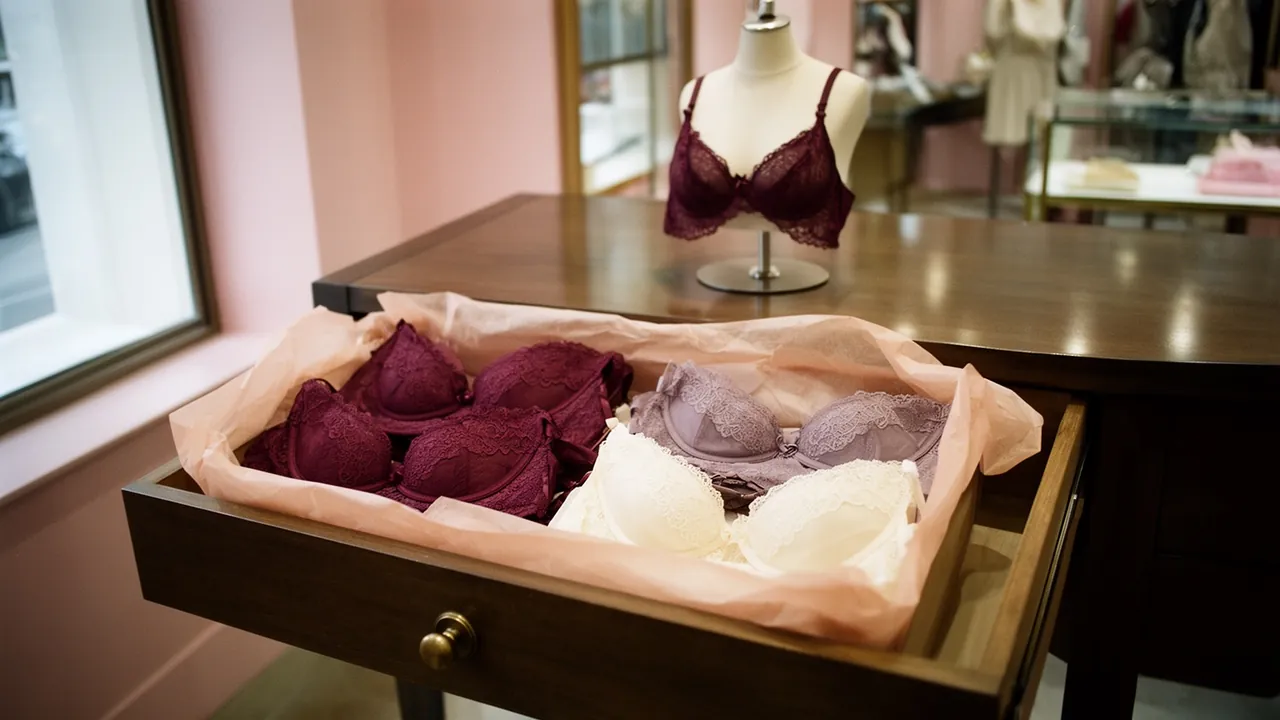
The stores were built around an idea borrowed from Victoria's Secret: most stock sits in drawers beneath the display tables, not on hanging rails. A customer sees one sample of each style on show, and the staff pull the right size from below. It keeps the shop floor tidy and makes the fitting service, rather than self-service browsing, the center of the visit. It also costs more in staff time than a rail of bras on hangers, which is the trade-off Boux Avenue chose.
The name has a gentler origin story. According to Paphitis, it was inspired by a French waitress who served him while he was on a family holiday in France.
The Boux Avenue range
The product range follows the British high-street pattern: fashion bras with matching briefs and thongs, plus nightwear and swimwear. Shapes such as the balconette and the plunge, in colored lace, are the bread and butter of this end of the market. The pitch is a step up in finish and service from supermarket lingerie, at prices well below premium labels.
The company today
Boux Avenue remains privately held by its founder's business interests. Its companies, along with sister firms such as Boux Limited and DNA Lingerie Limited, share a registered office at Kindred House on Hartfield Road in Wimbledon, southwest London. The chain competes with Hunkemöller and the lingerie floors of the big British department stores, and it has outlasted La Senza's own UK business, which collapsed into administration years ago. For a chain that began as a founder's second try at the same idea, that is a fair result.
Last updated
Sources
- en.wikipedia.org: Boux Avenue
- en.wikipedia.org: Theo Paphitis
- find-and-update.company-information.service.gov.uk: companies
Collections (1)
Members
How Boux Avenue fits
Loading member reviews...
104 products in our archive
Use our Lingerie Identifier to find matching pieces