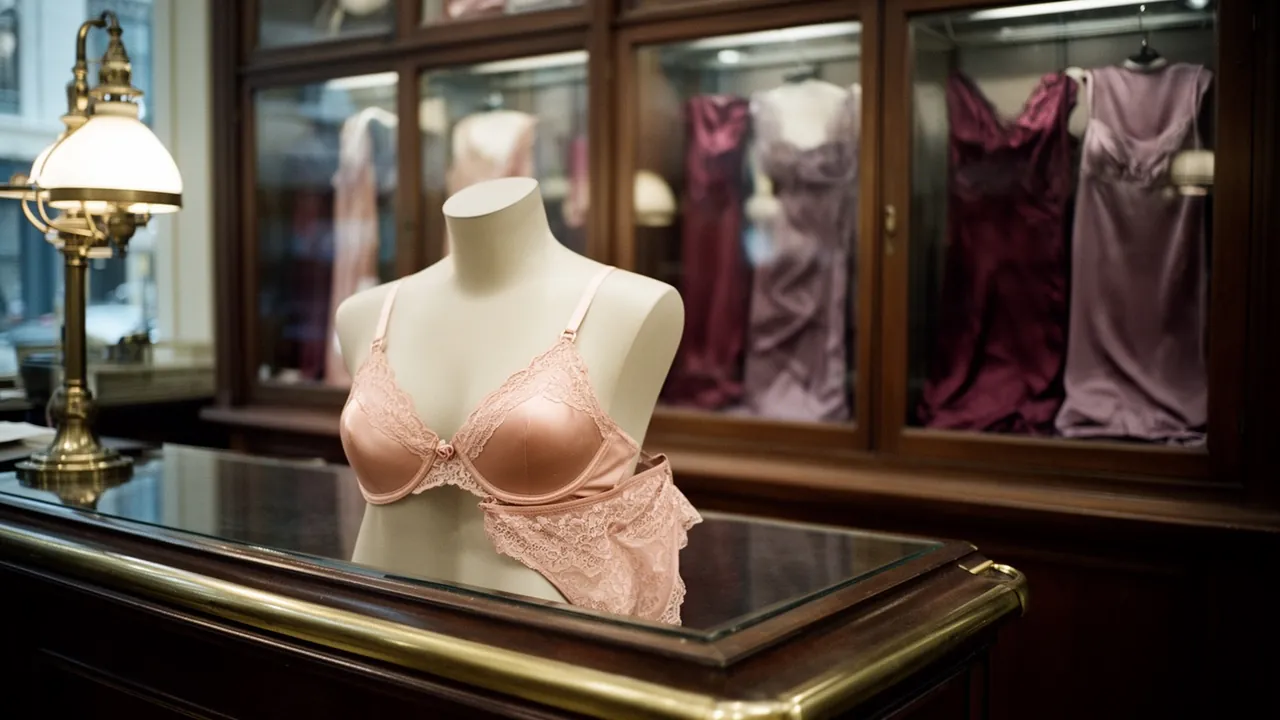
Macy's Lingerie is the intimate apparel business of Macy's, the American department store founded in 1858 by Rowland Hussey Macy, whose first store opened on Sixth Avenue between 13th and 14th Streets in Manhattan. Today the bras, panties, shapewear and sleepwear sold at Macy's reach shoppers through about 450 stores across the United States and its online store, from a company headquartered at its Herald Square flagship in New York City.
Sixth Avenue, October 1858
Macy's opened its New York store on 28 October 1858. Rowland Hussey Macy was building a dry-goods business at a time when corsetry, chemises and petticoats were still largely made at home or by dressmakers. Department stores changed that. By putting ready-made underwear on open counters next to fabrics and household goods, they turned intimate garments into something a woman could buy off the shelf in a public space.
That shift is one of the quieter revolutions in the history of lingerie, and the big New York stores were at the center of it. The museum's sources do not document Macy's own early intimates departments in detail, so this entry does not invent them, but the store belongs firmly to the retail culture that created the modern lingerie floor.
Herald Square and the department store floor
In 1902 the flagship moved to Herald Square, at 34th Street and Broadway, where it still stands. The move took the store about twenty blocks uptown from its first site near 14th Street, following the city's shopping district as it pushed north. The building became the company's headquarters in 2020, when Macy's, Inc. closed its Cincinnati head office and consolidated in New York. Cincinnati had been the base of the parent company from 1945.
A department store lingerie floor works very differently from a specialist boutique or a mall chain. It gathers many brands under one roof, each with its own fixtures and fit philosophy, and it serves customers who often arrive with a size and a favorite brand already in mind. The core of that business is the everyday bra: T-shirt bras, underwire bras and minimizers sold in wide size ranges, backed by multipack panties and shapewear.
Federated, 1994, and Macy's, Inc., 2007
The corporate story is one of mergers. Bloomingdale Brothers of New York joined the group that became Federated Department Stores in 1930. In December 1994, R. H. Macy & Co. merged with Federated. On 1 June 2007, Federated changed its name to Macy's, Inc., and the Macy's name now sits over the whole company, including its sister chain Bloomingdale's.
For lingerie, the mergers matter because they concentrated buying power. A single parent company deciding which bra brands get floor space at both Macy's and Bloomingdale's carries real weight with the manufacturers that supply them.
Macy's lingerie today
The museum was unable to read Macy's own category pages, so it cannot list the brands currently on the floor or the house labels the store uses for intimates. What it can say is that the archive lists about 50 products recorded under Macy's lingerie, and that the business operates at the scale of roughly 450 stores.
The department store in lingerie history
The department store's place in lingerie history is easy to underrate now that so much underwear is sold online or by single-brand chains. For most of the twentieth century, though, the department store fitting room was where American women were measured, where new bra shapes were introduced and where brands competed for counter space. Macy's, with its Herald Square flagship, was one of the big stages for that competition, and it still trades from the same corner of Manhattan it moved to in 1902.
Last updated
Sources
- en.wikipedia.org: Macy's
- en.wikipedia.org: Macy's, Inc.
Collections (2)
Members
How Macy's Lingerie fits
Loading member reviews...
51 products in our archive
Use our Lingerie Identifier to find matching pieces