Tulle is a very fine net with small, usually hexagonal openings. It takes its name from Tulle, a town in the Correze department of France that was known for lace and silk production in the 18th century. Early tulle was silk; lingerie tulle today is nylon or polyester, sometimes with elastane.
The machine that made tulle a commercial fabric was English. John Heathcoat built his bobbinet machine in 1808 in Loughborough, producing a twisted hexagonal net that had previously been made by hand as the ground of pillow lace. Bobbinet is still the name for the most stable traditional tulle. A few years later John Levers adapted Heathcoat's machine into the Leavers lace machine, which is why tulle and lace share a family history and often a factory.
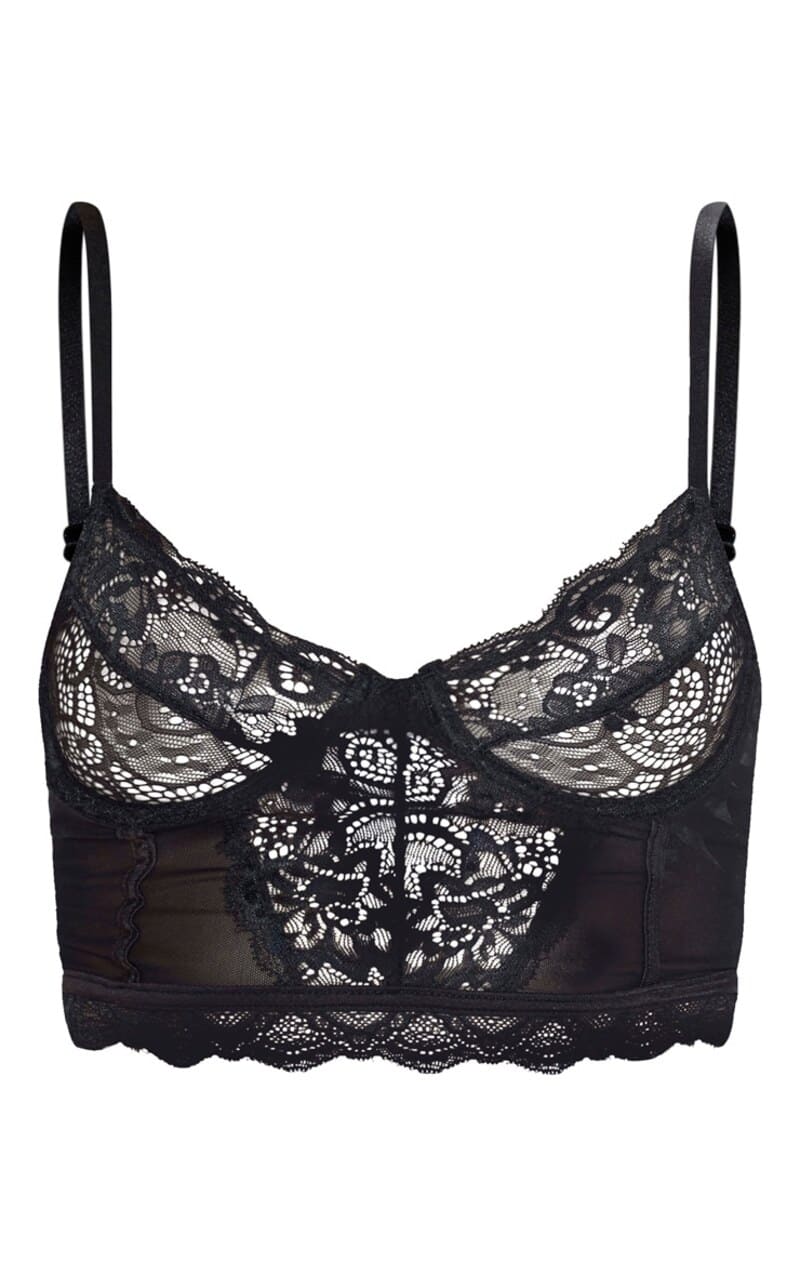
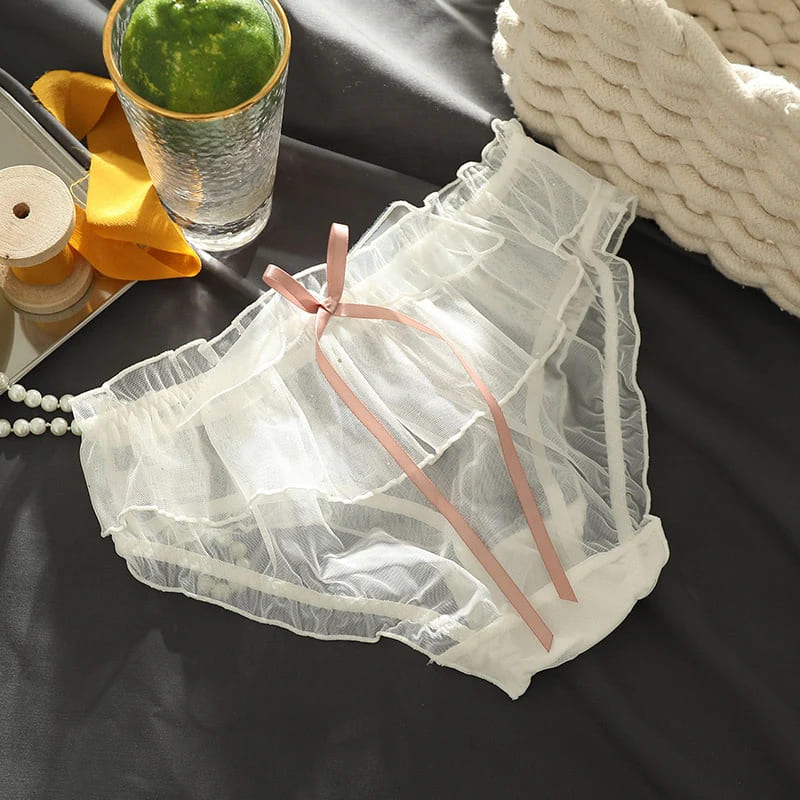
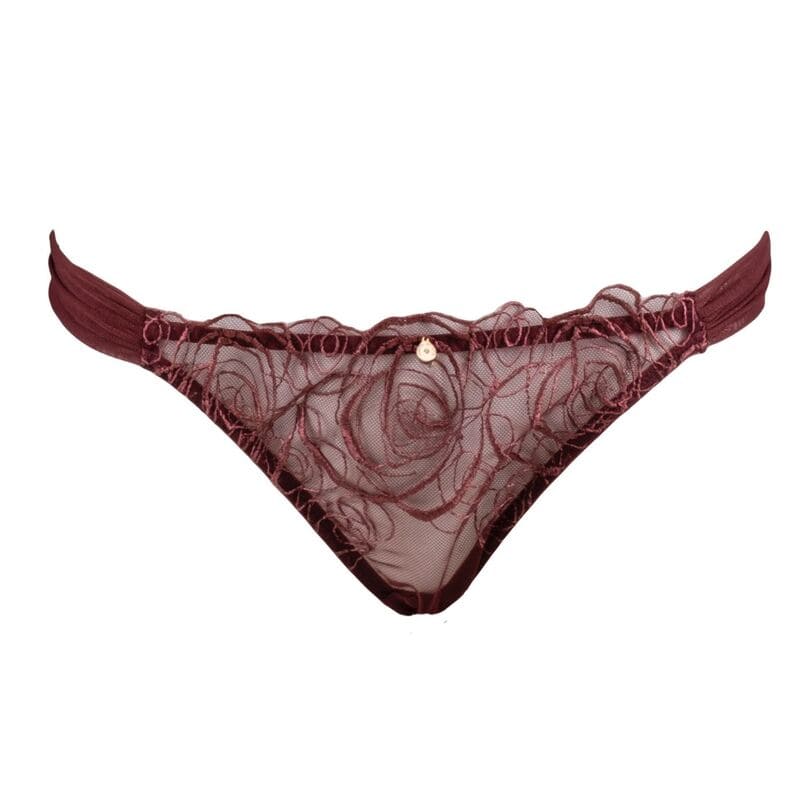
In lingerie, tulle does three jobs. It is the ground fabric for embroidery, so stitched flowers seem to float on the skin. It forms sheer cup overlays and plunge-neck insets. And it makes the see-through panels on babydolls, chemises and bridal sets. Silk tulle drapes beautifully but tears easily; nylon tulle holds its shape and survives washing better.
Tulle suits wearers who want the most transparent look available while keeping some structure, since it holds a cut edge better than chiffon. It is easily confused with mesh, but mesh holes are larger and more open, and mesh is heavier in hand. Chiffon is also sheer, but it is a woven cloth with a faint crepe texture and no holes at all. Lace often sits on a tulle ground; when there are motifs, call it lace.
How to Identify
- Holes so small they read as a haze from a distance
- Six-sided (hexagonal) openings when seen close up or against light
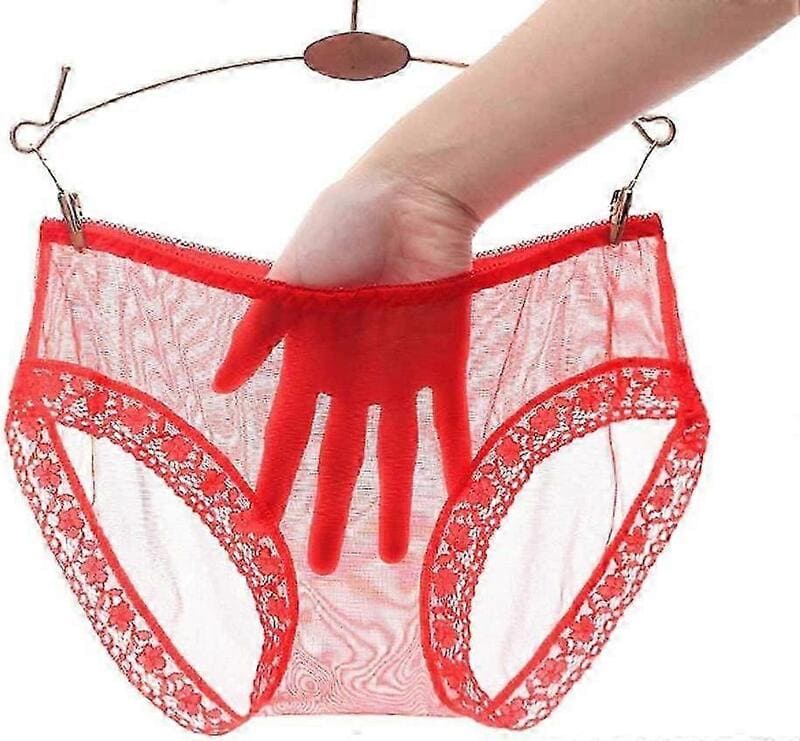
- Almost fully transparent, with skin clearly visible through it
- Stiffer than chiffon, holds a crisp cut edge
- Often carries embroidered motifs that seem to float on it
Last updated