Velvet is a woven fabric with a pile: an extra set of warp threads woven into loops that are then cut, leaving short upright fibers densely packed over a base cloth. Because those fibers lean slightly in one direction, velvet looks paler from one angle and richer and darker from another. Cutters lay every pattern piece the same way to avoid a garment that seems to be in two shades.
The classic industrial method weaves two cloths face to face with the pile threads running between them, then slices through the middle to make two pieces of velvet. From the 1830s this double-cloth method on Jacquard looms roughly halved the cost of the fabric. Velvet was silk for most of its history; lingerie velvet now is mostly polyester or nylon, and stretch velvet adds elastane so it can be cut close to the body.
In lingerie, velvet appears in bodysuits, bralettes, plunge bras with velvet cups or straps, bustiers, slips, robes and trim ribbons. Crushed velvet, pressed so the pile lies in random directions, gives a mottled shine. It tends to appear in autumn and holiday collections in deep colors.
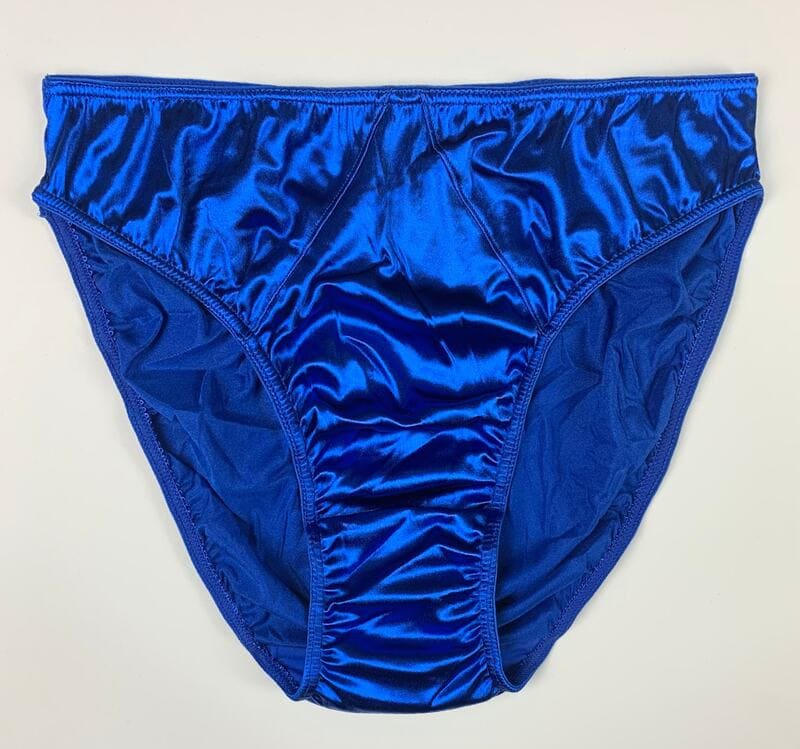
Velvet suits a dressed-up, tactile look and colder months. It is warm, bulky in seams, and pile can flatten with wear and sitting. It is confused with satin, since both shine, but satin reflects in smooth bright streaks while velvet's light is soft and changes with the direction of the pile. Velour is a knitted cousin with a lower, looser pile.
How to Identify
- Soft, plush surface made of densely packed short fibers
- Color looks lighter or darker depending on viewing angle and pile direction
- Highlights are diffuse and velvety, not sharp streaks
- Opaque and slightly thick at seams and edges
- Crushed velvet shows a mottled pattern of light and dark patches
Last updated