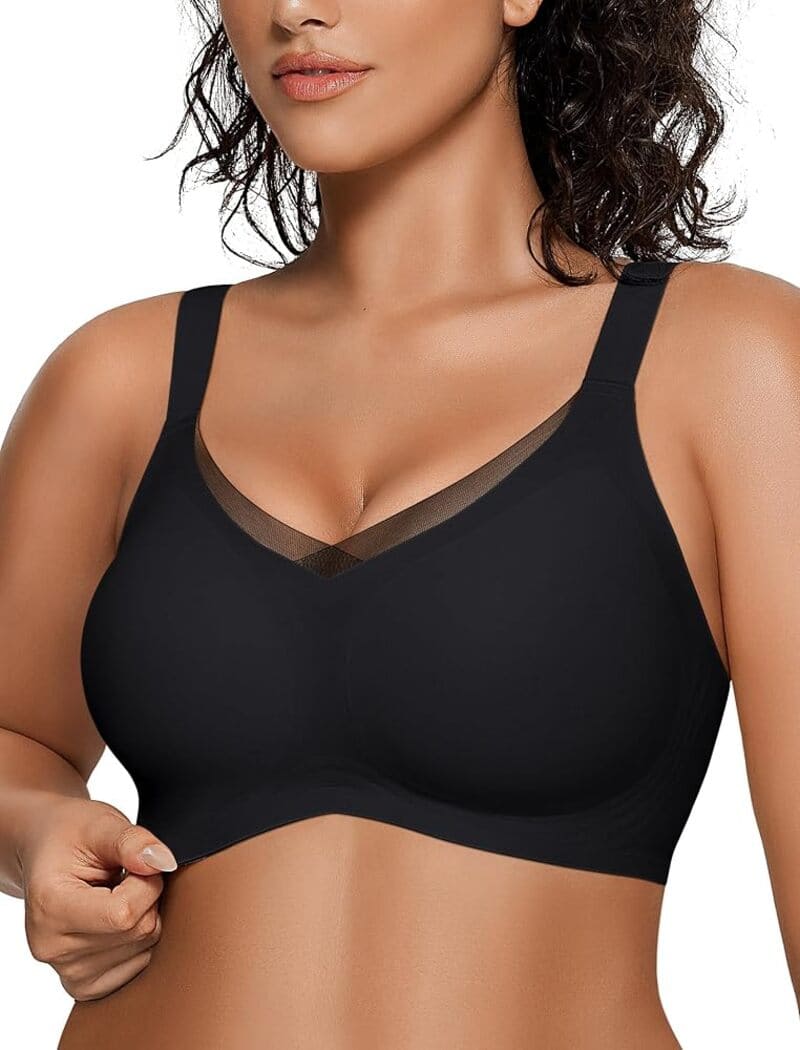
Pregnancy changes both measurements a bra is fitted to. The ribcage widens, the breasts usually grow, and both keep changing month to month. A maternity bra is built to absorb that. Cups are stretch fabric or soft molded foam, usually wireless or with a flexible wire. The back closure has extra columns or a longer row of hooks so the band can be let out. Straps are wide and padded to carry the added weight, and side panels are deep.
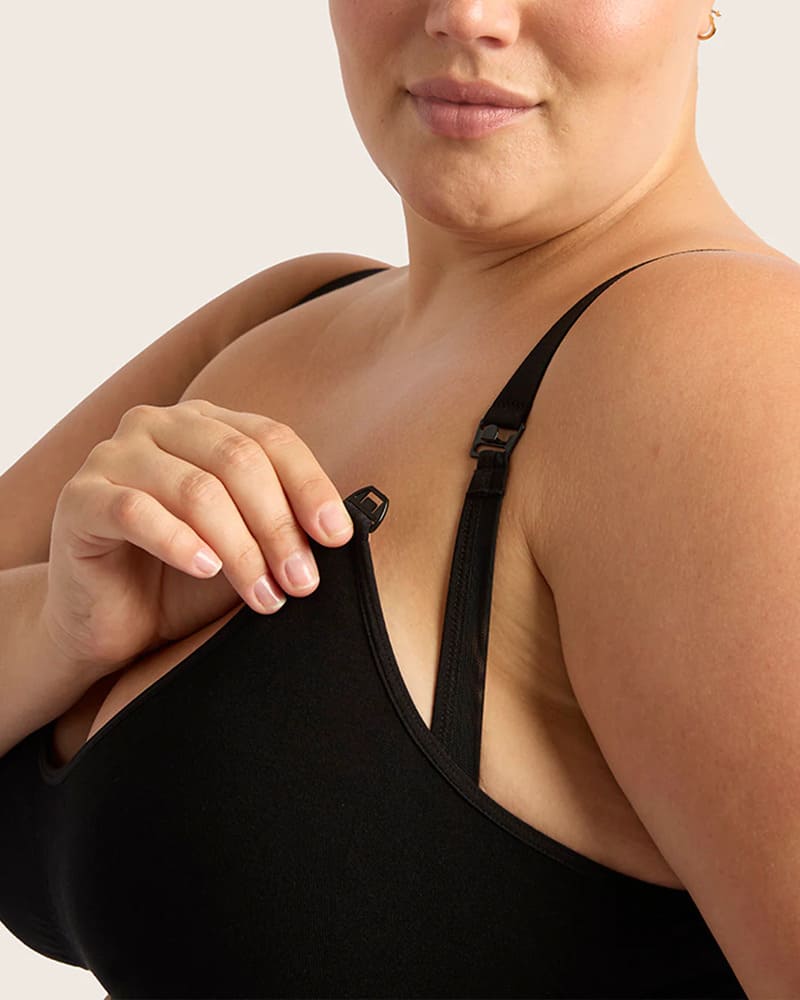
It is worn from early pregnancy to birth, and many wearers keep it for sleep afterward. A large share of maternity bras are sold as maternity and nursing bras in one, with drop-cup clips added, so the same bra carries on after the birth.
The maternity bra has no single recorded inventor; it developed alongside the nursing bra, and the two categories have overlapped for most of their history. In this site's classifier the class is switched off, because in photographs a maternity bra is close to indistinguishable from a soft wireless or nursing bra.
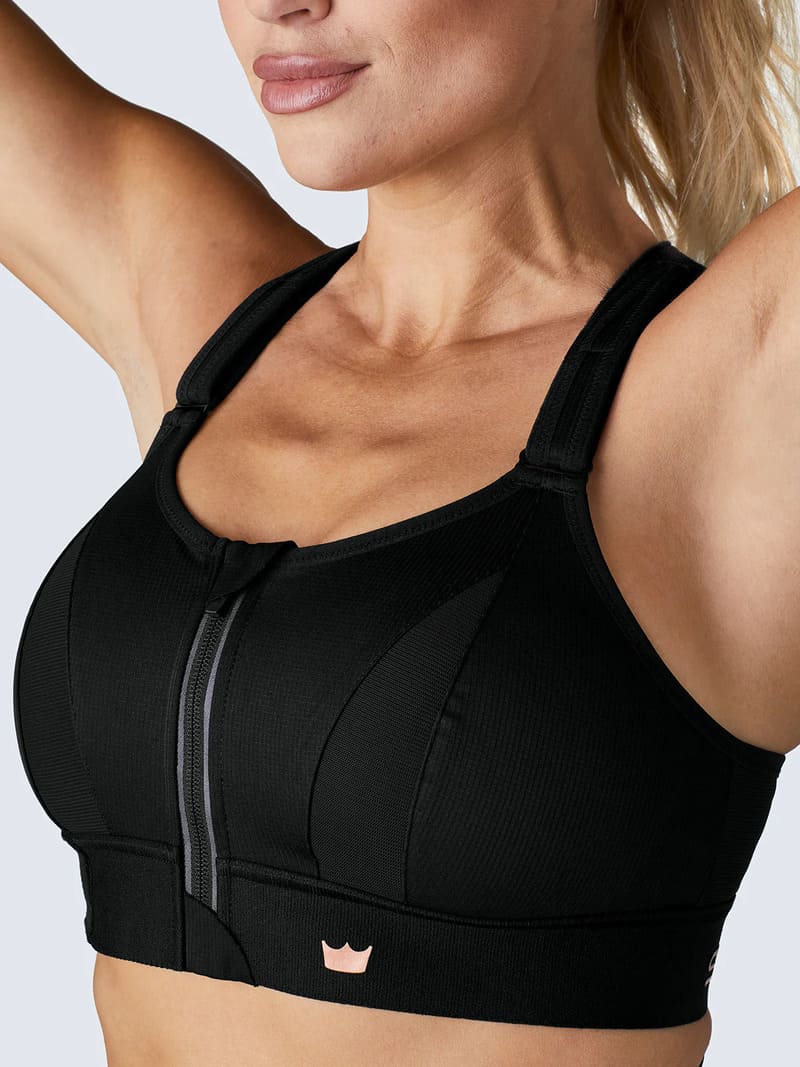
A nursing bra has clips at the top of the cups; a maternity-only bra does not. A wireless bra lacks the wire too but has a standard band. A sports bra may look similar with its wide straps, but it compresses the breasts, which is the opposite of what a maternity bra tries to do.
How to Identify
- Long back closure with extra columns or rows of hooks
- Wide, cushioned straps
- Stretch or soft molded cups, usually wireless
- Deep side panels
- No clips at the top of the cups, unless it doubles as a nursing bra
Around the fourth month of pregnancy, regular bras usually start to feel tight in the band, the cup or both, and that is the signal to buy the first maternity bra. Wikipedia's nursing bra entry puts the point at about four months and frames the rule simply: switch when your usual bras become uncomfortable, not on a calendar date.
Plan for two fittings
Breasts usually grow one to two cup sizes during pregnancy and sometimes several. The ribcage widens too, mostly in the second half. One bra bought in the third month will rarely fit through to birth, so plan for at least two fittings.
- First fitting, around month four. Buy two bras, enough to rotate while one is in the wash.
- Second fitting, around month seven or eight. By then the ribcage has expanded and the cups have filled. If you plan to breastfeed, this is the usual moment to buy maternity-and-nursing hybrids, since they will carry on after the birth.
How it should fit when new
Buy the band fitting on the tightest hook. The extra columns, up to four on some maternity bras, are there for the ribcage to grow into, and you lose them if you start on the loosest setting.
The cups should be full but not cutting in, with a little stretch left. A stretch-knit cup that is already tight at the first fitting will be too small in a few weeks. Straps should sit wide and flat without digging grooves into the shoulders.
Underwire is a personal call during pregnancy, but most maternity bras are wireless or use a flexible plastic wire. Wikipedia notes that some experts advise against underwire nursing bras over milk flow concerns, which is one reason soft cups dominate the hybrids. For comparison, see the site's wireless bra entry.
Fabrics that give
The fabric is what lets one bra cover several sizes. The usual recommendation is a soft cup in cotton with Lycra, which stretches as the breast grows and breathes against warmer skin. Modal and bamboo viscose blends are softer still, though they lose their shape faster than cotton.
Boody is one basics brand that sells a dedicated maternity bra range. Larger cups often need a molded foam spacer cup, which keeps its shape without wires and does not show under a T-shirt.
Skip heavy lace and rigid embroidered cups for now. They do not stretch, and they rub skin that is often more sensitive during pregnancy.
Sleep bras and when to switch to nursing
Many wearers add a sleep bra in the third trimester, a light pullover with no hooks and no wire, for comfort at night. After the birth, breasts change again as milk comes in, which is why many fitters suggest waiting until then to buy the bulk of a nursing bra wardrobe.
The nursing bra has its own patent history. Albert A. Glasser filed the first "nursing brassiere" patent in 1943, and Mary Sanchez patented a one-handed fastening in 1991, which is close to the drop-cup clip still used today.
Washing a bra worn every day
A maternity bra gets more wear than almost any other bra, often day and night for months. Wash it after every one or two wears in cool water, inside a mesh bag if you use a machine, and air dry it. Heat breaks down elastane, and a bra that has lost its stretch stops doing its job just as the bust needs it most. With two or three in rotation, each gets a day off for the elastic to recover.
Shop
See maternity bra styles on AmazonAs an Amazon Associate we earn from qualifying purchases. It does not change what we write.
Sources
- en.wikipedia.org: Nursing bra
- en.wikipedia.org: List of bra designs
- boody.com: maternity
Last updated