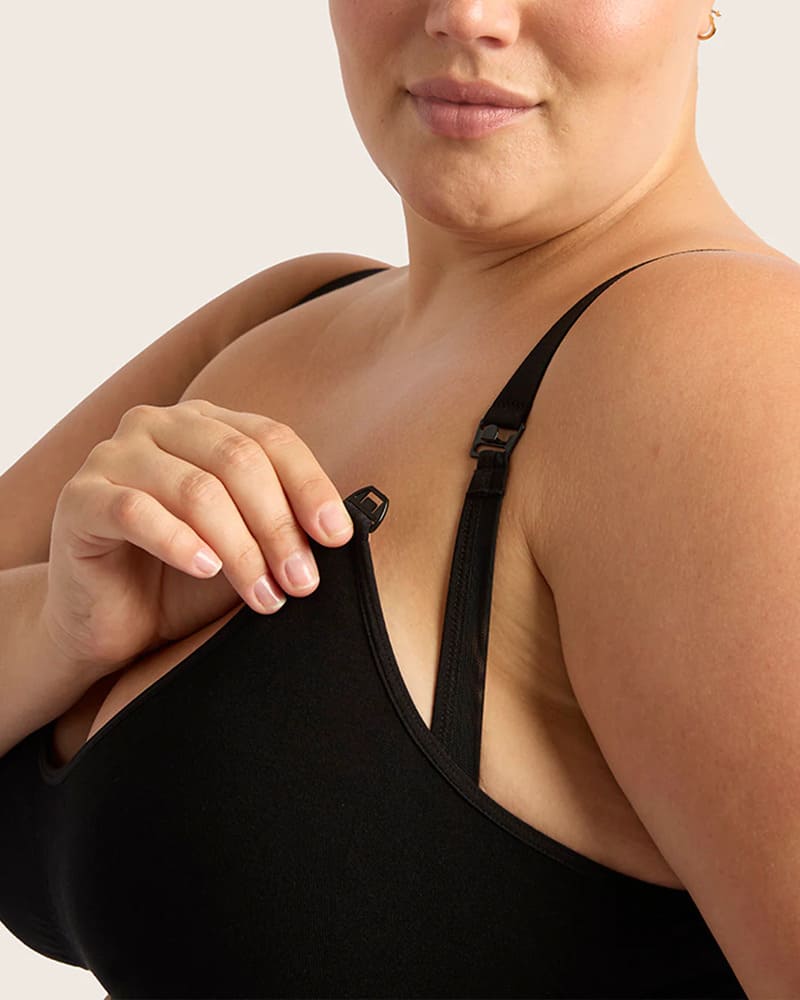
A nursing bra opens one cup at a time. The usual mechanism is a clip where the strap meets the top of the cup: unhook it and the outer cup drops down while an inner sling or frame stays in place to support the breast. Other designs pull aside, with crossover or stretch layers that move instead of unclipping. Clips are made to work with one hand, since the other is usually holding a baby.
Breast size rises and falls through the day while feeding, so nursing bras favor stretch cups, flexible wires or no wire at all, a wide band, broad straps and room for breast pads. Many are designed to be worn from late pregnancy through the feeding months, which is why the line between nursing and maternity bras is blurred.
Nursing brassieres were being patented in the United States by the 1940s, and the post-war baby boom created a large market for them. In 1991 Mary Sanchez received a patent for a one-handed fastening with adjustable cup size, the problem nursing bra designers still work on.
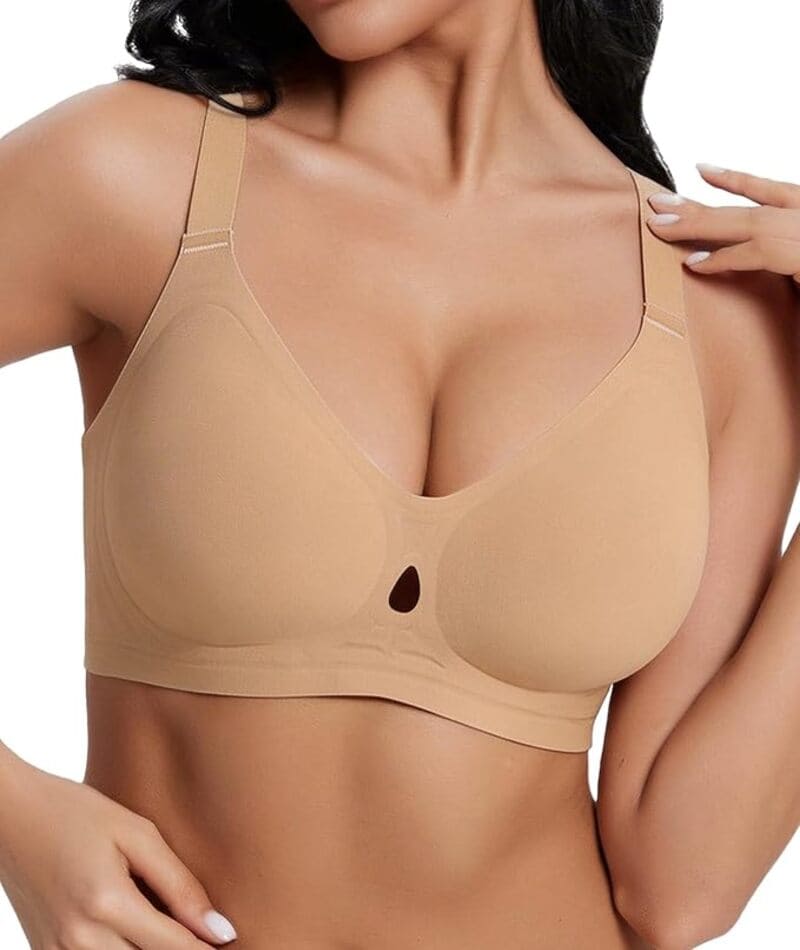
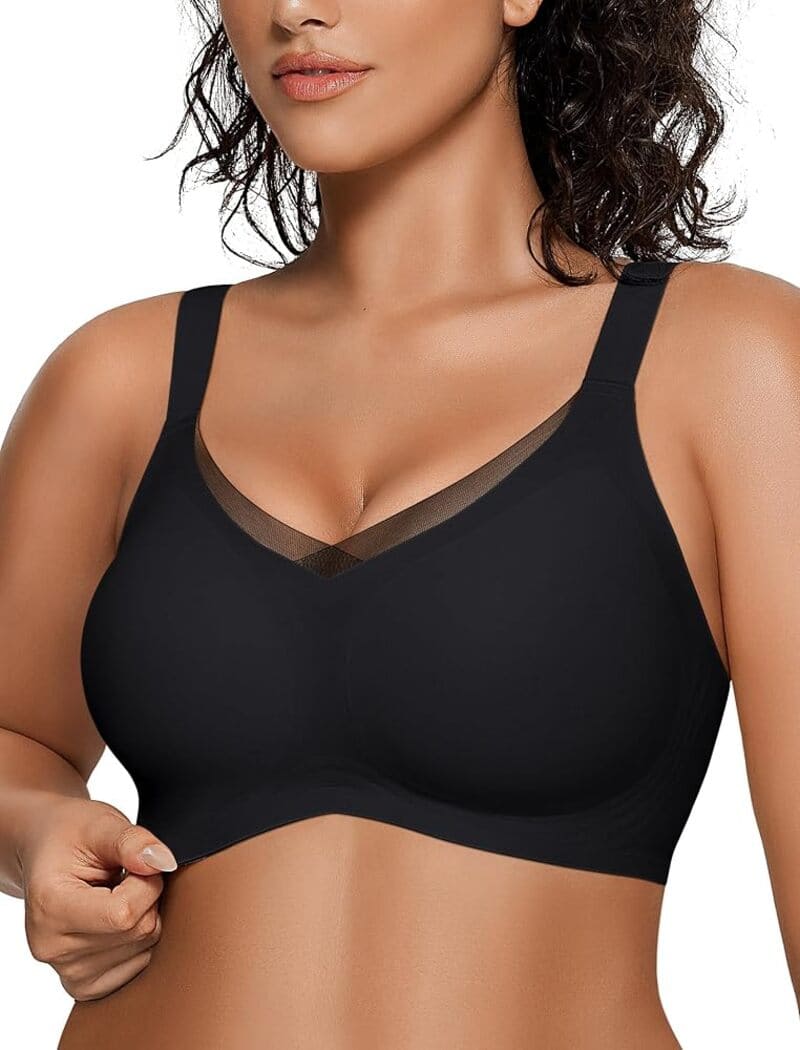
A maternity bra may look identical but has no clips; check the top of the cup. A wireless bra may share the soft cup and wide band but has nothing that opens. A T-shirt bra with molded cups can also be made in a nursing version, so the hardware decides the class. That hardware is often hidden in product photos, which is why this site's classifier does not try to recognize nursing bras.
How to Identify
- Clip or hook at the top of each cup where the strap joins
- Outer cup layer that folds down separately from an inner sling
- Wide band, often with extra rows of hooks
- Soft cups, flexible wire or no wire
- Broad, cushioned straps
Buy a nursing bra too early and it will probably be the wrong size by the time the baby arrives. Elomi advises a fitting around the 38th week of pregnancy, because that is the closest you will get to your size once feeding starts. Breasts commonly grow by one or two cup sizes during pregnancy, and they keep changing in the first weeks after birth as milk comes in.
Week 38, and what to wear before it
Before week 38, a soft maternity bra covers the growing months. Many people switch from their usual bras at about four months, when the old ones start to feel tight. Buy one or two nursing bras at the late-pregnancy fitting, not a full set, and wait until feeding is settled before buying more. Sizes swing a lot in the first two to six weeks.
When you measure, use a soft tape, snug around the ribcage just under the bust for the band, then loosely around the fullest part for the bust. Write both down in inches and centimeters, since brands chart them differently. Wikipedia's summary of lactation advice calls for strong side and undercup support and an extra-wide back with up to four rows of hooks, which leaves room to adjust as your shape changes after birth.
Wire or no wire in the early months
La Leche League's advice is direct: bras with underwire or other firm structure can contribute to blocked ducts and mastitis, so they are best avoided in the early months. It also warns against any bra that is too tight, since pressure can make breasts sore. That makes a soft-cup or wireless bra with a stretch cup the usual first choice.
Larger busts sometimes find soft cups give too little support. Wired nursing bras exist for that reason: Elomi makes its Molly nursing bra with softer flexible wires in G to P cups on 32 to 44 bands. If you choose one, make sure the wire sits on the ribcage well clear of breast tissue all the way round, and switch to a soft bra the moment anything feels pressed.
Checking the clip with one hand
In the fitting room, try the clip the way you will use it: with one hand, the other arm held as if carrying a baby. Unclip, drop the cup, and refasten without looking. If you need two hands or a mirror, the bra will be a nuisance at 3 a.m.
Then check what stays behind. On a drop-cup design, the inner sling or frame should still hold the breast while the outer cup is down. The cup should close easily over a nursing pad, with no spilling at the top edge. If the cup only just fits now, it will not fit when the breasts are full before a feed.
Fabric, number and washing
Cotton blends with elastane are the common recommendation for soft cups, and breathable fabric helps since nursing pads hold moisture against the skin. Most people end up needing at least three bras: one on, one in the wash, one spare for leaks.
Wash often, but gently. Elomi's care guide recommends hand washing, no bleach, drying flat and no tumble dryer, since heat damages elastane and can push wires through their channel. Those rules matter more with a bra washed every day or two. Check the clips after each wash, as a weak clip is the usual point of failure.
Night feeds and sleep bras
La Leche League notes that many people find it comfortable to wear a bra fairly often during the first two to six weeks, because of engorgement. At night, the priority is room and stretch, since breasts can fill between feeds. A soft crossover sleep bra, or a maternity tank with a built-in shelf bra to hold pads in place, does the job without any hardware to dig in. After the engorgement weeks, La Leche League sees no reason not to go without a bra whenever that feels better, and leaking usually eases after a few weeks or months.
Shop
See nursing bra styles on AmazonAs an Amazon Associate we earn from qualifying purchases. It does not change what we write.
Sources
- elomilingerie.com: nursing bra guide
- elomilingerie.com: 1009
- llli.org: bras
- en.wikipedia.org: Nursing bra
- elomilingerie.com: howtocareforlingerieandswimwear
- nhs.uk: mastitis
Last updated