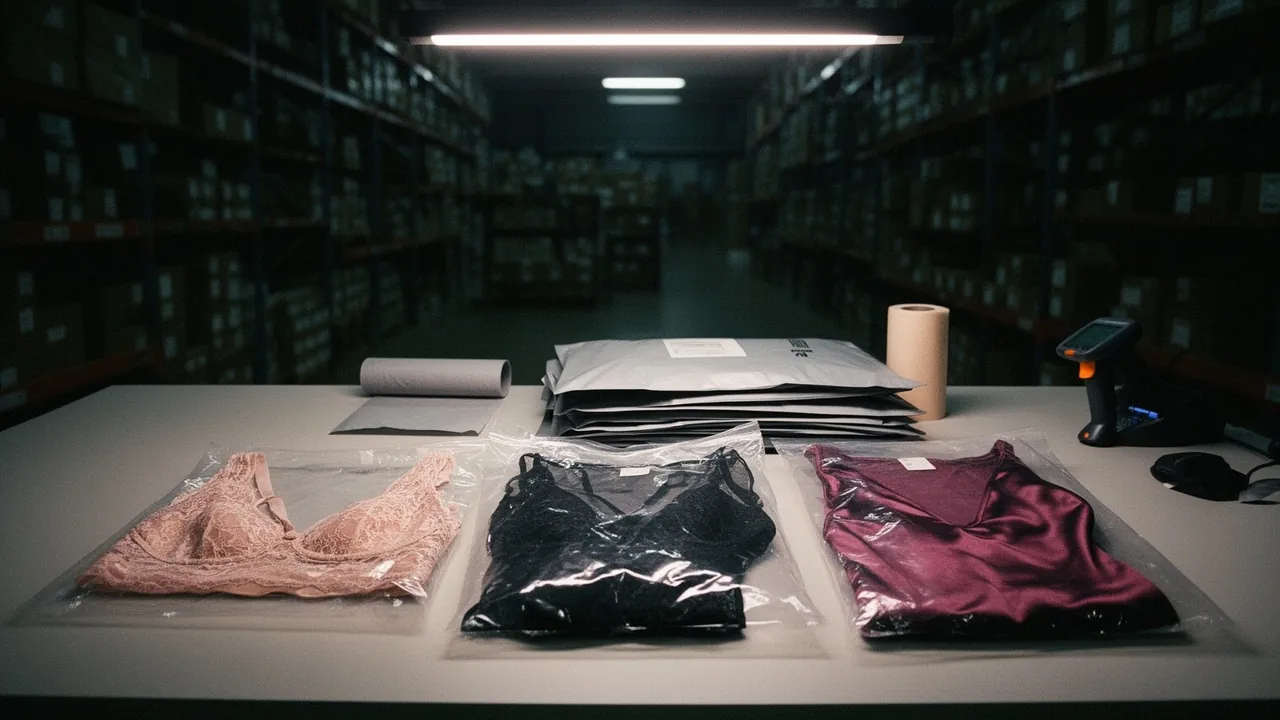
ASOS is a British online fashion retailer founded in London on 3 June 2000 by Nick Robertson, Quentin Griffiths, Andrew Regan and Deborah Thorpe. It began as AsSeenOnScreen, a site selling copies of clothes seen on film and television, and became ASOS plc in 2003. Today it sells to about 17 million active customers in more than 150 markets, mixing its own labels with hundreds of partner brands, and lingerie and nightwear is a standing category on its women's pages. This encyclopedia holds just under 500 ASOS intimates records, which places it among the bigger lingerie sellers in our catalog, although ASOS has never presented itself as a lingerie house.
From AsSeenOnScreen to ASOS Design
The first business was a product-placement idea: find the shirt from the film and sell something like it. It worked well enough to get the company onto London's Alternative Investment Market in 2001, but the brand only took shape once it stopped depending on screen credits. In 2004 ASOS reported its first profit and launched its own women's clothing label. That own-label line, now called ASOS Design, is the core of the business and the place where most of its lingerie comes from.
International growth came quickly. Country sites for Germany, France and the United States opened in 2010, followed by Australia, Italy and Spain in 2011. The same year ASOS added Marketplace, launched in November 2010, where independent boutiques and vintage sellers rent virtual stalls. The main distribution center is in Barnsley, South Yorkshire, where about 3,500 people worked by 2013. A second large center now runs in Berlin, and a smaller site in Dallas handles part of the American trade.
How ASOS sells lingerie
ASOS approaches intimates the same way it approaches dresses: speed, range, low prices and a long list of fits. Its own-label families include Curve for larger sizes, Petite, Tall and Maternity, and the same fit families appear across its underwear and nightwear. Alongside ASOS Design, the company owns the activewear label 4505 and the loungewear label ARRANGE, and in fiscal 2025 own brands made up about 40 percent of its gross merchandise value. The rest came from partner brands.
The lingerie section reads like a department store floor flattened into a scroll, heavy on trend pieces such as lace bralettes, sheer mesh sets, corset-style bodies, satin slip dresses and multipacks of thongs and briefs. The model works best for unstructured styles, where sizing is forgiving. It works less well for fitted underwire bras in fuller cups, where specialist brands and their fitters still hold the advantage, and where an online grid cannot replace a tape measure.
Topshop and the Arcadia brands
In February 2021 ASOS bought the Topshop, Topman, Miss Selfridge and HIIT brands from the collapsed Arcadia Group for 330 million pounds. It took the names, the designs and about 300 head-office staff, but not the shops. Topshop's lingerie and nightwear had been a high-street staple for younger British shoppers, and the deal moved that trade fully online. ASOS later sold control of Topshop and Topman and now keeps a 25 percent stake in each.
Returns, losses and new owners
The pandemic flattered online retail, and the years after it did not. By January 2023 ASOS shares had fallen about 70 percent in a year amid delivery problems, and by fiscal 2025 the company reported revenue of about 2.46 billion pounds with a net loss of nearly 300 million. Returns are a structural problem for any online clothing seller and a particular one for intimates, where hygiene rules restrict what can be resold. In 2019 ASOS conceded its free-returns policy carried an environmental cost, and in September 2024 it introduced a 3.95 pound fee on some returns, which drew complaints that inconsistent sizing was the real cause.
The shareholder register has changed too. Mike Ashley's Frasers Group owns about 29 percent and Bestseller, the Danish fashion group controlled by Anders Holch Povlsen, about 26 percent. Co-founder Quentin Griffiths died in February 2026.
For the lingerie trade, ASOS matters less for any single design than for the shopping habit it built. It taught a generation of British and European customers to buy bras and knickers from a scrolling grid, in the same basket as jeans, and our own catalog suggests it still lists intimates in volume. Its most recent push in the category is inclusive rather than seductive: an Adaptive collection, launched in September 2026 across womenswear, menswear and Curve, built around accessible design features for disabled customers.
Last updated
Sources
- en.wikipedia.org: ASOS plc
- asosplc.com
- asosplc.com: our business
Members
How ASOS fits
Loading member reviews...
473 products in our archive
Use our Lingerie Identifier to find matching pieces