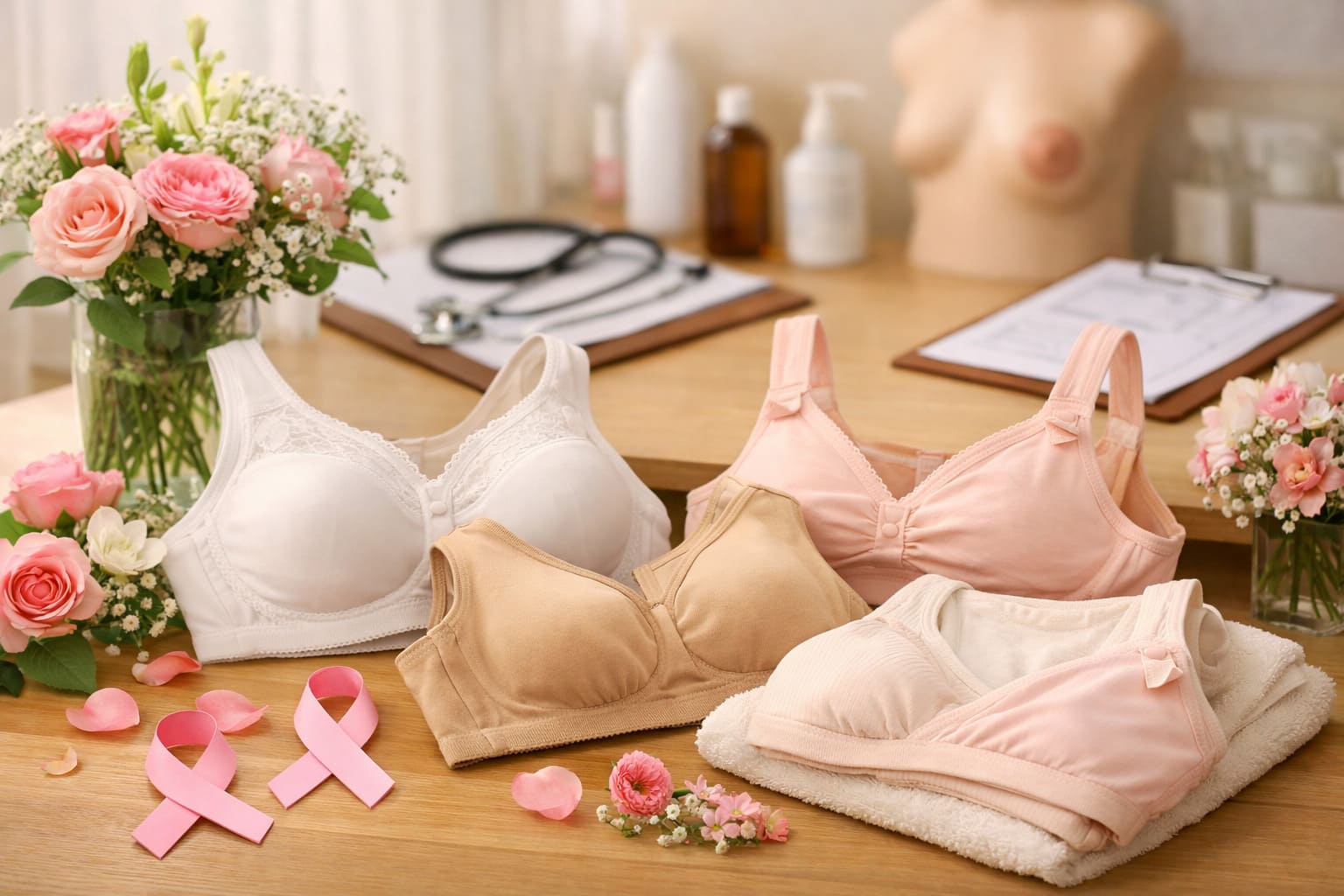
Anita is a German family-owned maker of specialist bras and shapewear, founded in 1886 by Ernst Max Helbig in Dresden and run since 1949 from Brannenburg in Upper Bavaria. It is best known for post-mastectomy lingerie, breast prostheses, maternity and nursing bras, and high-support sports bras, sold today in more than 60 countries.
Dresden, 1886: suspenders and medical goods
The company did not start with fashion. Helbig's first products were suspenders and garments for what the company's own history calls "special medical requirements". Garters, corsets and girdles followed, and by 1900 the first corset sold under the Anita name was in production. In 1910 the firm added trusses and hernia binders, which says a good deal about where its instincts lay: closer to the surgical supply catalog than to the Paris salon.
Dr. Walter Helbig took ownership in 1917. By 1930 the Dresden works employed about 300 seamstresses and turned over 17 million Reichsmark a year, making it one of the more important corset manufacturers in Germany at a time when the corset was already giving ground to the girdle and the bra.
Bombs, borders and a second start in Bavaria
Dresden ended the war in ruins, and so did the factory. The Helbigs restarted production in the Soviet zone, where Russia became both supplier of raw materials and main customer. The arrangement did not last. In 1949 Walter Helbig's daughter, Dr. Christine Weber-Helbig, moved west to Upper Bavaria with her husband, Dr. Heinrich Weber-Unger, and founded Anita Dr. Helbig GmbH in Brannenburg, a small town in the Inn valley near the Austrian border. They worked with salvaged machinery and the old Dresden cutting patterns.
The original Dresden plant stayed in the east and was confiscated by the East German state in 1971. The Bavarian company carried the name forward.
How Anita became a mastectomy specialist
Christine Weber-Unger's product lines
Between the 1960s and 1990 Christine Weber-Unger built the three specialist categories that still define the brand: pregnancy wear, nursing bras and post-mastectomy lingerie. Mastectomy bras need pockets to hold a prosthesis securely, soft seams that do not rub scar tissue, wider and higher sides, and straps that carry weight without digging in. Those are pattern-cutting problems, and a firm that had made hernia binders and corsets for decades was well placed to solve them.
Making the prostheses too
Anita later began producing silicone breast prostheses in-house, under its Anita care line. The company describes itself as the only supplier that develops and makes both the prostheses and the matching bras, shapewear and swimwear for women after breast surgery. In 2015 the company switched to 3D-printing the masters for its prosthesis molds. A mold used to take about two weeks of wooden templates, fiberglass and hand milling; the printed plastic positives, cast in sand and then aluminium, cut development costs by about half. The scale explains the effort: the company's director said it needed tools for 10 types in 100 sizes.
Support for sport and motherhood
The same engineering habit runs through the other ranges. Anita active makes high-impact sports bras in cup sizes that many athletic brands do not stock, using encapsulated cups and wide underbands rather than simple compression. Anita maternity covers maternity bras for pregnancy and nursing bras with drop-down cups and clips that can be opened with one hand. The fifth brand, Rosa Faia, takes the specialist fit into more fashion-led lingerie and swimwear.
A family firm with 1,600 staff
Georg Weber-Unger, son of the Brannenburg founders, became chief executive in the 1990s and pushed the business abroad. Subsidiaries opened in France, the United Kingdom, Switzerland and the Netherlands, and the company built factories in Austria, the Czech Republic and Portugal. Between 2000 and 2018 it expanded into the United States, Belgium, Spain and Poland, opened a logistics center at Kufstein in Austria, added production in Thailand and Myanmar, and made acquisitions in Italy and Canada.
Today Anita employs about 1,600 people across more than 20 subsidiaries and sells in over 60 countries. The company counts itself a fifth-generation family business, with Georg Weber-Unger and his sons in charge. Its five brands are Anita since 1886, Anita active, Anita maternity, Anita care and Rosa Faia.
Why the brand matters to lingerie history
Most lingerie houses with a nineteenth-century founding date sell the date as romance. Anita's history reads more like the story of German medical textiles: suspenders, binders, corsets, then mastectomy bras and prostheses. Its products rarely appear on runways. What it sells instead is fit for women whose bodies have changed through pregnancy, surgery or training, largely through specialist fitters and medical supply shops rather than fashion floors. Few companies in the trade have kept one family in charge through a destroyed factory in Dresden, a confiscated one in the East, and a rebuilt one in a small town in the Inn valley.
Last updated
Sources
- anita.com: history
- anita.com: locations
- companyhouse.de: ANITA Dr Helbig GmbH Brannenburg
- 3dprint.com: 3d print breast prosthetic
Members
How Anita fits
Loading member reviews...