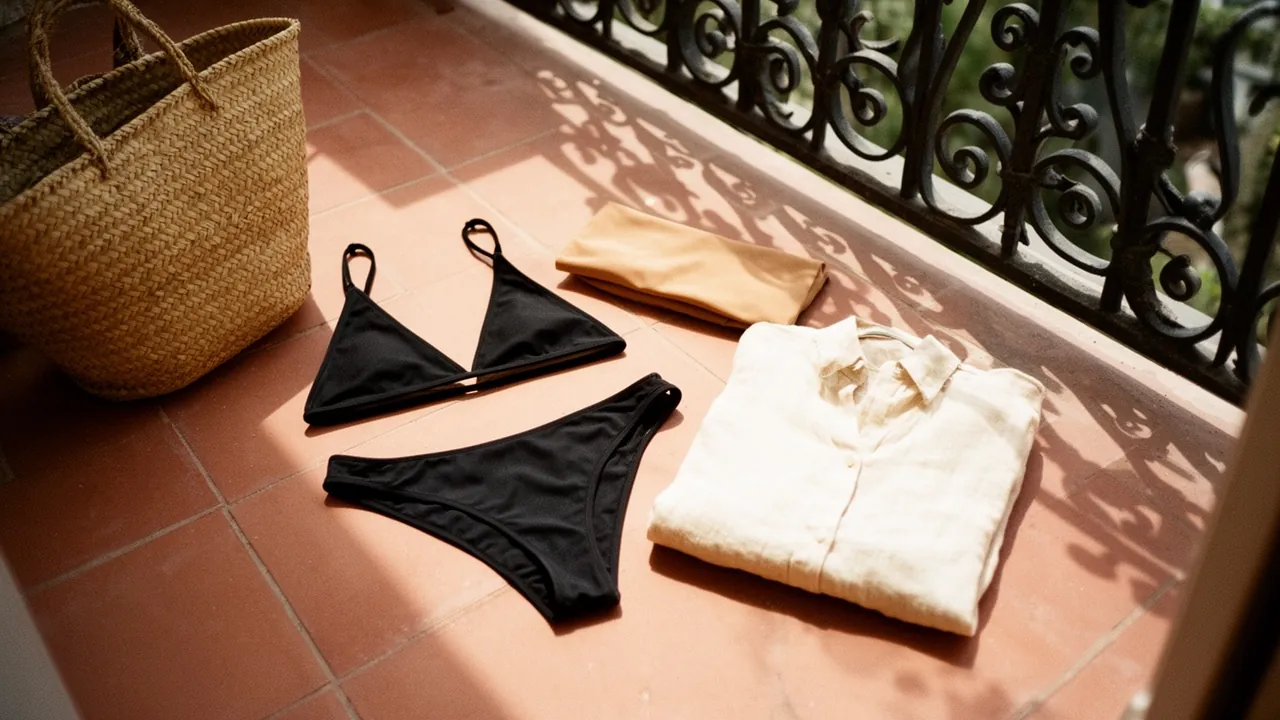
Mango is a Spanish fashion retailer founded in 1984 by the brothers Isak and Nahman Andic, who opened their first shop that year on the Passeig de Gracia in Barcelona. The company is based in Palau-solita i Plegamans, north of the city, and by 2025 it had revenue of about 3.77 billion euros from some 2,800 to 2,900 stores in more than 120 markets. Mango is a womenswear chain first, and its swimwear, lingerie and loungewear sit within that wider range rather than under a separate intimates brand. This encyclopedia holds just under 400 Mango products in those categories.
Two brothers from Turkey
The Andic family were Sephardic Jews who emigrated from Turkey to Catalonia. The first Mango store on the Passeig de Gracia, Barcelona's main shopping avenue, set the model the chain still follows: its own designs, sold in its own shops, at prices meant for young working women rather than for the boutiques on the same street.
The chain spread across Spain and then abroad, and Mango was early to online shopping by Spanish standards and began selling on the internet in 2000. By 2025 the online channel ran in more than 120 markets and accounted for roughly a third of sales.
Mango in the Spanish fashion system
Spain produced two of Europe's largest fashion retailers in the same decade. Inditex, the Galician group behind Zara, is the bigger, and it chose to spin intimates off into a dedicated chain, Oysho. Spain also has Women'secret, a lingerie and sleepwear chain with its own store network. Mango went the other way. It never built a standalone lingerie brand and instead folds bikinis, swimsuits, bras, briefs, pajamas and loungewear into its main women's collection, merchandised as part of the season's look.
That choice shapes the intimates. Pieces are designed and sold as part of the ready-to-wear story rather than as a fit-led department, and swimwear carries most of the weight: triangle and bandeau bikinis, one-pieces and matching cover-ups that sit on the same rail as linen shirts and summer dresses. Structured, fitted lingerie in a wide cup range is left to specialists.
Lines and sizes
Mango has spread its name across several sub-brands. The men's line began in 2008 as H.E. by Mango and was renamed Mango Man in 2014. Mango Kids followed, then Mango Teen and Mango Home in the early 2020s. In 2014 the company launched Violeta by Mango, a range in sizes 40 to 52 that drew criticism over how it presented larger bodies, and it was wound down in 2021. A sustainable line, Committed, appeared in 2017, and fragrances are made with the Barcelona perfume group Puig.
Faces and collaborations
Mango has long hired famous faces for its campaigns. Kate Moss was its muse from autumn 2012, followed by Miranda Kerr. In April 2024 it released a capsule with the Victoria Beckham label, launched on 23 April that year. These campaigns sell the main line, but they also set the tone for the swim and intimates pieces photographed beside it.
After Isak Andic
Isak Andic died on 14 December 2024, after a fall near caves outside Barcelona. He had turned a single shop into a group of thousands. The day-to-day business is run by Toni Ruiz, chairman and chief executive, and Mango reported revenue up 13 percent in 2025, with a net profit of about 242 million euros. In August 2025 it introduced an AI-powered virtual shopping assistant.
For lingerie history, Mango matters as an example of a road not taken. Its two Spanish rivals each built a dedicated intimates chain. Mango kept its bras and bikinis inside the main collection, and four decades on it still treats a swimsuit as one more piece of the season's wardrobe.
Last updated
Sources
- en.wikipedia.org: Mango (retailer)
- es.wikipedia.org: Mango (empresa)
- mangofashiongroup.com: about us
Members
How Mango fits
Loading member reviews...
395 products in our archive
Use our Lingerie Identifier to find matching pieces