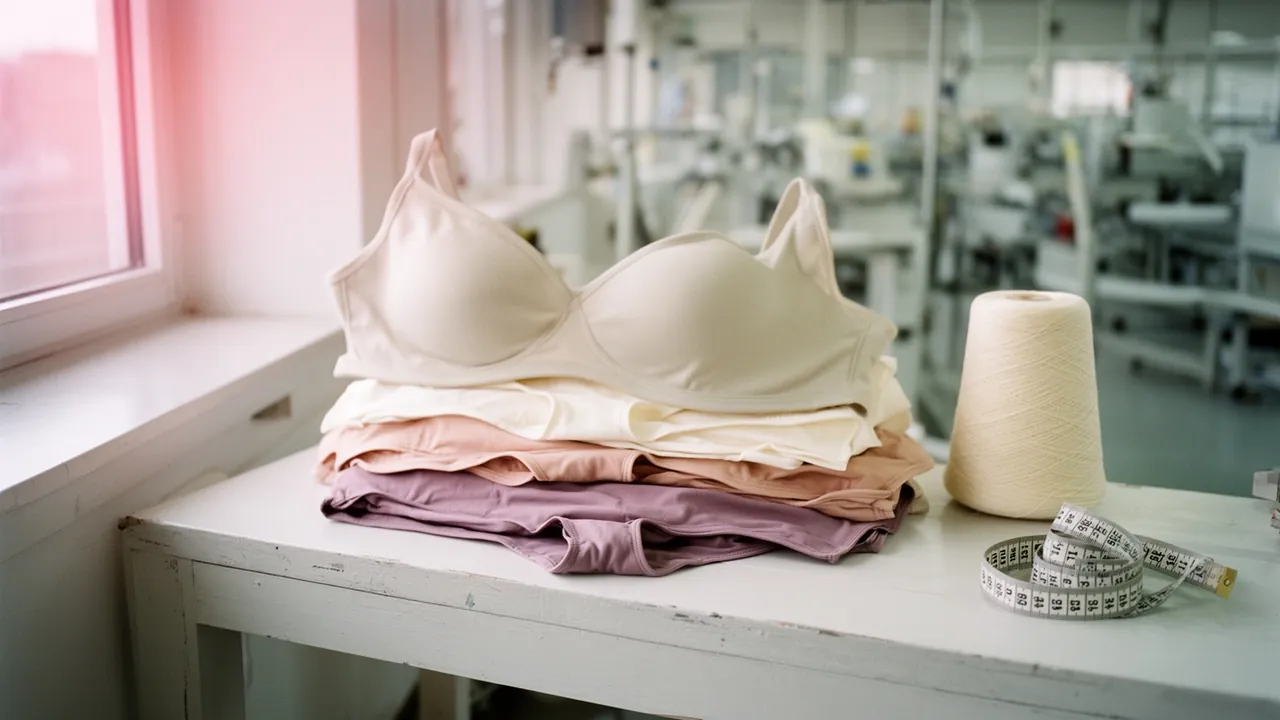
Sloggi is the everyday underwear brand of Triumph International, the corsetry and lingerie group founded in Heubach, Germany, in 1886 and run from Switzerland since 1977. Triumph introduced sloggi in the late 1970s for underwear with a high cotton content, and the brand, usually written in lowercase, now sits beside Triumph itself as one of the group's two core global labels, selling women's and men's briefs, bras and bodywear.
The idea was modest and commercial. Triumph made structured bras and foundation garments; sloggi gave it a separate name for soft, stretchy cotton basics sold in high volume. That split between engineering and comfort has defined the brand ever since.
Triumph's cotton brand
Triumph International began with six workers at six sewing machines in Heubach, in Baden-Württemberg, under the founders Johann Gottfried Spiesshofer and Michael Braun. It moved from corsets to brassieres in the 1920s, and by the late 1960s held roughly half of the German corsetry market. In 1977 it moved its headquarters to Bad Zurzach in Switzerland, and since 2011 it has been wholly owned by the Spiesshofer and Braun families. English Wikipedia puts the group today at about 1.4 billion euros in revenue, 30,000 employees and 2,000 stores in 45 countries, which gives sloggi a distribution network few comfort brands can match.
A brand built on cotton, sold off the rail rather than in a corsetry fitting room, gave Triumph a way to reach shoppers who would never book a bra fitting. The exact launch year is often given as 1979, but the sources we could read say only "late 1970s," so we leave it at that.
The maxi brief and the multipack
Among the brand's staples are high-rise briefs sold under the names maxi and midi. In our classification they are full briefs: wide side panels, full seat coverage, a waistband at or near the natural waist. The cut was never fashionable, and that was the point. Sloggi sold comfort in multipacks, and the multipack is still a large part of its range.
Men's lines followed under the sloggi men name, and the brand later added swimwear as sloggi swim. That expansion is typical of how Triumph used the label: as an umbrella for anything soft, simple and sold off a rail rather than fitted.
"It's string time!" and the 2003 complaint
Sloggi's advertising has caused more noise than its products. In 2003 a French campaign used the slogan "It's string time!" to promote thong underwear, with images of women in very little else. French advertising regulators criticized the campaign, and politicians including Ségolène Royal objected publicly. The episode showed a comfort brand trying to sell the thong, the most fashion-driven cut of the period, and discovering that a poster campaign can carry a brand further than its owners intended.
ZERO Feel and the current range
The modern sloggi catalog is organized by collection names more than by garment. ZERO Feel is the lead line, and its name states the brief: underwear meant to go unnoticed under clothing. Around it sit FREE Evolve, GO Sense, GO Blush, GO Crush and GO Casual, and a men's-focused line called SLG.
For women, the Swiss shop lists push-up, padded and wire-free bras, bralettes and tops; hipsters, maxi and midi briefs, strings and tangas; and bodysuits and shorts. Men get briefs, shorts, boxers and undershirts. The online shops run under Triumph Intertrade AG, with country stores for more than 30 markets.
Triumph has trimmed its portfolio, dropping smaller labels such as BeeDees and putting its weight behind the two names it considers global. Nearly half a century after its launch as a side brand for cotton basics, sloggi is one of them.
Last updated
Sources
- en.wikipedia.org: Sloggi
- de.wikipedia.org: Triumph International
- ch.triumph.com
- ch.sloggi.com
Members
How Sloggi fits
Loading member reviews...