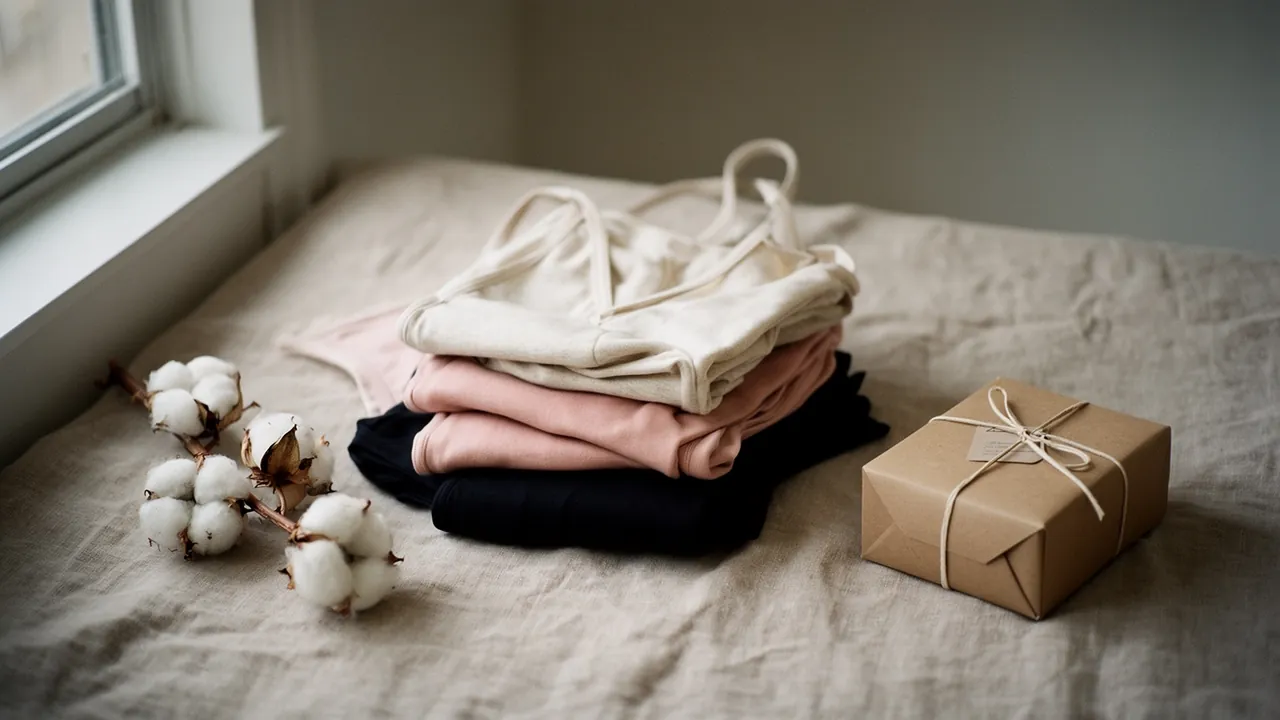
Subset is an organic cotton underwear brand founded by Cayla O'Connell Davis and Lauren Sagadore. It began life in 2018 as Knickey, a label selling women's briefs in certified organic cotton, and took the name Subset in 2023 when the range widened into bras, loungewear and men's underwear. Earlier summaries of the brand, including the one this encyclopedia used to carry, placed the founding in Vancouver in 2019 under a different founder. Nothing on the company's own pages supports that account, and the old Knickey address now forwards straight to Subset.
From Knickey to Subset
Knickey was a narrow idea done carefully. The first product was the everyday brief, cut in organic cotton and sold online, at a time when most "sustainable" underwear meant either a premium price or a vague promise on a swing tag. The founders came to it with what the company describes as more than a decade of product, supply chain and sustainability work between them, and the brand's early marketing leaned on that background rather than on lifestyle photography.
The 2023 change of name was presented as an evolution, not a relaunch. In the company's own words, Subset "builds upon the company's foundation and core values with an expanded offering of sustainable innerwear designed for daily living." In practice that meant a bigger catalog. Knickey had been an underwear brand. Subset is closer to a basics wardrobe.
The new name also removed a limit. "Knickey" pointed at one garment. "Subset" says nothing about underwear at all, which is the point once a brand starts selling robes and socks.
Certified Cotton, Certified Factories
The materials story is short, and that is to Subset's credit. The core fabric is organic cotton, and product pages carry the Global Organic Textile Standard (GOTS) mark, which covers the fiber from farm through processing. The sewing side is covered separately: the company states that its factories are Fair Trade certified, so that "everyone involved in the making of our products is treated with the respect and care they deserve."
Those are two different audits answering two different questions. GOTS is about what the cotton is and how it was dyed and finished. Fair Trade is about the people at the machines. Plenty of underwear labels claim one and imply the other. Subset names both. The brand's line is that it wants to "swap the greenwashing for integrity and accountability," and it has published an impact report to put numbers behind the claim.
What the site does not say is where the factories are, which is worth noticing in a brand that otherwise leads with transparency. It also does not publish the per-product water and carbon figures that older descriptions credited it with. This entry has dropped those claims.
For readers comparing fabrics, the case for organic cotton in underwear is mostly about the skin-side layer: it breathes, it washes hot, and it carries no synthetic finish against the body. The trade-off is recovery. A cotton brief relaxes over a day of wear in a way that a nylon microfiber brief does not, which is why cotton basics tend to be cut a little closer than synthetic ones.
The Range Today
The women's line covers the standard everyday cuts: thong, bikini, brief, hipster and boyshort, plus maternity styles. Bras are soft and wireless, in triangle, keyhole and scoop bralette shapes. There are men's boxer briefs, and a loungewear group of robes, tees, pants and socks. Sizing runs XS to 3XL for underwear and basics, with robes in paired sizes from XS/S to XL/2XL.
Prices sit in the middle of the market. A single brief sells for about $20, and a starter set of several pairs is priced near $100. That is more than a mass-market multipack and less than most designer organic labels, which is roughly where a GOTS and Fair Trade supply chain lands when it is sold direct rather than through department stores.
Shipping and take-back
Two smaller policies round out the picture. Subset offsets the carbon from shipping, and its site footer links to a recycle program for worn pieces. The details of what happens to returned garments are not spelled out on the main site, so this entry does not guess.
Where Subset Fits
Subset belongs to a generation of direct-to-consumer basics brands, alongside names such as Pact and Organic Basics, that sell certified cotton essentials online and compete on supply chain paperwork rather than on lace. Its distinguishing move was the rename: a founder-led company choosing to give up an established, cute name for a plainer one so the product range could grow without the brand outgrowing its own label. The founders are still the named faces of the business, and the GOTS mark is still printed on the brief that started it.
Last updated
Sources
Members
How Subset fits
Loading member reviews...