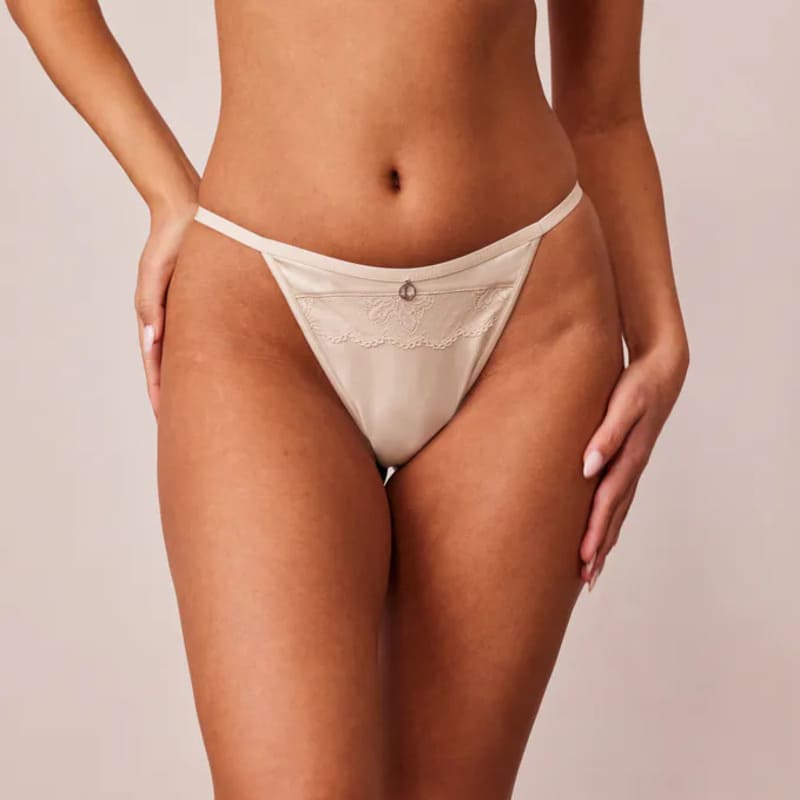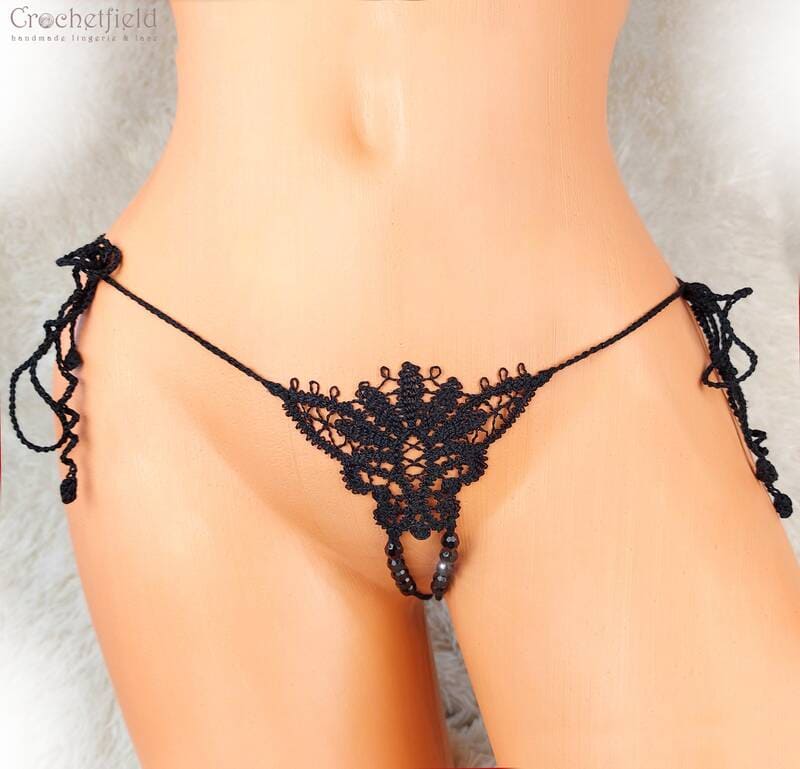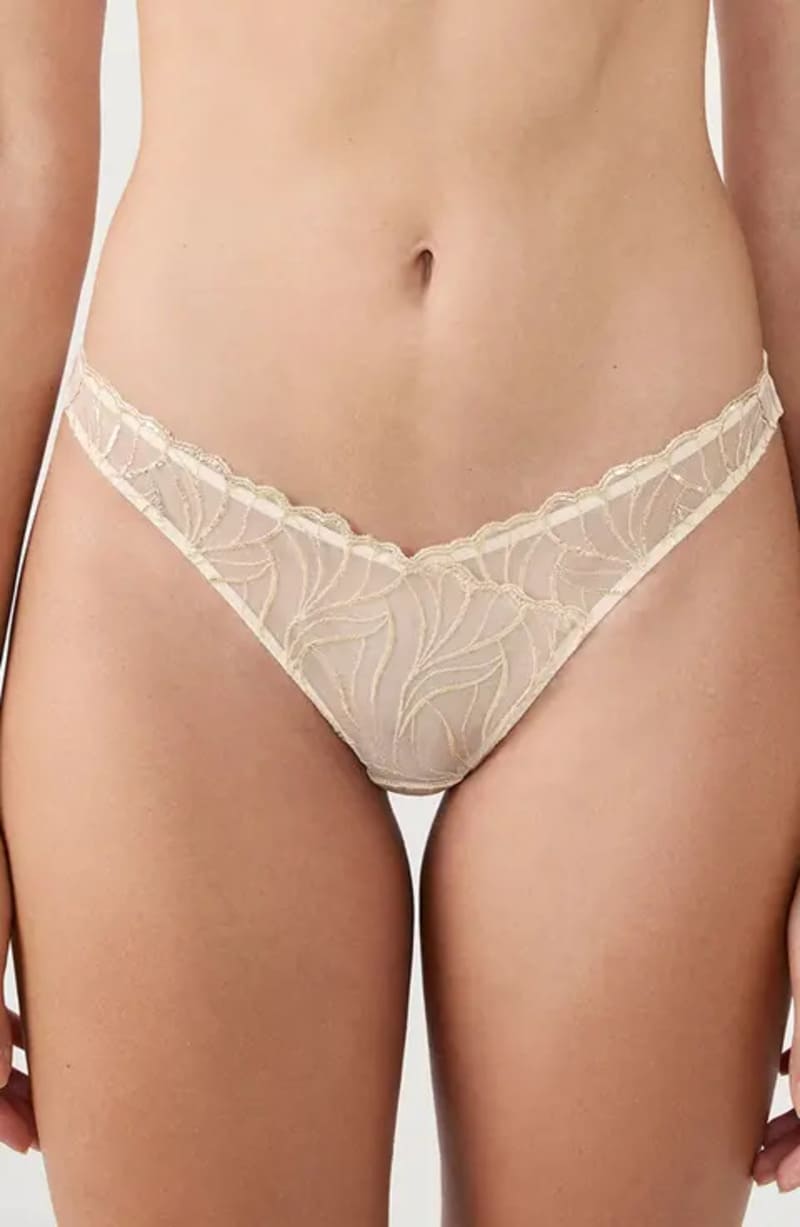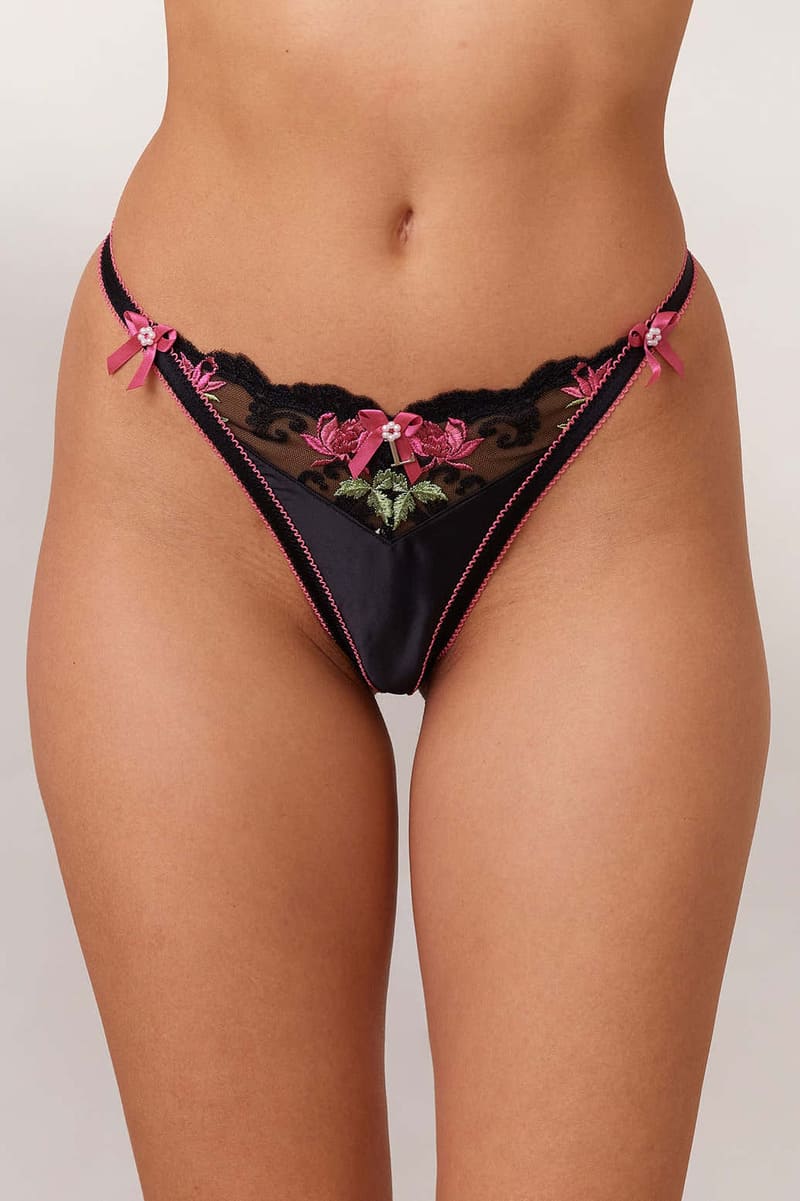
A V-string is a very low-coverage panty, a type of G-string. In front it has a small triangular panel, usually with a cotton gusset. The waistband is a thin string or a narrow strip of elastic. The difference shows at the back: instead of meeting the center string in a straight T, the two waistband strings angle down and join it in a V, sometimes through a tiny fabric triangle just above the buttocks. Victoria's Secret describes its V-strings as having an even thinner string that creates a V shape in the back.
The cut is meant for leaving no line under fitted clothes, such as leggings, bodycon dresses and tailored trousers. It suits people already comfortable in thongs and G-strings. Anyone who dislikes a string between the cheeks will find the V-string no different. Low-rise versions sit below the hip bones, and high-cut versions pull the side strings up over them.
The name belongs to Victoria's Secret. The brand introduced the V-string and, according to InsideHook, trademarked it in 1998, selling it as everyday underwear with no panty line. Victoria's Secret still groups the style with its thongs, and other makers now use the name loosely for any string panty with a V-shaped back.
Earlier descriptions, including an older version of this entry, placed the V at the front. Victoria's Secret and Wikipedia both locate it at the back, and that is the test used here.
A G-string has the same thin back string, but it usually meets the waistband in a T. A thong has a wider strip of fabric at the back. A tanga keeps fabric side panels and gives more rear coverage than either.
How to Identify
- Seen from behind, the waistband strings angle down and meet the back string in a V
- Sometimes a small fabric triangle where the strings join, just above the buttocks
- Back string as thin as a G-string, narrower than a thong's fabric strip
- Small triangular front panel
- String or very narrow elastic waistband with no side panels
Turn a V-string around before you judge it. The detail that gives the style its name is at the back, where the waistband strings dip down to meet the center string in a V.
What the V does under tight clothes
The V-string is a narrow form of G-string, so it leaves almost no line under clingy fabric. The angled back strings follow the top of the buttocks instead of crossing them in a straight T, which some people find smoother under fitted trousers. Victoria's Secret, the brand most closely tied to the name, calls its V-strings the most discreet option for form-fitting clothes.
That makes it a fit for:
- leggings, yoga pants and bodycon dresses in thin jersey
- pencil skirts and tailored trousers in light wool or crepe
- satin slip dresses, where any edge shows under raking light
- white or pale clothes, as long as the color matches your skin rather than the garment
Under loose jeans, flowing skirts or anything opaque and heavy, a V-string offers no real advantage over a tanga or a bikini brief.
Who gets on with it, and who should skip it
Anyone already comfortable in a thong or G-string will adjust to a V-string fast. The back string is about as thin, so the feel is similar. People who find any string between the cheeks irritating should not expect this one to change their mind. A thong with a wider fabric back strip is the gentler next step down.
Waistband height changes the look. Low-rise V-strings sit below the hip bones. High-cut versions, which Victoria's Secret also sells, pull the side strings up over the hip bone, lengthening the leg line. High-cut styles suit high-rise trousers and swimsuit-style looks, and low-rise ones suit hipster jeans.
Getting the V-string size right
Most V-strings come in letter sizes, XS to XL or wider. With so little fabric, small sizing errors show fast.
- Too small: the side strings dig in and roll, creating the bulge the style is meant to avoid. The front panel may pull tight and shift.
- Too big: the back string gaps away from the body when you bend, and the V loses its shape.
- Right: the waistband lies flat without leaving a red mark after a few hours, and the back string stays in place when you sit and stand.
If you are between sizes, go up, especially with plain elastic waistbands. A stretch-lace waistband is more forgiving than a string one.
Fabric and the gusset
The small front panel should be backed by a cotton gusset, which is more breathable than synthetic fabric. Hanky Panky sells its G-strings on "a soft cotton gusset where it counts" and a waistband that stretches instead of gripping. Victoria's Secret sells V-strings in cotton and in lace.
Laser-cut microfiber edges give the least visible line. Lace adds texture, which can show through very thin knit. For daily wear, cotton or a cotton blend in the gusset makes the most sense.
Care and how long they last
Hand washing in cool water keeps fine elastic strings from stretching out. A mesh laundry bag on a delicate cycle works too. Skip the dryer: heat weakens elastane faster than wear does, and the waistband string is usually the first part to fail. Once it goes slack, the V at the back flattens and the garment works like a loose G-string. For a direct comparison of the narrow cuts, see thong vs G-string.
Shop
See v-string styles on AmazonAs an Amazon Associate we earn from qualifying purchases. It does not change what we write.