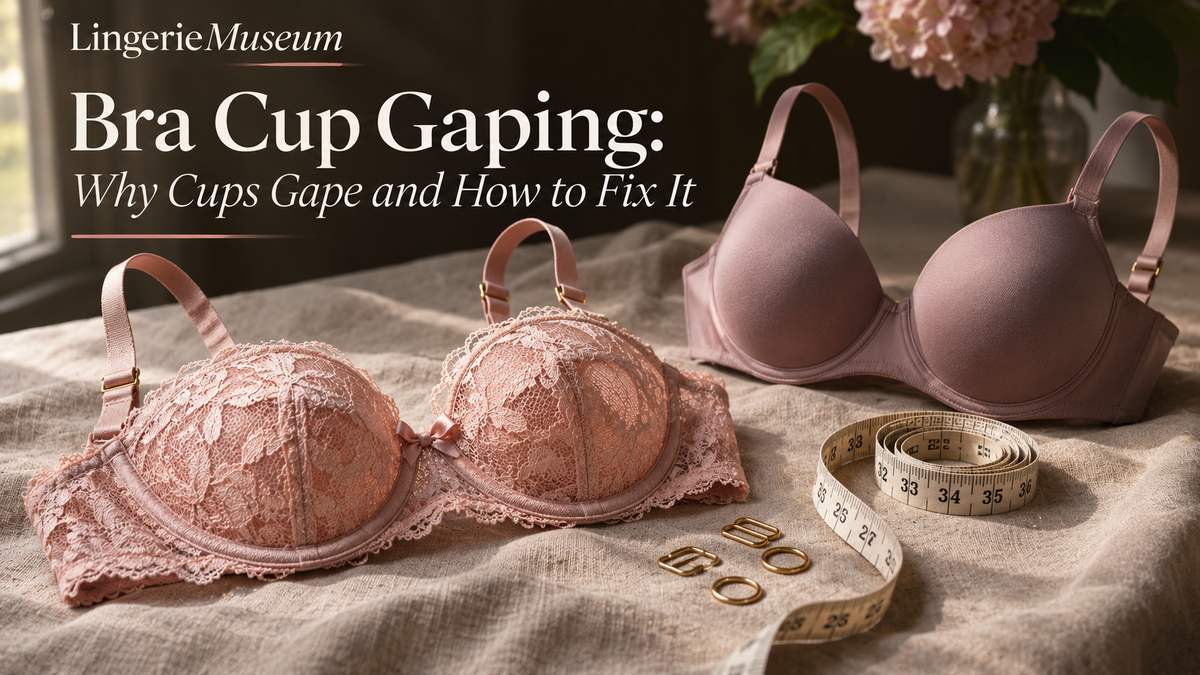
Bra cup gaping, the empty space between the cup edge and your breast, has three usual causes: the cup is too big, the cup shape does not match your breast shape, or the straps and band are loose. Tighten the straps first. If the gap stays, try one cup size smaller in the same band, then a different style.
Which of the three it is depends on where the gap opens and when. A few minutes in front of a mirror usually settles it.
Check the gap is real before you change size
Plenty of gaps are tissue that never made it into the cup. Fitters call the fix "scoop and swoop": fasten the bra on the loosest hook, lean forward, then reach into each cup with the opposite hand and lift the breast tissue from the side and underneath into it. Triumph's fit guide recommends the same step before judging a gap. Stand up, settle the straps and look again.
Then check the straps. ThirdLove lists overstretched straps among the main causes of gaping at the top of the cup and suggests tightening them as the first test. Marks & Spencer adds the limit: loosen them if they dig into your shoulders or pull the cups into your breasts. A strap is there to hold the cup against you, not to carry the weight.
Where the cup gapes, and what it points to
| Where the gap is | Most likely cause | First thing to try |
|---|---|---|
| Top edge, both sides, cup also wrinkles | Cup too big | One cup size smaller, same band |
| Top edge only, lower cup full | Shape: less fullness on top | Balconette, plunge or stretch-lace top |
| Sides and underarm, wires flare out | Band too loose or wires too wide | Smaller band, narrower wire |
| Only when you lean forward | Band too loose, or cup too shallow | Firmer band, deeper cup |
| One cup only | Asymmetry | Fit the larger side, pad the other |
When the cup is simply too big
Marks & Spencer's fitting guide puts it in one line: go down a cup size if the cups are wrinkling or gaping. Wikipedia's entry on brassiere measurement says the same thing more bluntly: loose fabric in the cup means the cup is too big. The signal is wrinkles or a hollow across the whole cup, not only at the edge.
Sometimes the gap is more than one size. On the fitting forum Bratabase, a reader in a 36G that gaped after scooping was told by another user to try "at least two cup sizes down"; she reported that the 36FF fit her better.
Watch the sister-size trap. Sister sizes, such as 32C, 34B and 36A, hold the same cup volume on different bands, as the Wikipedia entry explains. Going from a 34C to a 36B loosens the band but keeps the same cup, so the gap stays. To shrink the cup, drop a letter on the same band: 34C to 34B.
Bra cup gaping from shape, not size
Some cups gape on breasts they fit by volume. Wacoal calls one common case a shallow top, "when the majority of the breast tissue and volume sits under the nipple." The upper cup has nothing to fill it, so the edge stands away from the skin even when the lower cup is snug. Going down a size then makes the bottom of the cup too small.
Molded foam is the usual offender. A molded cup keeps one fixed shape, and a Bratabase commenter put the problem plainly: "Molded cups expect your boobs to mold to them, not the other way around." Honeylove names rigid molded T-shirt cups as a frequent cause of gaping on projected or center-full shapes, and recommends seamed cups or stretch-lace and elastic necklines, which follow the breast instead of standing off it.
Not every source agrees. The Indian retailer Shyaway recommends contour and molded cups for shallow-top breasts, because the foam holds its shape where tissue is missing. Both can work: foam hides an empty upper cup, while stretch lace removes it. Wacoal's answer is a third route, a contour cup with pads shaped to put volume back at the top.
Bands, wires and straps that pull the cup away
A band that is too big lets the whole bra tip forward. Honeylove lists it among the causes of top gaping, and on Bratabase a 36D wearer whose cups gaped "about an inch" was told the band was probably two sizes too large, "which can also cause wires to be wider." Wider wires sit outside the breast and leave air at the sides. Marks & Spencer's rule for the band: go down a back size if it rides up your back.
Strap position matters too. A balconette sets the straps wide, and M&S advises women with narrow shoulders to avoid balcony bras for that reason. Straps that slide toward the arm drag the cup edge outward with them.
Styles that close the gap
For less fullness on top, pick a cup with less cup above the nipple. ThirdLove points to balconette and demi styles because they "tend to have less cup to fill." The difference between the two is set out in our balconette vs demi cup comparison. A plunge bra is cut low at the center, so there is little cup at the inner top edge to stand away from the breast. The whole range of cuts is laid out in our bra type index.
If you want a smooth line under knits, a T-shirt bra with a lightly lined cup works best when the cup matches your upper-breast shape; if it does not, a seamed or stretch-lace cup is the alternative fitters suggest.
When only one cup gapes
That is often not a fit fault at all. Wikipedia's measurement entry cites research that up to 25% of women have a persistent, visible asymmetry between their breasts. The usual advice, given by ThirdLove among others, is to fit the larger breast and fill the smaller side with a removable pad or a slightly shorter strap. Wacoal builds a style for it: its Shape Revelation Uneven bra has adjustable straps on the front of the cups so each side can be set separately.
Breasts also change. The same Wikipedia entry notes that some women's breasts change shape by as much as 20% across a month, which is why a bra that gaped last week can fit this week.
Last updated
Questions
Should I size down if my bra cups gape at the top?
Only if the whole cup is loose. If the cup wrinkles or hollows all over after you scoop your breasts in and tighten the straps, go down one cup letter on the same band, for example 34C to 34B. If only the top edge stands away while the lower cup is full, the cup shape is the problem, not the size.
Why does my bra gap when I lean forward?
A gap that opens only when you bend usually means the band is too loose, so the bra tips away from your chest, or the cup is too shallow for your breast. Try the band on its loosest hook in a smaller size, and check whether a deeper or seamed cup stays closer when you move.
Does going up a band and down a cup fix gaping?
No. Moving one band up and one cup down, from 34C to 36B for example, gives a sister size with roughly the same cup volume, so the gap stays. It loosens the band only. To make the cup smaller, keep the band and drop one cup letter.
What bra style is best for cups that gape at the top?
Styles with less cup above the nipple suit breasts with less fullness on top: balconette and demi cups. Cups with a stretch-lace or elastic upper edge follow the breast instead of standing off it. Some brands also make contour cups with pads shaped to fill the upper cup.
Sources
- marksandspencer.com: fittingroom
- en.wikipedia.org: Brassiere measurement
- thirdlove.com: why does my bra gap in the front
- wacoal-america.com: empowering women wacoals breast shape series and the journey to fin...
- honeylove.com: why do bras gape at the top
- blog.shyaway.com
- bratabase.com: dhoh3
- bratabase.com: dlhwq
- bratabase.com: dnvkp
- au.triumph.com: bra fit guide
- thirdlove.com: ask a fit specialist i have asymmetric breasts what are the best br...
Discussion
Loading...