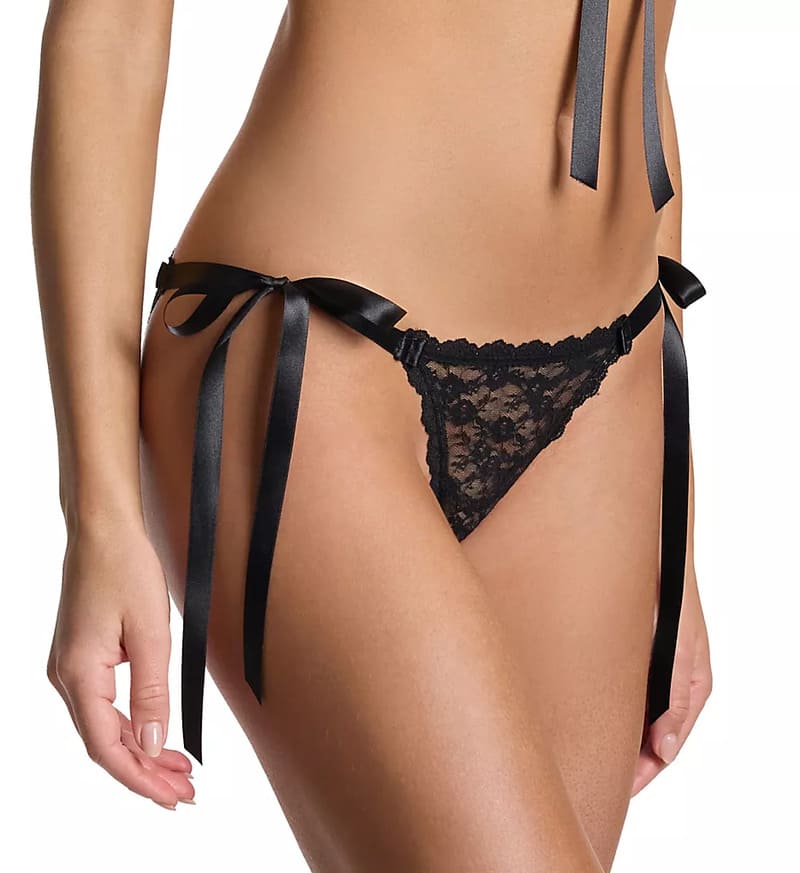
A side-tie brief has no closed waistband at the sides. The front and back panels each end in fabric ties or ribbon at the hip, and the wearer knots them, usually into a bow. Untie both and the garment comes off flat. The panels can be any cut, though bikini and Brazilian shapes are the most common.
The ties adjust the fit at each hip independently, which helps between sizes, and they make the brief easy to put on and take off. Knots add a small bump at the hip that can show under fitted clothes, so side-ties work best under loose skirts and as lingerie meant to be seen. In lingerie the ties are largely decorative, a feature of bridal and romantic sets in satin and lace. In swimwear they are standard on string bikini bottoms.
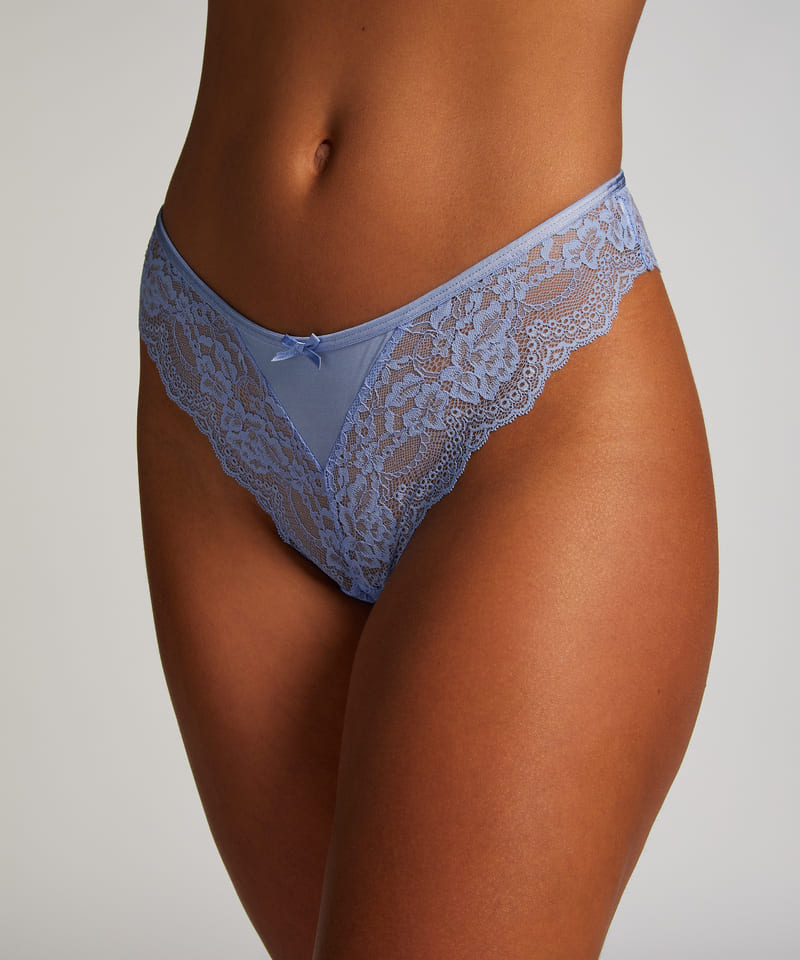
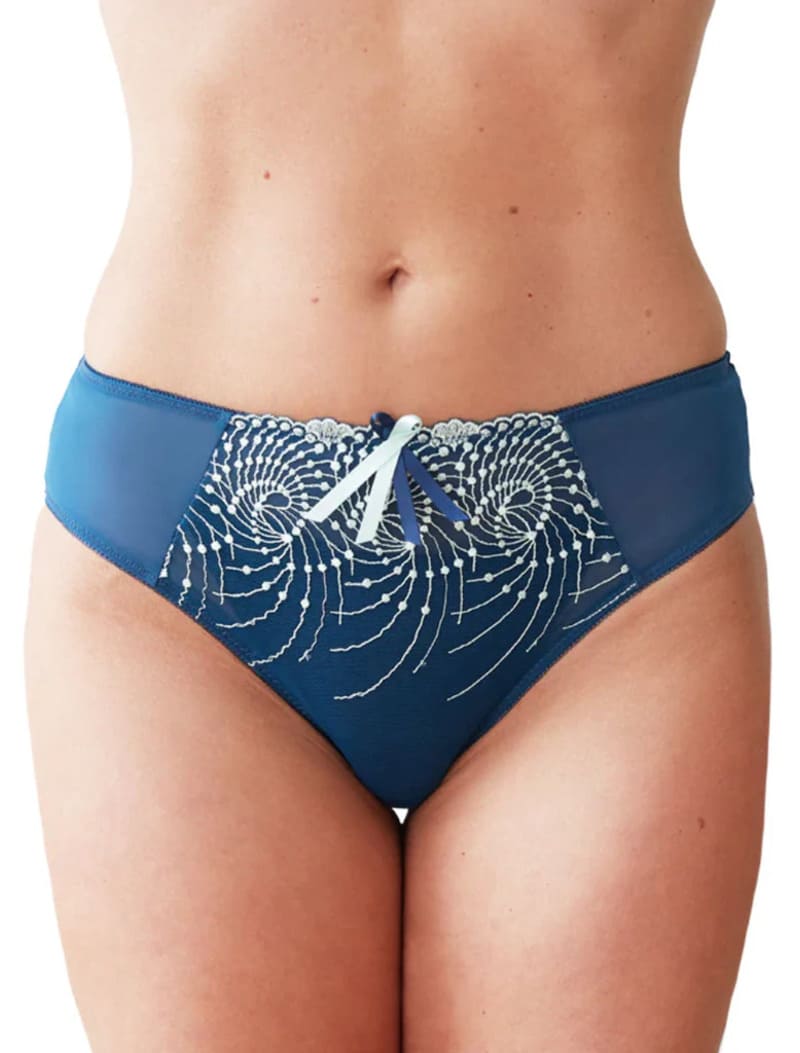
Some briefs sold as side-tie have the bows sewn on as decoration over a closed elastic side. They look the part in a photo but behave like an ordinary brief.
A Brazilian has narrow sides, sometimes strings, but they are sewn closed. A bikini brief has an unbroken elastic waistband. If the side can be untied, it is a side- tie, whatever the cut of the panels.
How to Identify
- Fabric ties or bows at each hip
- No continuous elastic at the sides
- Front and back panels separate when untied
- Ribbon, satin or self-fabric ties
- Common in bridal lingerie and swimwear
The string bikini, the swimwear form of the side-tie, had its first formal presentation in New Orleans in 1974. A publicist, Glen Tortorich, and his wife, the model Brandi Perret-DuJon, had a local designer named Lapin make one for the opening of a new shopping arcade in the French Quarter, after seeing a photograph of a Rio de Janeiro model. A popular story credits the Brazilian model Rose di Primo with inventing it when there was too little fabric for a shoot, but Wikipedia treats that as legend. The term "string bikini" entered common use the same year.
Tying it right: knot, bow and tension
How you tie it decides how it fits and how long it stays tied.
- Put the brief on and hold both panels in place at the hips.
- Tie the first side at the top of the hip bone, firm enough to hold the panel flat without pulling.
- Tie the other side to match. Look in a mirror to check that both front and back panels sit level.
- Tie a bow over a square knot, not a granny knot, so it stays put. Satin ribbon slips more than self-fabric ties, and a double knot under the bow helps.
Tie the sides too tight and they dig in and make a bump; too loose and the brief slides down. Retie them once after an hour of wear, as the fabric relaxes.
Who benefits from adjustable sides
Beyond the in-between-sizes case, ties help when hips are not quite symmetrical, since one side can sit a little looser than the other. They also suit a body whose waist measurement moves by an inch (2.5 cm) or so through the month, where a fixed elastic band is right one week and tight the next.
Side-ties do have limits. The knots add a small bump at the hip, and the brief has no elastic to grip, so on a very active day it can work loose. For everyday wear under fitted clothes, a closed elastic brief is easier.
The skirts and trousers that hide a bow
Bows show under anything that hugs the hip: pencil skirts, bodycon dresses, fitted jeans. They disappear under A-line and full skirts, slip dresses cut on the bias with some ease, wide-leg trousers, and nightwear. In bridal sets, where the ties are part of the look, they are meant to be seen.
The site's side-tie vs bikini brief exhibit puts the two side by side, and satin explains why satin ribbon ties look good and slip easily.
Swimwear tie-sides
On the beach, tie-sides are standard. Seafolly sells several, including the Sea Dive Tie Side Rio Bikini Bottom and a Drift Club tie-side high cut. For swimming, tie double knots, since waves pull on bows. Swim ties are usually self-fabric or round cord, which hold better wet than ribbon. The site's bikini bottom page covers the swim cuts that use them.
Ribbon care and fraying
Untie both sides before washing and tie them loosely to themselves so they cannot knot around other pieces. Wash in a mesh bag on cold, or by hand. Satin ribbon frays at cut ends; good brands heat-seal or fold and stitch them. If a ribbon end starts to fray, a drop of clear fabric glue or seam sealant stops it spreading. Iron ribbon ties on low heat only, as satin made from polyester glazes under a hot iron.
Side-Tie Brief in our archive
Brands with the most pieces in our archive that our image classifier identifies as this cut. Labels are automatic and can be wrong.
Shop
See side-tie brief styles on AmazonAs an Amazon Associate we earn from qualifying purchases. It does not change what we write.
Sources
- en.wikipedia.org: Bikini variants
- en.wikipedia.org: Panties
- us.seafolly.com: bikini bottoms
Last updated